Pipelines deliver vital resources across long distances, but keeping them efficient and safe comes down to understanding pig launcher working and the complete pigging process in pipeline systems. A pig launcher is a specialized vessel designed to introduce a maintenance tool—commonly called a “pig”—into a pipeline while the line remains live and pressurized. The pig launcher working principle is central to effective pipeline operations, helping maintenance teams and engineers remove deposits, scale, or blockages, and conduct internal pipeline inspections without shutting down the system.
By mastering pig launcher working, professionals ensure regular pigging prevents hazardous blockages, supports flow efficiency, and protects pipeline integrity in any industry. Whether you’re running an oil and gas operation or managing municipal water supply, a reliable pipeline pigging process is crucial for safe and uninterrupted operations.
Regular pigging prevents dangerous blockages and maintains maximum flow efficiency. Whether you manage a major oil network or an industrial water system, mastering the pipeline pigging process keeps operations running smoothly and safely.
Pig Launcher Working Principle: How It Works in Pipeline Pigging Process
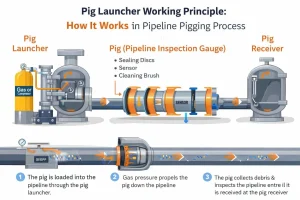
The foundation of pig launcher working lies in its use as a controlled access point to safely introduce a pig into a live, pressurized pipeline. Specifically, pig launcher working allows operators to insert the pig into a sealed chamber, which is then connected to the main pipeline system. This process is essential for maintaining the integrity and functionality of pipelines across industries.
In a typical pig launcher working sequence, the launcher acts as a pressure-safe lockout zone between the exterior environment and the pressurized pipeline. By utilizing a pressure based pigging system, operators carefully manipulate isolated valves to direct a portion of pipeline fluid behind the pig. Due to the consistent seal the pig forms against the pipe’s internal walls, this pressure creates the force required for efficient pig movement inside pipeline.
As a result, the pig progresses through miles of pipeline, performing crucial cleaning, inspection, or separation tasks in one smooth operation. Once its function is complete, the pig is collected by a pig receiver at the end of the line, demonstrating how precise pig launcher working keeps the pigging process safe and effective.
The pig launcher working principle relies on a pressure based pigging system. By manipulating a series of valves, operators divert a portion of the main pipeline fluid (or gas) behind the pig. Because the pig fits snugly against the inner walls of the pipe, this trapped pressure pushes it forward. The continuous flow of the pipeline medium provides the driving force, allowing the pig to travel miles down the line to clean, clear, or inspect the interior surface. Once it completes its journey, a similar device called a pig receiver safely catches and extracts it.
Step-by-Step Pig Launcher Working Process in Pipeline Pigging
To achieve both reliable pig launcher working and the highest standards of maintenance in pipeline systems, it is essential to follow a structured, step-by-step pigging process in pipeline operations. Proper pig launcher working not only boosts operational safety but also ensures efficient cleaning and inspection. Below, you’ll find a comprehensive, easy-to-follow guide outlining how pig launcher working is executed in real-world industrial settings. This process highlights each critical aspect of the pipeline pigging process while prioritizing safety, accuracy, and efficiency for pipeline maintenance professionals and engineers.
Step 1: Pig Insertion Into Launcher
First, operators isolate the launcher barrel from the main active pipeline to ensure it is fully depressurized. Once they verify zero pressure, they open the closure door and manually push the pig tightly into the launcher barrel. Pushing the pig firmly ensures the pipeline medium cannot bypass it later. After the pig is securely in place, operators close and lock the closure door securely.
Step 2: Sealing and Pressurization
Before launching, the system must match the pressure of the main pipeline. Operators open the kicker valve slightly to allow the pipeline fluid or gas to enter the barrel. As the fluid fills the chamber behind the pig, the pressure inside the launcher slowly equalizes with the pressure of the active pipeline. Proper sealing and pressurization prevent dangerous pressure surges that could damage equipment.
Step 3: Pig Movement Inside Pipeline
Once pressures equalize, operators open the main isolation valve connecting the launcher to the pipeline. They then fully open the kicker valve. This action directs the full force of the pipeline flow directly behind the pig. The pressure differential pushes the pig out of the barrel and into the main pipeline stream. Pig movement inside pipeline is entirely controlled by the flow rate and pressure of the transported medium.
Step 4: Cleaning and Inspection Process
As the pig travels through the network, it performs its designated pipeline cleaning steps. Utility pigs scrape away wax, scale, and debris, pushing the waste ahead of them. Smart pigs, equipped with advanced sensors, record data on wall thickness, corrosion, and internal geometry. Throughout this phase, the pig maintains a tight seal against the pipe walls to ensure thorough cleaning and accurate data collection.
Step 5: Pig Receiving at Receiver
At the end of the line, the pig enters the pig receiver barrel. The receiver catches the pig and the debris pushed ahead of it. Operators then isolate the receiver from the main flow, drain the trapped fluid, safely depressurize the barrel, and open the closure door to extract the pig. This completes the launching and receiving process safely.
Pig Launcher Working: Visualizing the Launching and Receiving Process (Text-Based Diagram)
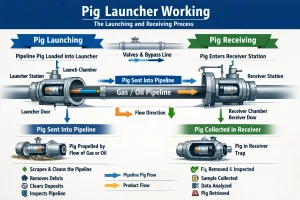
If you look at a schematic of a pig launcher, you will see a large, oversized pipe section called the barrel, which narrows down to match the diameter of the main pipeline through a concentric reducer.
At the rear end of the barrel sits the heavy-duty closure door used for loading. A smaller pipe, controlled by the kicker valve, connects to the barrel near the closure door. This pipe supplies the driving pressure. At the front end, a large main isolation valve separates the launcher from the active pipeline. A bypass line allows normal flow to continue when the launcher is isolated. When the kicker valve opens, flow redirects behind the pig in the barrel, pushing it through the open main isolation valve and into the primary flow of the pipeline.
Key Components in Pig Launcher Working Operation
A successful pipeline pigging process relies on several heavy-duty components working together seamlessly.
- Launcher Barrel: This oversized, heavy-walled cylindrical vessel holds the pig before launch. It is built larger than the main pipeline to make loading easy and features a reducer to guide the pig into the main pipe.
- Closure Door: This is a high-pressure, quick-opening mechanical door located at the rear of the barrel. It features safety locks to prevent opening under pressure and provides access for inserting the pig.
- Valves: The system relies on multiple valves to control pressure and flow. The main isolation valve separates the launcher from the pipeline, the kicker valve introduces pressure behind the pig, and drain/vent valves release trapped pressure.
- Pipeline: The main transport pipe acts as the track for the pig. Its internal diameter dictates the size of the pig used, and its flow provides the motive force.
Applications of Pig Launcher Working in Pipeline Systems
Pig launcher systems play a critical role in maintaining pipeline efficiency, safety, and performance across multiple industries. From cleaning and inspection to product separation, pipeline pigging is widely used in modern industrial operations.
- Oil and Gas: Pipeline pigging is extensively used in crude oil and natural gas pipelines to remove paraffin wax buildup, sludge, and debris. Pig launchers help insert cleaning and smart pigs into pipelines without interrupting operations. Additionally, pigging removes trapped water that can cause internal corrosion. Smart pigs are also used for pipeline inspection, detecting cracks, leaks, and structural weaknesses—ensuring safe and continuous operations.
- Chemical Processing: In chemical industries, multiple products are often transported through the same pipeline. Pigging allows efficient separation of different chemicals, preventing contamination between batches. This batching process improves product purity, reduces wastage, and ensures compliance with industrial quality standards. Pig launcher systems make this process safe and controlled.
- Water Pipelines: Municipal and industrial water pipelines use pigging to remove sediment, sludge, biofouling, and mineral deposits. This ensures smooth water flow and maintains pipeline hygiene. Regular pigging also reduces pumping costs and prevents blockages, making it essential for long-term water infrastructure maintenance.
- Food and Beverage Industry: Pigging systems are used to recover leftover product (like sauces, dairy, or beverages) from pipelines. This minimizes product loss and ensures maximum yield. It also helps maintain hygiene standards by cleaning pipelines effectively between production cycles.
- Pharmaceutical Industry: In pharmaceutical manufacturing, maintaining purity is critical. Pigging helps avoid cross-contamination between different formulations and ensures strict hygiene standards are met. This improves production efficiency and reduces cleaning time between batches.
- Mining and Slurry Pipelines: Mining industries use pigging to clean slurry pipelines carrying minerals and waste materials. Pig launchers help remove solid deposits and prevent pipeline clogging, ensuring uninterrupted operations.
- Power Plants & Industrial Utilities: Power plants use pigging systems in pipelines carrying fuel, water, or steam-related fluids. Regular pigging improves flow efficiency and reduces maintenance downtime in critical utility pipelines.
Pig Launcher Working: Benefits of a Proper Pipeline Pigging Process
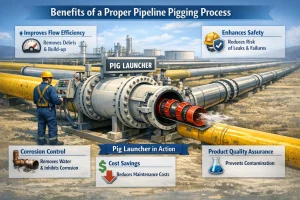
Executing a consistent pigging program delivers several major advantages for pipeline operators.
- Improved Flow Efficiency: Pigging removes internal deposits such as wax, sludge, and scale buildup. This restores the original internal diameter of the pipeline, reducing friction and allowing smoother fluid movement. As a result, operators experience improved throughput and reduced energy consumption.
- Reduced Blockage & Downtime: Routine pigging prevents the accumulation of debris and solid particles that can lead to severe blockages. By maintaining a clean pipeline, industries can avoid unexpected shutdowns and costly production interruptions.
- Corrosion Prevention & Pipeline Protection: Pigging helps eliminate stagnant water, corrosive chemicals, and sediments that settle inside pipelines. This significantly reduces internal corrosion risks and extends the service life of the pipeline infrastructure.
- Enhanced Operational Safety: A properly maintained pigging system minimizes the risk of pressure build-up, leaks, and pipeline failures. This ensures safer operations for workers and reduces environmental hazards, especially in oil & gas industries.
- Accurate Inspection & Monitoring: Pipeline pigging enables the use of intelligent pigs (smart pigs) equipped with sensors to detect cracks, corrosion, and structural weaknesses. This allows early detection of issues and prevents major failures.
- Cost Savings in Maintenance: Regular pigging reduces the need for expensive repairs and emergency maintenance. It also lowers pumping costs by improving flow efficiency, leading to long-term operational savings.
- Improved Product Quality: In industries like oil, gas, and food processing, pigging prevents cross-contamination between batches. This ensures consistent product quality and meets industry standards.
- Increased Pipeline Lifespan: By preventing corrosion, buildup, and mechanical damage, pigging significantly extends the lifespan of pipelines, reducing capital expenditure on replacements.
Pig Launcher Working: Safety Considerations for Pipeline Pigging
Handling pressurized vessels requires extreme caution. Operators must prioritize safety during every pig launcher operation.
- Pressure Handling: Operators must never open a closure door until they verify the barrel is at zero internal pressure. Vent valves and pressure gauges must be double-checked before any physical access.
- Proper Sealing: The closure door O-rings and seals must be inspected before every launch. A damaged seal can cause a catastrophic blowout when the kicker valve introduces pipeline pressure.
- Operational Checks: Teams must follow strict valve sequencing checklists. Opening or closing valves in the wrong order can trap pressure, damage the pig, or disrupt the main pipeline flow.
Pig Launcher Working: Final Thoughts and Next Steps
A thorough understanding of pig launcher working is crucial for ensuring industrial pipelines stay efficient, safe, and reliable. Every aspect— from carefully loading the pig to monitoring pressure and pig movement inside the pipeline— plays a role in the success of the pipeline pigging process. When you follow a systematic, step-by-step approach to pig launcher working, you not only protect vital infrastructure from blockages and corrosion but also extend the operational life of your entire pipeline system. Relying on best practices for pig launcher working allows industrial engineers to maintain optimal flow, minimize maintenance risks, and achieve superior results in every pigging operation.
Looking for pig launcher manufacturer in India? Get custom fabrication solutions from industry experts.
Pig Launcher Working: Frequently Asked Questions (FAQ)
What is the pigging process in the pipeline?
The pigging process involves sending a mechanical device through a pipeline to clean debris, separate different products, or inspect the pipe walls without stopping the product flow.
Why is pigging important?
Pigging is important because it maintains optimal flow efficiency, prevents dangerous blockages, and removes corrosive materials that could otherwise damage the pipeline over time.
What is pig movement in the pipeline?
Pig movement in a pipeline is driven entirely by the pressure of the fluid or gas flowing behind it. The snug fit of the pig ensures the pressure pushes it forward continuously.
What is pig launcher operation?
Pig launcher operation is the mechanical procedure of safely loading a pig, equalizing pressure with the main line, and manipulating valves to launch the pig into an active pipeline.