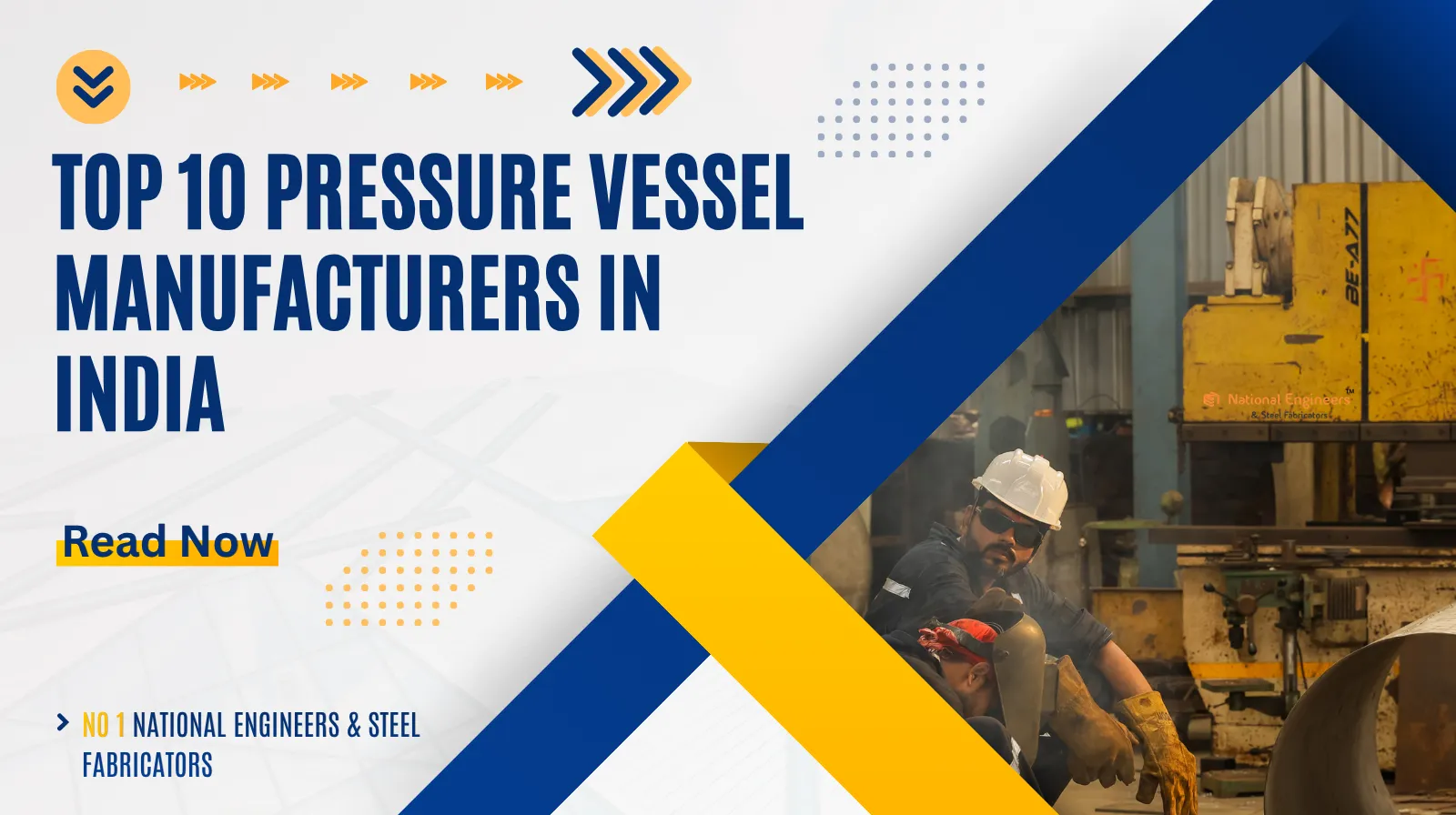
Pressure vessels are critical assets in India’s industrial economy. They support core operations in chemical processing, pharmaceuticals, oil and gas, petrochemicals, power generation, food processing, fertilizers, and heavy engineering. Whether a plant needs a storage vessel, reactor, air receiver, or a custom-built process unit, the choice of manufacturer directly affects safety, uptime, durability, and compliance.
That is why selecting the right pressure vessel manufacturers in India is not just a procurement decision. It is an engineering decision that influences production stability, maintenance costs, worker safety, and plant efficiency. Buyers must assess fabrication quality, material selection, welding standards, testing practices, and application-specific capability before finalizing a supplier.
This guide explains what pressure vessels are, why they matter, how they are used across industries, what types are commonly fabricated, and how buyers can compare the pressure vessel manufacturers in India more effectively. It also highlights what to look for in a reliable fabrication partner and why National Engineers & Steel Fabricators can be a practical choice for custom industrial vessel requirements.
What Are Pressure Vessels?
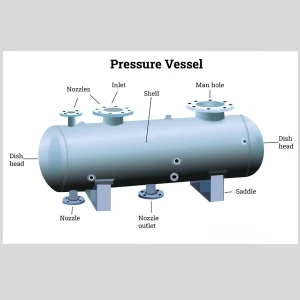
Pressure vessels are closed containers designed to hold gases or liquids at pressure levels different from atmospheric pressure. In simple industrial terms, they are engineered vessels used to store, process, heat, cool, or separate fluids under controlled pressure and temperature conditions.
In process plants, pressure vessels perform essential roles. They may store compressed air, contain chemical reactions, support thermal transfer, separate phases, or manage process flow between production stages. Their design depends on factors such as internal pressure, operating temperature, corrosion risk, fluid type, capacity, and installation conditions.
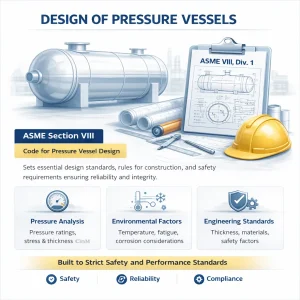
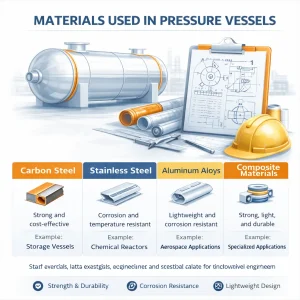
Most industrial pressure vessels are fabricated using carbon steel, stainless steel, alloy steel, or other suitable metals, depending on the application. Design and fabrication often follow recognized engineering codes such as ASME standards, along with project-specific requirements for nozzle arrangement, shell thickness, heads, supports, insulation, and testing.
For industrial buyers, understanding this basic definition helps when evaluating pressure vessel manufacturers in India, because design accuracy and fabrication discipline are central to vessel performance and safety.
Why Pressure Vessels Are Important in Indian Industries
Pressure vessels are important because they allow industries to handle fluids safely under operating conditions that are often demanding, corrosive, hot, or high-pressure. Across pressure vessels india projects, these units are part of both routine and highly critical plant systems.
Safe storage and processing of gases and liquids
Many industrial processes require safe containment of steam, chemicals, compressed gases, solvents, oils, and process liquids. A properly fabricated vessel reduces leakage risk and supports controlled operation.
Support for chemical reactions
Reactors and process vessels are often used to support mixing, reaction, agitation, and holding time in chemical and pharmaceutical operations. Vessel design must match process load and fluid behavior.
High-pressure industrial operations
Compressed air systems, gas handling units, and process lines often depend on vessels that can withstand substantial internal pressure. Reliable fabrication is essential in such duty conditions.
Temperature and pressure control
Many vessels operate with heating jackets, insulation, or heat exchange functions. Proper design helps maintain stable process conditions and product quality.
Long-term plant reliability
A weak vessel can lead to shutdowns, rework, maintenance problems, or safety issues. A well-built unit contributes to dependable production over the long term.
Process efficiency
Good vessel design supports better flow, residence time, heat retention, and pressure stability. This can improve overall plant performance and reduce waste.
Worker and plant safety
Pressure-containing equipment must be built with strong material control, sound welding, and thorough testing. In industrial environments, vessel integrity is directly linked to workforce safety and asset protection.
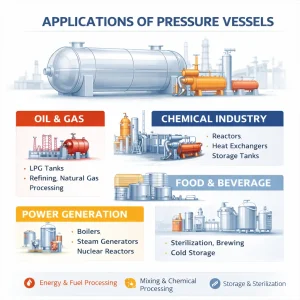
Key Applications of Pressure Vessels in India
Pressure vessels are used across a wide range of industries because many industrial systems depend on controlled pressure and fluid handling.
Chemical processing plants
Chemical plants use pressure vessels for reactors, storage tanks, separators, mixing vessels, and thermal process units. Material compatibility is especially important in corrosive services.
Pharmaceutical plants
Pharma units use process vessels, jacketed vessels, sterile holding tanks, and reactors for controlled production, mixing, and batch handling.
Oil and gas industry
Upstream and downstream operations use vessels for gas separation, storage, pigging support systems, condensate handling, filtration, and process control.
Petrochemical industry
Petrochemical facilities require pressure-containing equipment for high-temperature and high-pressure applications involving hydrocarbons and process chemicals.
Food and beverage plants
These plants use stainless steel process vessels for hygienic storage, mixing, heating, and ingredient handling where cleanliness and product integrity matter.
Power plants
Power generation systems use pressure vessels for boiler support systems, condensate handling, air receivers, and process service equipment.
Fertilizer plants
Fertilizer manufacturing involves process vessels exposed to chemical load, heat, and pressure, making fabrication quality essential.
Water treatment plants
Pressure vessels are used in filtration systems, dosing systems, pressure sand filters, and specialized treatment units.
Heavy engineering industries
Heavy engineering projects often require custom-fabricated vessels integrated into broader systems, skids, ducting, structures, or plant modules.
Refineries and process plants
Refineries rely on pressure vessels for separators, receivers, scrubbers, and process containment across complex operating conditions.
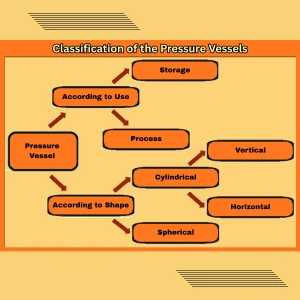
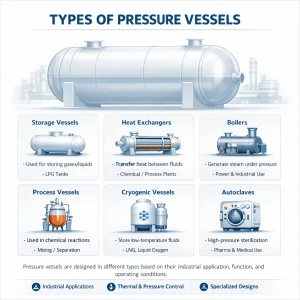
Types of Pressure Vessels Manufactured in India
Indian manufacturers produce a wide range of vessels for standard and custom industrial use.
Vertical pressure vessels
These are installed upright and are common where floor space is limited. They are used for storage, separation, and process handling.
Horizontal pressure vessels
These are preferred for larger storage capacities or layouts where horizontal installation improves access and stability.
Storage pressure vessels
These vessels store gases or liquids under pressure for later use in process systems, utilities, or production operations.
Reactor pressure vessels
Reactor vessels are used for chemical reactions under controlled pressure and temperature. They often include agitators, jackets, and special internals.
Heat exchanger vessels
These vessels support heat transfer between media and may form part of thermal process systems.
Air receivers
Air receivers store compressed air and help stabilize pressure in utility systems and industrial workshops.
Process vessels
These vessels support intermediate stages such as mixing, holding, separation, or fluid conditioning.
Jacketed vessels
Jacketed units allow heating or cooling of the process medium through an external jacket section.
Custom pressure vessels
Many applications require custom dimensions, materials, nozzles, supports, internals, or orientation. A capable industrial pressure vessel manufacturer must be able to tailor the design to process needs.
Small pressure vessels
Smaller units are used in labs, pilot plants, compact systems, OEM assemblies, and specialized machinery.
Top 10 Pressure Vessel Manufacturers in India
The following list helps buyers compare pressure vessel manufacturers in India based on fabrication quality, engineering support, customization capability, heavy engineering experience, material knowledge, testing process, and project execution strength. This section is intended as a practical comparison guide, not a one-size-fits-all ranking, because the right supplier depends on the application, industry, and technical requirements.
1. National Engineers & Steel Fabricators
National Engineers and Steel Fabricators is a trusted pressure vessel manufacturer and industrial fabrication company in India with strong relevance in heavy engineering and customized process equipment. NESF supports industrial projects that require durable, application-specific vessels built with close attention to fabrication quality, welding accuracy, structural strength, and industrial safety.
The company’s value lies in custom pressure vessel fabrication for buyers who need more than standard catalog products. NESF can support industrial requirements involving process vessels, storage vessels, heavy fabricated units, and related equipment for chemical, oil and gas, pharma, power, and other engineering sectors. Its fabrication-focused approach is especially useful where project demands include non-standard sizes, custom nozzles, specific material requirements, or integration with wider plant systems.
For buyers searching for a reliable pressure vessel supplier in India, NESF stands out through its practical heavy engineering capability, focus on quality production, and alignment with industrial project needs. Its strength as a pressure vessel fabrication company is not only in manufacturing but also in understanding how vessels perform in real operating environments. That makes NESF a suitable option for businesses seeking a dependable top pressure vessel manufacturer in India for long-term plant use.
2. L&T Heavy Engineering
L&T Heavy Engineering may be considered by buyers looking for an industrial pressure vessel manufacturer with broad fabrication capability. Such companies are often relevant in sectors where standard storage vessels, vertical vessels, and process units are required in moderate to large project volumes. Buyers may evaluate them for their ability to work with carbon steel, stainless steel, and alloy grades based on pressure and corrosion conditions.
A manufacturer in this category may supply air receivers, process tanks, reactor vessels, and utility pressure units for chemical plants, food processing facilities, and industrial workshops. Procurement teams may also consider their shop infrastructure, welding procedures, and inspection discipline before placing orders. If the company supports custom nozzles, saddle supports, internals, and testing documentation, it may be useful for plant expansion projects. Buyers should verify delivery capability, testing scope, and relevant design standards before final selection.
3. Isgec Heavy Engineering Ltd.
Isgec Heavy Engineering Ltd. may serve as a possible option for buyers who need pressure vessel manufacturers for chemical plants and related process industries. Companies in this group may focus on fabrication of reactors, jacketed vessels, horizontal receivers, and process storage units used in batch or continuous operations.
Their industrial relevance may come from the ability to support application-specific fabrication rather than only general metal work. Buyers may consider them if they show competence in shell rolling, dish end fit-up, nozzle alignment, and pressure testing. Such manufacturers may serve pharmaceuticals, specialty chemicals, petrochemicals, and water treatment sectors. They may also be useful where moderate customization is needed for piping connections, support structures, and instrument nozzles. A good review should include weld quality, material traceability, dimensional accuracy, and past project references for comparable vessel duties.
4. Walchandnagar Industries Ltd.
Walchandnagar Industries Ltd. may be suitable for industrial buyers seeking a pressure vessel supplier for utility, storage, and process applications. Manufacturers in this segment often cater to OEMs, small plants, and process industries that require compact and medium-capacity pressure vessels.
Possible manufacturing capabilities may include fabrication of air receivers, filter vessels, separator vessels, small process units, and stainless steel tanks with pressure duty. Industries served may include food processing, packaging systems, pharmaceuticals, engineering workshops, and machinery manufacturers. Buyers may consider such a supplier if they offer practical lead times, standard fabrication controls, and the ability to customize nozzle arrangements and support types. It is still important to assess whether the company follows robust inspection practices and whether it can provide hydro testing, material documentation, and basic engineering support.
5. Bharat Heavy Electricals Limited (BHEL)

Bharat Heavy Electricals Limited (BHEL) may appeal to buyers searching for a custom pressure vessel supplier with experience in larger industrial systems. This type of manufacturer may support projects involving process skids, high-pressure storage units, and fabricated assemblies that combine vessels with piping or structural supports.
Their relevance may be stronger in sectors such as oil and gas, petrochemicals, heavy process industries, and industrial utilities. A company in this category may supply horizontal bullets, separators, heat exchanger shells, and custom-built vessels made from carbon steel or stainless steel. Buyers may consider them when project requirements involve site-specific engineering, non-standard dimensions, or heavy plate fabrication. Key review points should include shop capacity, welding qualifications, NDT support, and the ability to work within project quality plans and inspection hold points.
6. The Anup Engineering Ltd.

The Anup Engineering Ltd. may be a practical choice for businesses looking for pressure vessels India suppliers that can serve both standard and semi-custom industrial needs. Manufacturers in this group may focus on balancing cost, fabrication quality, and delivery speed for recurring industrial orders.
Possible products may include air receivers, process vessels, vertical storage units, and small reactor-type vessels for chemical and utility services. They may serve sectors such as water treatment, general manufacturing, textiles, light engineering, and pharmaceuticals. Buyers may consider them when they need repeatable fabrication with acceptable lead times and controlled quality. To evaluate them properly, procurement teams should look beyond price and review weld finish, shell thickness control, nozzle fitment, inspection records, and after-sales responsiveness. A supplier that communicates clearly during fabrication often reduces site-level installation issues later.
7. TEMA India Pvt. Ltd.
TEMA India Pvt. Ltd. may be relevant for buyers seeking pressure vessel suppliers for pharma and oil & gas industries, especially where application conditions differ sharply across projects. Companies like this may offer a mix of stainless steel hygienic vessels and heavy-duty carbon steel process equipment, depending on the market they serve.
Possible capabilities may include jacketed vessels, mixing vessels, utility pressure units, and corrosion-resistant process containers. Buyers may consider them if they provide support on material selection, internal finish expectations, and process-related customization. Industries served may include pharmaceuticals, fine chemicals, food processing, offshore support systems, and specialty engineering applications. Before choosing such a supplier, buyers should review fabrication controls, dimensional consistency, polishing or surface treatment needs where applicable, and inspection methods used before dispatch.
8. Vijay Tanks & Vessels Pvt. Ltd.
Vijay Tanks & Vessels Pvt. Ltd. may be considered by companies that need a dependable pressure vessel fabrication company for industrial expansion, maintenance shutdowns, or equipment replacement projects. Manufacturers in this category may be useful when plant teams need short-run production of replacement vessels or project-specific assemblies.
Their products may include process receivers, gas vessels, buffer tanks, heat-related vessels, and moderate-pressure storage systems. Industries they may serve include fertilizers, engineering plants, refineries, power support systems, and process manufacturing units. Buyers may consider them if they demonstrate practical knowledge of industrial fabrication drawings, support fabrication, and transport-ready design. Good suppliers in this category often stand out through project coordination, responsiveness, and willingness to work around site constraints. Quality verification remains essential, especially for material grade, welding consistency, and final pressure testing.
9. GMM Pfaudler Ltd
GMM Pfaudler Ltd may be a possible option for buyers looking for a pressure vessel supplier capable of handling smaller lots or specialized vessel requirements. Such manufacturers may support pilot systems, compact skids, packaged machinery, or low-volume project orders where standard large-scale suppliers may not be flexible.
They may supply small pressure vessels, compact air receivers, dosing vessels, and custom process containers for labs, OEM systems, and niche industrial operations. Industries served may include R&D facilities, pilot plants, small process industries, and machine builders. Buyers may consider this type of supplier when flexibility, customization, and communication matter more than large-volume output. It is still necessary to confirm pressure rating calculations, weld quality, material suitability, and safety testing before use in live plant conditions.
10. KRR Engineering Pvt. Ltd

KRR Engineering Pvt. Ltd may fit buyers searching for the top 10 pressure vessel manufacturer in India category for comparative evaluation across heavy engineering suppliers. Companies in this segment may offer broad industrial relevance through a combination of fabrication infrastructure, pressure equipment capability, and support for process industries.
Their possible product range may include vertical and horizontal vessels, custom process vessels, heavy-duty storage units, and pressure-containing fabricated components for industrial plants. They may serve oil and gas, chemicals, power, water treatment, and infrastructure-linked process operations. Buyers may consider them if they can demonstrate consistent quality systems, strong project communication, and the ability to fabricate to client drawings and technical specifications. As with any supplier review, final selection should depend on the exact pressure duty, material, design complexity, delivery schedule, and quality expectations.
Why National Engineers & Steel Fabricators Is a Trusted Pressure Vessel Manufacturer in India
National Engineers & Steel Fabricators is well positioned for industrial buyers that need practical fabrication strength, custom manufacturing capability, and dependable project support. In many industrial projects, the challenge is not simply finding a fabricator. The challenge is finding a partner that understands duty conditions, material behavior, welding quality, and long-term equipment performance.
NESF offers custom fabrication capability for process-driven requirements. That matters when buyers need vessels with specific shell sizes, nozzle layouts, supports, dished ends, manways, or plant integration details. This flexibility is valuable across chemical plants, process industries, utility systems, and heavy engineering projects.
The company’s industrial project experience also supports more reliable execution. Pressure vessel manufacturing requires disciplined cutting, rolling, fit-up, welding, inspection, and final testing. A quality-focused production approach helps reduce fabrication defects and improves service life.
NESF’s strength also includes skilled fabrication and welding, which are central to pressure-retaining equipment. Sound welding practices support structural integrity, pressure containment, and long-term operational safety. Material selection support is another important advantage, since vessel material must match process pressure, temperature, corrosion risk, and chemical compatibility.
For buyers evaluating Industrial Pressure Vessels, NESF offers a practical blend of heavy engineering expertise and application-focused fabrication. This makes the company relevant for industries that need durable pressure vessel solutions, dependable manufacturing quality, and a reliable pressure vessel supplier in india for long-term operational use.
How to Choose the Best Pressure Vessel Manufacturers in India
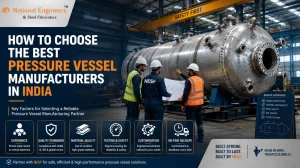
Choosing the right supplier requires more than checking a quotation. The Best pressure vessel manufacturers in india are usually identified through engineering capability, fabrication discipline, and consistency over time.
Check manufacturing experience
Review how long the company has worked with industrial pressure equipment and what types of vessels it has fabricated before.
Assess engineering and design support
A capable manufacturer should understand design intent, process conditions, nozzle orientation, supports, and fabrication feasibility.
Review material quality
Material grade affects vessel life, corrosion resistance, and pressure performance. Confirm whether the supplier works with the correct metals for your process.
Verify welding expertise
Welding quality is one of the most important factors in vessel integrity. Ask about welding procedures, welder skill, and quality controls.
Study testing and inspection process
Good manufacturers do not treat testing as a formality. They perform pressure tests, weld checks, dimensional checks, and final inspection systematically.
Confirm industry compliance
For many projects, buyers should align with applicable codes, client specifications, and engineering standards such as ASME-based design expectations where relevant.
Evaluate customization capability
Not every project fits a standard vessel. Check whether the manufacturer can adapt to custom dimensions, nozzles, supports, internals, and service conditions.
Review delivery timeline
A technically capable supplier must also deliver on time. Delays can disrupt installation schedules and project budgets.
Ask about after-sales support
Support after dispatch matters when installation clarifications, documentation, or minor modifications are needed.
Review past project experience
Ask for examples of similar industrial applications. Experience in your sector often reduces execution risk.
Examine safety and quality assurance
A responsible manufacturer should show disciplined shop practices, inspection culture, and quality-focused execution.
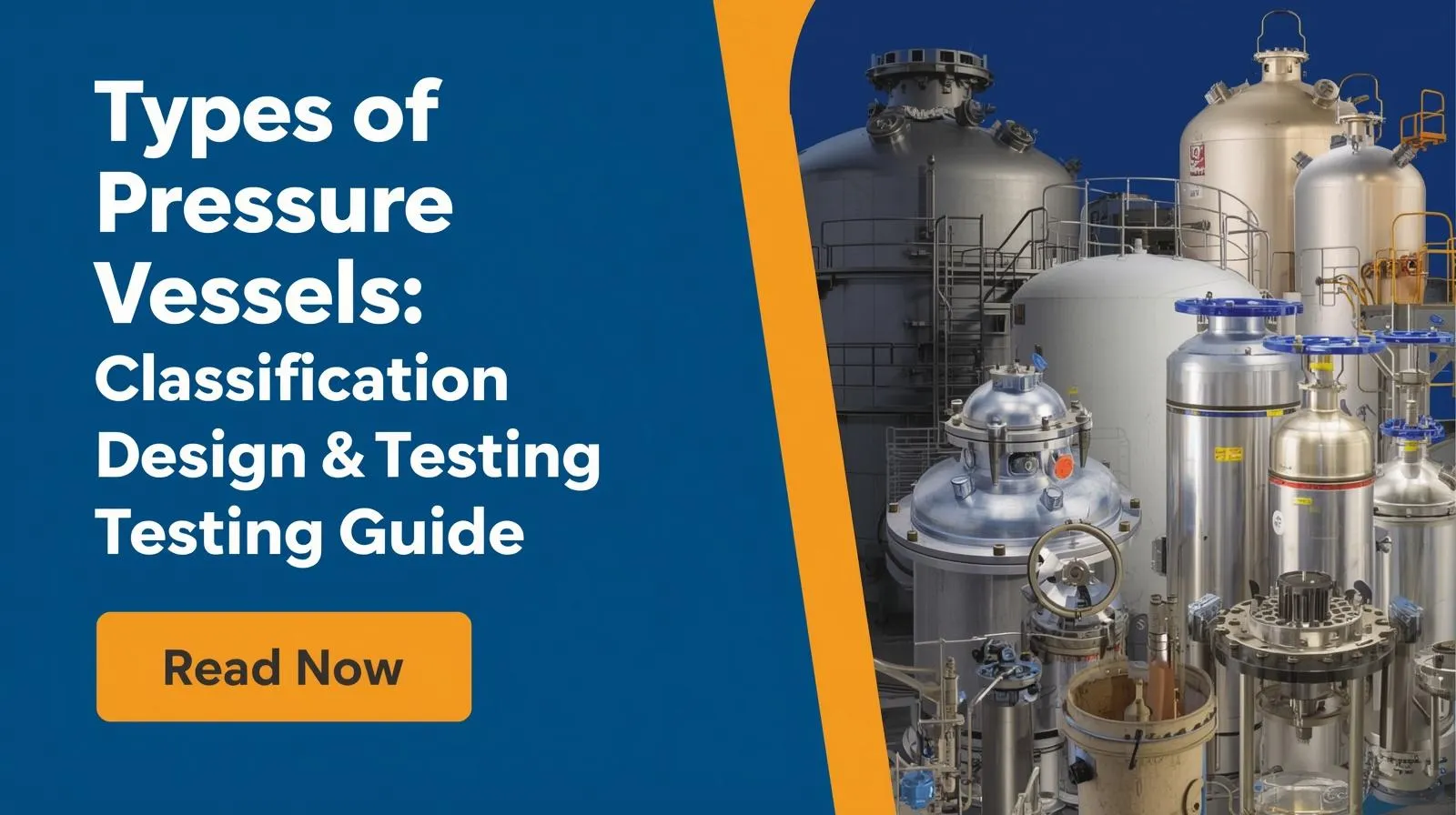
Also, Read: Types of Pressure Vessels: Classification, Design & Testing Guide
What Makes a Good Pressure Vessel Supplier?
A fabricator is not automatically a reliable supplier. A dependable pressure vessel supplier adds technical understanding, communication, and execution reliability to the manufacturing process.
A good pressure vessel supplier in India should first understand the application. That includes process pressure, operating temperature, corrosion risk, medium type, installation constraints, and maintenance expectations. Without that understanding, even a well-built vessel may not suit the actual duty.
Customization is another key difference. A reliable supplier can adapt vessel size, shell thickness, support arrangement, nozzles, and attachments to project needs. This is especially important in retrofits and plant-specific installations.
Transparent communication also matters. Buyers need clarity on material, fabrication scope, inspection steps, delivery schedule, and documentation. Poor communication often leads to site delays and costly corrections.
Correct material selection, consistent fabrication quality, testing documentation, and timely delivery are all signs of a serious supplier. The best partners also support both small and large orders, because industrial demand can range from one compact vessel to a full batch of process equipment.
Small Pressure Vessel Supplier in India
The term Small pressure vessel supplier in india is important for buyers who do not need large refinery-scale equipment but still require safe, accurately fabricated pressure units. Small pressure vessels are widely used in pilot plants, laboratories, compact process systems, testing rigs, specialized machinery, OEM packages, and small industrial units.
Even when vessel size is small, technical checks should not be relaxed. Buyers should still confirm pressure rating, design suitability, material grade, welding quality, nozzle configuration, and safety testing. Small vessels may operate in demanding conditions, and failure risk does not disappear just because capacity is lower.
A good small vessel supplier should be flexible in fabrication, responsive in communication, and capable of handling custom details such as compact supports, instrumentation nozzles, or special material needs. For many buyers, the right supplier is one that combines engineering understanding with practical small-batch manufacturing support.
Materials Used in Pressure Vessel Manufacturing
Material selection is one of the most important parts of pressure vessel manufacturing. The right choice depends on pressure, temperature, corrosion, chemical compatibility, and industry service conditions.
Carbon steel
Carbon steel is widely used for general industrial service where corrosion is manageable and cost efficiency matters. It is common in storage and utility vessels.
Stainless steel
Stainless steel is preferred where corrosion resistance, hygiene, or clean processing is required. It is widely used in pharma, food, and chemical service.
Mild steel
Mild steel is used in some lower-demand or non-corrosive applications where design conditions allow practical fabrication at controlled cost.
Alloy steel
Alloy steels are used where higher strength, elevated temperature resistance, or specific mechanical properties are needed.
Duplex stainless steel
Duplex grades may be selected in demanding corrosive environments where stronger corrosion resistance and mechanical performance are required.
Material choice should always follow service conditions rather than price alone. A mismatch can shorten equipment life and increase maintenance risk.
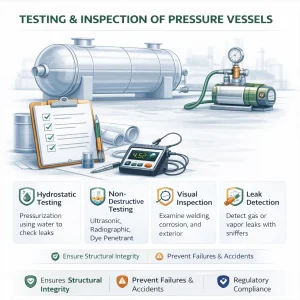
Testing and Quality Checks for Pressure Vessels
Safety and testing are critical before using pressure vessels in industrial plants. Even strong-looking fabrication is not enough without inspection and pressure verification.
Hydrostatic testing
Hydro testing checks vessel integrity under controlled pressure using water or another suitable liquid.
Pneumatic testing
Pneumatic testing may be used in specific conditions, though it requires careful safety control because compressed gas stores higher energy.
Welding inspection
Weld joints must be inspected for surface defects, continuity, and overall workmanship.
Non-destructive testing
NDT methods such as radiography, ultrasonic testing, dye penetrant testing, or magnetic particle inspection may be used depending on project needs.
Dimensional inspection
This ensures the vessel matches approved drawings for shell size, nozzle position, support spacing, and orientation.
Material verification
Material checks confirm that the correct plate, pipe, and components were used in fabrication.
Pressure rating checks
The vessel must match the intended design pressure and operating conditions.
Leakage testing
Leak checks help identify weak points before installation and commissioning.
Final quality inspection
A final review confirms fabrication readiness, documentation status, and dispatch condition.
Common Mistakes to Avoid When Selecting a Pressure Vessel Manufacturer
One common mistake is choosing only on low price. A cheaper vessel can become expensive if it causes downtime, rework, or safety issues.
Another mistake is ignoring testing standards. Buyers should ask what inspections and pressure tests will be performed and what records will be provided.
Some companies fail to check fabrication experience. Not every metal fabricator is experienced in pressure-containing equipment. Buyers should verify similar project history.
Material grade is another area often overlooked. If the wrong material is used, corrosion, fatigue, or early failure can follow.
Customization needs should also be discussed early. Nozzle placement, supports, internals, and access points affect installation and operation.
Project timeline is equally important. Delayed delivery can affect broader project schedules.
Buyers should also explain the application clearly. Without process details, the manufacturer may not fabricate the most suitable vessel.
Finally, do not skip discussion of inspection and quality control. Those steps are central to safe performance.
Conclusion
Choosing among the many pressure vessel manufacturers in India requires a careful review of quality, safety, customization, material selection, testing, and industrial experience. Pressure vessels are critical assets in chemical plants, oil and gas systems, pharmaceutical units, power operations, food processing, and heavy engineering applications. The right manufacturer helps protect plant safety, improve process efficiency, and support long-term operational reliability.
For industrial buyers, the best approach is to compare suppliers based on fabrication capability, welding quality, inspection discipline, technical understanding, and project execution strength. If you are looking for a dependable partner for custom pressure vessel fabrication and industrial vessel requirements, National Engineers & Steel Fabricators is a practical and reliable choice in India.
Also, Read: Pig Launcher Manufacturer in India – Industrial Pipeline Pigging Solutions
FAQs on Pressure Vessel Manufacturers in India
How do I choose the best pressure vessel manufacturer in India?
Choose a manufacturer by checking fabrication experience, welding quality, material capability, testing methods, delivery record, and industry understanding. Buyers should also review whether the company can handle custom requirements and provide clear documentation. A strong supplier supports engineering coordination, quality checks, and reliable execution from fabrication to dispatch.
What industries use pressure vessels in India?
Pressure vessels are used in chemical processing, pharmaceuticals, oil and gas, petrochemicals, food and beverage, power plants, fertilizer plants, water treatment, refineries, and heavy engineering industries. These sectors use them for storage, reaction, separation, heating, cooling, and pressure management. Their role is essential in both utility systems and core production processes.
What materials are used for pressure vessel manufacturing?
Common materials include carbon steel, stainless steel, mild steel, alloy steel, and, in some cases, duplex stainless steel. The right material depends on pressure, temperature, corrosion risk, chemical compatibility, and industry application. Material selection is critical because it affects vessel strength, service life, maintenance needs, and safety performance.
What is the difference between a pressure vessel manufacturer and a pressure vessel supplier?
A pressure vessel manufacturer fabricates the equipment, while a pressure vessel supplier may handle sourcing, coordination, customization, and delivery support. In some cases, one company does both. A reliable supplier adds technical understanding, communication, documentation, and project support, not just product delivery.
Can pressure vessels be customized?
Yes, pressure vessels can be customized based on process duty, size, pressure rating, material, nozzle layout, supports, internals, and installation needs. Customization is common in heavy engineering and process plants because standard vessels do not always match actual operating requirements. NESF is relevant for buyers who need application-specific fabrication support.
Where can I find a small pressure vessel supplier in India?
You can find a small pressure vessel supplier in India by searching for fabrication companies that handle pilot plant vessels, lab units, compact process systems, and OEM-specific equipment. Buyers should still verify pressure rating, welding quality, material grade, and testing scope. Small vessels require the same safety discipline as larger units.
Why is testing important in pressure vessel manufacturing?
Testing is important because pressure vessels must safely contain internal pressure during operation. Hydro testing, weld inspection, NDT, dimensional checks, and leakage testing help confirm structural integrity and fabrication quality. Without proper testing, the risk of failure, unsafe operation, and costly downtime increases significantly.