Proper temperature control and clean air are non-negotiable for modern buildings and industrial facilities. Without a reliable ventilation system design, even the most expensive air conditioning units will fail to perform.
Poorly constructed air distribution systems lead to massive energy waste and uncomfortable environments. When air leaks through gaps or struggles against friction, your energy bills skyrocket while indoor air quality plummets.
The ultimate solution lies in professional HVAC ducting fabrication. High-quality duct fabrication services ensure precise airflow, lower energy consumption, and long-lasting system performance. This guide explores everything you need to know about creating the perfect ductwork for your facility.
What is HVAC Ducting Fabrication?
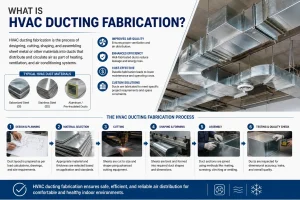
What is HVAC ducting fabrication? HVAC ducting fabrication is the process of cutting, shaping, and assembling sheet metal or other materials to create a custom network of pipes and channels. These channels deliver conditioned air throughout a building.
As a core component of any building’s infrastructure, HVAC duct fabrication connects air handling units (AHU) to different rooms. It acts as the respiratory system of your facility.
Without precise air duct fabrication, an HVAC system cannot distribute air effectively. Proper fabrication ensures that air flows smoothly, maintaining optimal temperatures and pressure balances across all zones.
Importance of HVAC Duct Fabrication
The quality of your HVAC ducting fabrication directly impacts the success of your entire heating and cooling system. Precision matters when moving massive volumes of air.
Airflow Efficiency
Custom duct fabrication minimizes resistance and friction inside the channels. Smooth transitions and accurate duct sizing calculations ensure optimal airflow efficiency.
Energy Savings
Leaky or poorly designed ducts force your HVAC system to work overtime. Professional sheet metal duct fabrication eliminates air loss, significantly reducing your monthly energy consumption.
Indoor Air Quality
Clean air systems rely on airtight ductwork. Well-fabricated ducts prevent dust, pollutants, and allergens from entering the air stream from unconditioned spaces.
System Performance
High-quality ducting reduces wear and tear on your HVAC system components. When airflow moves without obstruction, your blowers and motors enjoy a much longer operational lifespan.
Types of HVAC Ducts
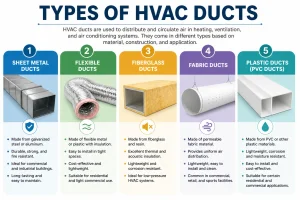
Different building layouts require specific duct profiles. HVAC duct manufacturers create several primary shapes to meet diverse architectural and airflow needs.
Rectangular Ducts
Rectangular ducts fit perfectly above drop ceilings and inside tight wall spaces. They are the most common choice for duct fabrication for commercial buildings due to their space-saving profile.
Round Ducts
Round ducts offer the most efficient airflow with the least amount of friction. Because they have a smaller surface area, they suffer from less pressure loss in ducts compared to rectangular versions.
Flexible Ducts
Flexible ducts consist of a wire coil covered in bendable plastic. Installers use them to connect rigid main ducts to individual air vents in complex or hard-to-reach spaces.
Spiral Ducts
Spiral ducts are round ducts formed by twisting a continuous strip of metal. They are highly popular in modern industrial ventilation duct systems and buildings with exposed, open-ceiling designs.
Materials Used in HVAC Ducting Fabrication
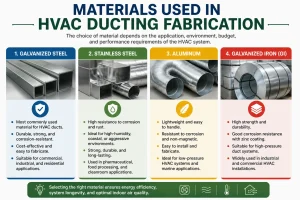
Choosing the right material is a critical step in the ductwork fabrication process. The environment, budget, and application dictate which metal works best.
Galvanized Iron (GI)
Galvanized iron duct fabrication is the industry standard for most commercial and residential projects. The zinc coating prevents rust, making it highly durable and cost-effective for general air distribution.
Stainless Steel
Stainless steel duct fabrication is essential for environments exposed to moisture, chemicals, or extreme heat. It is the top choice for industrial duct fabrication, commercial kitchens, and hospitals.
Aluminum
Aluminum is lightweight, corrosion-resistant, and easy to install. HVAC ducting contractors often use aluminum for clean rooms and specialized exhaust systems where weight is a primary concern.
Mild Steel
Mild steel is incredibly strong and used primarily for heavy-duty industrial exhaust systems. Because it lacks rust resistance, fabricators typically paint or coat mild steel before installation.
HVAC Duct Fabrication Process (Step-by-Step)
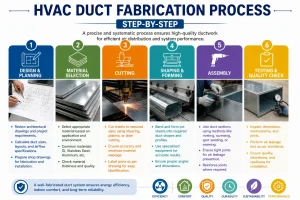
The hvac duct fabrication process step by step requires specialized machinery and expert craftsmanship. Here is how raw metal transforms into a functional air system.
Design & Planning
Engineers start with detailed blueprints and a precise duct sizing calculation. This phase ensures the final product meets the specific airflow requirements of the building.
Sheet Metal Cutting
Technicians use plasma tables or laser cutters to slice flat sheets of metal. Precision cutting is vital to ensure all parts fit together without gaps during the HVAC ducting fabrication process.
Bending & Forming
Operators feed the cut metal through press brakes and rollers. These machines fold the flat pieces into rectangular, round, or spiral shapes according to the design specifications.
Welding / Joining
Fabricators connect the formed pieces using welding, interlocking seams, or specialized flanges. Strong joints are crucial to prevent air leakage and maintain structural integrity.
Sealing & Insulation
Workers apply mastics and sealants to all joints to guarantee an airtight finish. Proper duct insulation is then added to prevent condensation and maintain the temperature of the air inside.
Quality Inspection
Inspectors thoroughly check the finished pieces against strict fabrication standards. They test for dimensional accuracy, seam strength, and overall build quality before approving the ducts for dispatch.
Design Standards & Codes
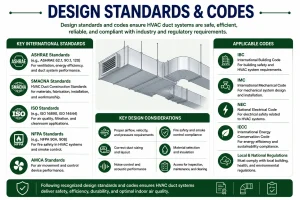
Professional HVAC ducting fabrication must comply with rigorous industry standards. These codes guarantee safety, efficiency, and longevity.
SMACNA Standards
The Sheet Metal and Air Conditioning Contractors’ National Association (SMACNA) sets the global benchmark for duct construction. Their guidelines dictate metal thickness, joint types, and reinforcement requirements. You can learn more about their rigorous guidelines through SMACNA.
ASHRAE Guidelines
The American Society of Heating, Refrigerating and Air-Conditioning Engineers (ASHRAE) provides standards for system design and energy efficiency. Compliance with ASHRAE ensures optimal indoor environmental quality.
Importance of Compliance
Adhering to these design standards prevents system failures and building code violations. Standardized HVAC ducting design standards protect building owners from expensive retrofits and safety hazards.
Industrial vs Commercial Duct Fabrication
While the core principles remain the same, industrial and commercial HVAC ducting fabrication serve entirely different operational demands.
Scale
Industrial duct fabrication involves massive components designed to move enormous volumes of air. Commercial fabrication typically deals with smaller, more standardized sizes suitable for office spaces.
Materials
Industrial environments often require heavy-gauge materials like stainless or mild steel to handle harsh exhausts. Commercial spaces usually rely on lighter galvanized iron duct fabrication.
Applications
Commercial ducts focus on human comfort and standard temperature control. Industrial ducts often handle toxic fumes, extreme heat, heavy particulate matter, and strict humidity controls.
Benefits of Professional Duct Fabrication Services
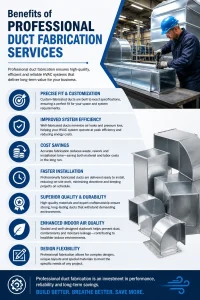
Partnering with an expert fabrication team guarantees a superior final product. Cutting corners on ductwork always leads to expensive long-term problems.
Customization
Professional HVAC ducting fabrication allows for completely tailored solutions. Experts can design custom fittings that perfectly navigate the unique architectural constraints of your building.
Durability
High-quality materials and expert joining techniques result in rugged, long-lasting ductwork. Professionally built systems withstand high air pressures without vibrating or breaking apart.
Energy Efficiency
Precision manufacturing eliminates air leaks at the seams. This airtight construction ensures your climate control system operates at peak energy efficiency, saving money year after year.
Cost Savings
While custom duct fabrication might seem like a higher upfront investment, it prevents costly energy waste. It also drastically reduces the need for constant repairs and early system replacements.
Applications of HVAC Ducting
HVAC ducting fabrication supports a wide variety of sectors. Every industry relies on specialized air handling to maintain safe operations.
Manufacturing Plants
Factories need robust industrial ventilation duct systems to remove harmful fumes and dust. Heavy-duty ducts protect workers and keep machinery from overheating.
Hospitals
Healthcare facilities require strict clean air systems to prevent the spread of airborne diseases. Stainless steel ducts and heavy filtration are mandatory in these environments.
Commercial Buildings
Offices, malls, and hotels rely on extensive air distribution systems for occupant comfort. Quiet, efficient ductwork is essential for a productive commercial environment.
Clean Rooms
Laboratories and electronics manufacturers need environments totally free of contaminants. Specialized HVAC ducting fabrication ensures precise pressure balances to keep impurities out.
Food Processing Units
Food facilities require highly hygienic environments with strict temperature controls. Fabricators use smooth, easily washable materials to prevent mold and bacteria growth in the air system.
Cost of HVAC Duct Fabrication
Understanding the cost of HVAC duct fabrication helps you budget effectively for your construction or renovation project. Several primary factors influence the final price.
Material
The type of metal you choose heavily dictates the price. Standard galvanized iron is highly affordable, while stainless steel and custom alloys cost significantly more.
Size
Larger ductwork requires more raw material and heavier machinery to manipulate. The total linear footage of the system will serve as a baseline for your fabrication costs.
Complexity
Straight rectangular runs are cheap and fast to produce. Complex custom transitions, tight bends, and specialized fittings require more engineering and labor time.
Installation
HVAC duct installation adds a separate layer of cost. Working in confined spaces, high ceilings, or occupied buildings will increase the labor expenses of your project.
Common Challenges & Solutions
Even the best HVAC systems face operational hurdles if the ductwork is compromised. Recognizing these issues early prevents major system failures.
Air Leakage
Gaps in seams or joints allow expensive conditioned air to escape into ceilings or crawlspaces. The solution is applying high-quality sealants and adhering strictly to SMACNA construction standards during fabrication.
Poor Insulation
Uninsulated ducts in unconditioned spaces lose heat or cool air rapidly, causing condensation and rust. Applying the correct duct insulation thickness resolves temperature loss and protects the metal.
Incorrect Sizing
Ducts that are too small create noisy, high-velocity airflow, while oversized ducts fail to push air effectively. Accurate duct sizing calculations during the engineering phase eliminate these pressure imbalances.
How to Choose the Right HVAC Duct Fabrication Company in India
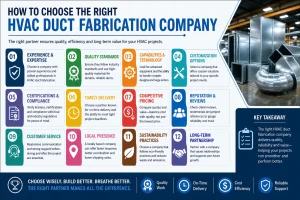
Selecting the right partner for your HVAC ducting fabrication guarantees a smooth, successful project. Look for a team that prioritizes precision and reliability.
Experience
Look for a company with a proven track record in both commercial and industrial projects. Experienced fabricators understand how to navigate complex architectural challenges easily.
Certifications
Ensure your chosen partner follows strict industry standards. A reputable company will happily demonstrate their compliance with SMACNA and ASHRAE guidelines.
Custom Capability
Your project will likely require unique fittings and specialized shapes. Verify that the manufacturer has the modern CNC machinery required for precise custom duct fabrication.
Quality Standards
At National Engineers & Steel Fabricators, we pride ourselves on delivering unmatched quality in every piece of sheet metal we form. We invite you to explore our comprehensive fabrication services to see how we can optimize your facility’s air distribution system.
Future Trends in HVAC Ducting
The HVAC ducting fabrication industry continues to evolve. New technologies are making air distribution smarter and greener than ever before.
Smart HVAC Systems
Modern ducts increasingly integrate with IoT sensors. These smart systems monitor airflow efficiency, pressure loss, and air quality in real-time to automatically adjust system performance.
Energy-Efficient Ducting
Fabricators are developing tighter sealing methods and pre-insulated metal panels. These innovations drastically reduce thermal loss and lower the carbon footprint of large commercial buildings.
Sustainable Materials
The industry is shifting toward recycled metals and eco-friendly insulation products. Sustainable HVAC ducting fabrication helps builders meet strict new environmental certifications and green building codes.
Conclusion
High-quality HVAC ducting fabrication is the backbone of any successful climate control and ventilation system. From selecting the right materials like galvanized or stainless steel to ensuring airtight seams, every step of the ductwork fabrication process matters.
Investing in professional custom duct fabrication guarantees superior airflow efficiency, improved indoor air quality, and massive long-term energy savings. Do not let poorly constructed ductwork compromise your facility’s performance and comfort.
Are you ready to upgrade your building’s air distribution system with precision-engineered ductwork? Contact our expert fabrication team today to discuss your project requirements and receive a custom quote!
Also, Read: Why Choose NESF for Heavy Engineering Projects: A Complete Guide to India’s Premier Fabrication Company
FAQs For HVAC Duct Fabrication
Which material is best for ducting?
Galvanized iron (GI) is the best and most common material for standard commercial ducting. Stainless steel is best for industrial applications requiring chemical or moisture resistance.
How long do HVAC ducts last?
Properly fabricated and maintained sheet metal ducts can last between 15 to 25 years. Their lifespan depends heavily on the operating environment and the quality of the initial installation.
What is the cost of duct fabrication in India?
The cost of duct fabrication in India varies based on the material, gauge thickness, and project complexity. You should contact local HVAC ducting contractors in India for the most accurate, up-to-date project estimates.
Why is duct insulation important?
Duct insulation prevents thermal energy loss as air travels through the system. It also stops condensation from forming on the metal, which prevents rust and water damage.
What causes pressure loss in ducts?
Pressure loss in ducts is caused by friction against the duct walls, sharp bends, and sudden changes in duct size. Proper design and smooth fabrication minimize these airflow disruptions.