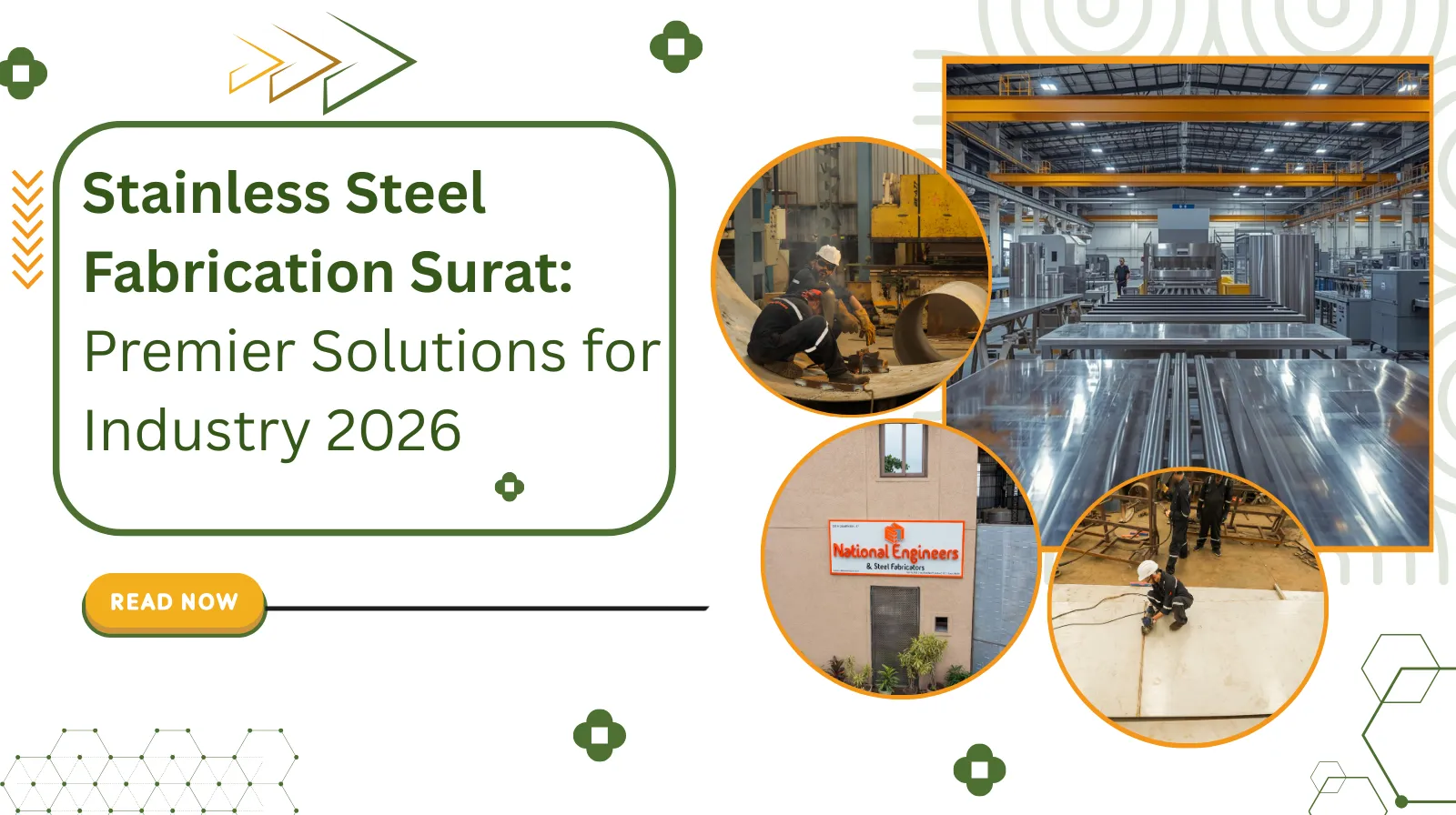
Looking for reliable stainless steel fabrication Surat? We provide high-quality SS fabrication services in Surat for industries that demand strength, precision, and corrosion resistance. From custom components to large-scale industrial structures, our fabrication solutions are designed to meet the highest standards of performance and durability.
As a trusted stainless steel fabrication company in Surat, we specialize in cutting, bending, welding, and assembling stainless steel for applications across food processing, pharmaceuticals, chemical plants, and construction. Our expert team ensures every project is delivered with accuracy, strength, and long-term reliability.
Whether you need stainless steel welding services, structure fabrication, or complete project execution, we serve businesses across Surat including GIDC, Hazira, Sachin, and surrounding industrial areas with fast turnaround and dependable quality.
What is Stainless Steel Fabrication in Surat?
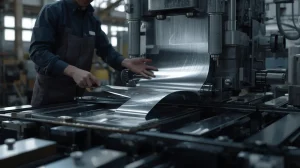
Stainless steel fabrication in Surat refers to the process of cutting, bending, shaping, and assembling stainless steel into finished products, industrial components, and structural systems. It is a highly specialized service used by industries that require durability, hygiene, and corrosion resistance.
In Surat, SS fabrication services are widely used across industrial sectors such as food processing, pharmaceuticals, chemical plants, and construction. Fabricators work with stainless steel sheets, plates, pipes, and tubes to create custom-designed solutions based on specific project requirements.
Unlike standard metal work, stainless steel fabrication requires advanced tools, precision engineering, and expert handling to maintain the material’s strength and corrosion-resistant properties. Professional stainless steel fabrication companies in Surat use modern techniques like laser cutting, CNC bending, and high-quality welding to ensure accuracy and long-lasting performance.
Whether it’s stainless steel welding services, structure fabrication, or custom component manufacturing, the fabrication process plays a critical role in delivering reliable and high-performance industrial solutions.
Key Characteristics of Stainless Steel Fabrication in Surat
The success of any stainless steel fabrication in Surat project depends on several critical factors that ensure strength, durability, and precision. Professional SS fabrication services in Surat follow strict processes to maintain quality standards across different industrial applications. Below are the key characteristics that define high-quality fabrication:
- Precision Engineering: Stainless steel fabrication requires high accuracy to meet exact design specifications. Advanced machinery like CNC cutting and laser technology is used by leading fabrication companies in Surat to ensure every component fits perfectly, especially in industries like pharmaceuticals and food processing.
- Specialized Tooling & Equipment: Unlike regular metal work, stainless steel requires dedicated tools to avoid contamination and maintain its corrosion resistance. Professional workshops use advanced machines designed specifically for stainless steel fabrication services in Surat, ensuring clean cuts and precise shaping.
- Material Integrity & Corrosion Resistance: One of the biggest advantages of stainless steel is its anti-corrosive property. During fabrication, special techniques are applied to protect the chromium oxide layer, ensuring long-term durability in harsh industrial environments such as chemical plants and water treatment systems.
- High-Quality Welding Standards: Welding is a critical part of the fabrication process. Skilled technicians provide stainless steel welding services in Surat using TIG and MIG welding methods to ensure strong, clean, and defect-free joints that maintain structural strength and finish quality.
- Finishing & Surface Treatment: The final stage of fabrication includes polishing, brushing, and passivation to enhance both appearance and performance. High-quality finishing is essential for applications requiring hygiene, such as food-grade equipment and pharmaceutical machinery.
Stainless Steel Fabrication Services in Surat
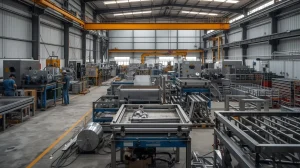
Surat is one of the fastest-growing industrial hubs in India, with increasing demand for high-quality stainless steel fabrication services in Surat across multiple industries. From small custom components to large-scale industrial structures, businesses require reliable fabrication partners who can deliver precision, durability, and timely execution.
As a trusted stainless steel fabrication company in Surat, we offer end-to-end solutions including design, cutting, welding, assembly, and finishing. Our services are tailored to meet the requirements of industries such as food processing, pharmaceuticals, chemical plants, construction, and engineering.
Core Services Offered by Fabricators
Top-tier fabricators provide a spectrum of services, ensuring a single point of contact for all your project needs.
1. Design and Engineering Support
Every project starts with a concept. Our team provides detailed design and engineering support using advanced CAD software to convert ideas into precise fabrication drawings. This ensures accuracy, cost efficiency, and long-term performance for every project.
2. Custom Stainless Steel Fabrication
We specialize in custom stainless steel fabrication in Surat, delivering tailor-made solutions based on your exact requirements. Whether it’s industrial machinery, structural components, or specialized equipment, we ensure high-quality fabrication with precision and durability.
3. Stainless Steel Welding Services
Welding is a critical step in most fabrication projects. Stainless steel welding requires a higher level of skill than welding standard steel. Specialized techniques like TIG (Tungsten Inert Gas) and MIG (Metal Inert Gas) welding are commonly used.
- TIG Welding: This method offers high precision and clean, strong welds, making it ideal for applications where appearance and weld integrity are paramount, such as in food-grade equipment and architectural elements.
- MIG Welding: Faster than TIG, MIG welding is excellent for joining thicker materials and is often used for structural applications where speed and strength are key factors.
Professional stainless steel welding services ensure that joints are free from defects, maintain the material’s corrosion resistance, and are strong enough to withstand the intended operational stresses.
4. Cutting and Forming
The initial stage of fabrication involves cutting and shaping the raw material. Modern workshops in Surat utilize advanced technology for this phase.
- Laser Cutting: Offers unparalleled precision for cutting intricate shapes from stainless steel sheets with clean edges and minimal heat distortion.
- Plasma Cutting: A faster and more cost-effective method for cutting thicker plates of stainless steel.
- Bending and Rolling: Press brakes are used to bend sheets into specific angles, while rollers can form sheets and plates into cylindrical or conical shapes.
5. Assembly and Finishing
Once individual components are formed and welded, they are assembled into the final product. This may involve bolting, riveting, or further welding. The final step is finishing, which enhances both the appearance and performance of the product.
Common finishing techniques include:
- Polishing: Creates a smooth, reflective surface, crucial for hygienic applications.
- Brushing: Produces a uniform, satin-like grain.
- Passivation: A chemical treatment that removes contaminants and enhances the natural corrosion-resistant layer of the stainless steel.
Types of Stainless Steel Fabrication in Surat
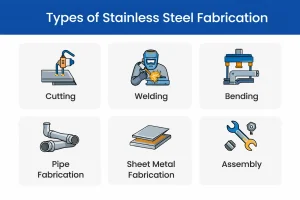
Stainless steel fabrication in Surat can be categorized based on application, complexity, and industrial requirements. Understanding these types helps businesses choose the right SS fabrication services in Surat for their specific needs. Each type plays a critical role in delivering strength, precision, and long-term performance across different industries.
Structural Fabrication
This type of fabrication involves creating strong frameworks and support systems for industrial and infrastructure projects. Stainless steel structure fabrication in Surat is widely used in environments where corrosion resistance and durability are essential, such as chemical plants, coastal areas, and water treatment facilities.
Common applications include:
- Support beams and columns
- Mezzanines and platforms
- Staircases and handrails
- Pipe racks and equipment supports
Sheet Metal Fabrication
This is one of the most commonly used fabrication processes, involving stainless steel sheets (typically up to 6mm thickness). Sheet metal fabrication in Surat is ideal for producing lightweight yet durable components with high precision.
Applications include:
- Electrical enclosures and control panels
- Hoppers, chutes, and conveyors
- Kitchen equipment and countertops
- Ductwork and ventilation systems
Custom Component Manufacturing
Many industries require specialized components tailored to their operations. Custom stainless steel fabrication in Surat focuses on producing precision-engineered parts based on specific design requirements. These components are manufactured with tight tolerances to ensure seamless integration into machinery and systems.
Industries We Serve with Stainless Steel Fabrication Surat
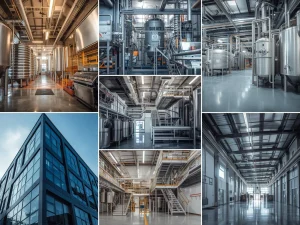
Stainless steel fabrication services in Surat are widely used across multiple industries due to their strength, corrosion resistance, and hygienic properties. As a trusted SS fabrication company in Surat, we provide customized fabrication solutions tailored to the specific needs of different industrial sectors.
Food & Beverage Industry
Stainless steel is essential in food processing due to its hygienic and non-porous surface. Our SS fabrication services in Surat are used for manufacturing tanks, conveyors, pipelines, and food-grade equipment that prevent contamination and ensure safety.
Pharmaceutical & Biotech Industry
In pharmaceutical manufacturing, cleanliness and precision are critical. We provide stainless steel fabrication for reactors, mixing vessels, piping systems, and cleanroom equipment designed to meet strict hygiene and safety standards.
Chemical Processing Industry
Chemical plants require materials that can withstand corrosive substances. Our stainless steel fabrication in Surat ensures durability and safety for storage tanks, pipelines, and processing systems exposed to harsh chemicals.
Construction & Infrastructure
Stainless steel is widely used in modern construction for its strength and aesthetic appeal. We offer fabrication solutions for structural supports, railings, facades, and architectural elements that deliver long-term durability.
Oil & Gas Industry
In demanding environments like oil and gas, stainless steel plays a critical role. Our fabrication services are used for pipelines, pressure vessels, and structural components that operate under extreme conditions.
Water & Wastewater Treatment
Stainless steel is ideal for water treatment plants due to its resistance to corrosion and chemicals. We provide fabrication for tanks, filters, piping systems, and pumps used in water purification and wastewater management.
Key Benefits of Stainless Steel Fabrication in Surat
Businesses choose stainless steel for compelling reasons. The initial investment is often offset by its long-term performance and low maintenance requirements.
1. Superior Corrosion Resistance
This is the most well-known benefit. The chromium content in stainless steel forms a passive, invisible layer of chromium oxide on the surface. This layer self-heals in the presence of oxygen, providing outstanding protection against rust and corrosion from moisture, chemicals, and environmental factors.
2. Exceptional Strength and Durability
Stainless steel offers an excellent strength-to-weight ratio. It can withstand significant physical impacts and high pressures. Different grades can be selected for their hardness, tensile strength, and performance at extreme temperatures, both high and low.
3. Hygienic and Easy to Clean
The smooth, non-porous surface of stainless steel makes it difficult for bacteria and other microorganisms to adhere and grow. It can be easily cleaned and sanitized without degrading, which is why it is mandated in food, medical, and pharmaceutical applications.
4. Aesthetic Appeal
With finishes ranging from a bright mirror polish to a subtle brushed texture, stainless steel provides a clean, modern, and professional look. This aesthetic quality makes it a popular choice for architectural features, commercial kitchens, and consumer products.
5. Long-Term Value
While the upfront cost of stainless steel may be higher than other metals, its longevity and low maintenance needs result in a lower total cost of ownership. Products fabricated from stainless steel rarely need replacement due to rust or degradation, providing decades of reliable service.
Stainless Steel Fabrication Process in Surat (Step-by-Step)
The stainless steel fabrication process in Surat involves multiple stages to ensure precision, strength, and quality output. Professional fabrication companies follow a structured approach:
- Step 1: Consultation and Design: The project begins with a detailed discussion to understand the client’s needs, application, and specifications. Engineers use this information to create or refine drawings using CAD software.
- Step 2: Material Sourcing: The appropriate grade and form of stainless steel (sheet, plate, bar, etc.) are selected based on the project’s requirements for corrosion resistance, strength, and temperature tolerance.
- Step 3: Cutting: The raw material is cut to the required shapes and sizes. Precision methods like laser cutting, plasma cutting, or waterjet cutting are used to ensure accuracy.
- Step 4: Forming and Bending: The cut pieces are shaped using machinery like press brakes (for bends) or rollers (for curves). This stage requires skilled operators to achieve the correct angles and radii without damaging the material.
- Step 5: Welding and Joining: The formed parts are assembled. Expert welders join the pieces using techniques like TIG or MIG welding, ensuring the joints are strong, clean, and maintain the material’s properties.
- Step 6: Finishing and Surface Treatment: After assembly, the product undergoes finishing. This may include grinding welds smooth, polishing the surface to a specific grit, or applying a chemical passivation treatment to enhance corrosion resistance.
- Step 7: Quality Inspection: The finished product is rigorously inspected to ensure it meets all dimensional tolerances, weld quality standards, and finishing specifications.
- Step 8: Packaging and Delivery: The final product is carefully packaged to protect its finish during transit and delivered to the client’s site.
Stainless steel fabrication services in Surat are essential for industries that require precision engineering, corrosion resistance, and long-lasting performance.
Leading fabrication companies in Surat use advanced technology and skilled expertise to deliver customized industrial solutions across multiple sectors.
Why Choose a Professional Stainless Steel Fabrication Company in Surat?
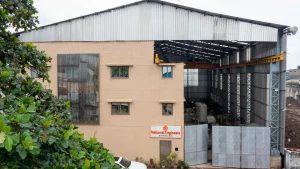
Choosing the right stainless steel fabrication company in Surat is essential for ensuring quality, durability, and long-term performance. Professional SS fabrication services in Surat offer advanced technology, skilled expertise, and reliable project execution that general workshops cannot match.
Quick Answer: Why choose a professional stainless steel fabrication company in Surat?
A professional stainless steel fabrication company in Surat ensures precision, high-quality welding, advanced machinery, timely delivery, and long-lasting performance for industrial applications.
Expertise and Experience
Experienced fabricators understand different grades of stainless steel and how they behave during cutting, welding, and forming. This prevents issues like distortion, contamination, and corrosion damage, ensuring high-quality results.
Advanced Machinery & Technology
Specialized shops invest in state-of-the-art equipment designed specifically for stainless steel. This includes high-precision laser cutters, dedicated press brakes, and advanced welding machines. Using the right tools ensures cleaner cuts, more accurate bends, and higher-quality welds.
High-Quality Welding Standards
Expert teams provide stainless steel welding services in Surat using TIG and MIG welding techniques, ensuring strong, clean, and durable joints for industrial applications.
Strict Quality Control & Compliance
Reputable companies follow strict quality checks at every stage of fabrication to ensure compliance with industry standards and client specifications.
Timely Project Delivery
With streamlined processes and experienced teams, fabrication companies ensure projects are completed on time without compromising quality.
Cost-Effective & Long-Term Value
While professional services may seem costly initially, they reduce long-term maintenance, prevent rework, and deliver durable solutions that save money over time.
Leading stainless steel fabrication companies in Surat provide end-to-end solutions including design, cutting, welding, and finishing. Their expertise ensures reliable performance across industries such as construction, pharmaceuticals, and chemical processing.
Looking for a trusted stainless steel fabrication company in Surat? Get in touch with our team today for high-quality fabrication services, competitive pricing, and fast project execution.
Conclusion: Trusted Stainless Steel Fabrication Services in Surat
Stainless steel fabrication in Surat plays a crucial role in delivering durable, high-performance solutions across industries such as construction, pharmaceuticals, chemical processing, and food manufacturing. With its corrosion resistance, strength, and long-term reliability, stainless steel remains the preferred choice for industrial applications.
Choosing the right stainless steel fabrication company in Surat ensures precision engineering, high-quality welding, and efficient project execution. From custom fabrication to large-scale industrial projects, professional SS fabrication services in Surat help businesses achieve better performance, safety, and cost efficiency.
Stainless steel fabrication in Surat provides durable, corrosion-resistant, and customized industrial solutions using advanced technology and expert engineering.
Frequently Asked Questions
How do I choose the right stainless steel fabrication company in Surat?
Look for a company with proven experience in your industry. Ask to see examples of their previous work and check for client testimonials. A reputable company should have a well-equipped facility, skilled technicians, and a strong quality control process. They should also be willing to provide design and engineering support.
What information do I need to provide to get a quote for custom stainless steel fabrication?
To receive an accurate quote, you should provide detailed drawings or blueprints (if available), dimensions, the desired grade of stainless steel, the required finish, and the quantity of items you need. Also, describe the application and operating environment, as this helps the fabricator recommend the best materials and processes.
What are the most common grades of stainless steel used in industrial fabrication?
Grade 304 is the most versatile and widely used stainless steel due to its excellent corrosion resistance and formability. For environments with high exposure to chlorides (like coastal areas or chemical plants), Grade 316 is often preferred because its added molybdenum content provides superior corrosion resistance.
How long does a typical stainless steel fabrication project take?
The timeline for a project depends heavily on its complexity, size, and the fabricator’s current workload. A simple, one-off component might be completed in a few days, while a large structural project or a high-volume production run could take several weeks or months. It is best to discuss your timeline with the fabrication company during the initial consultation.
Are SS fabrication services in Surat suitable for the food processing industry?
Absolutely. Professional SS fabrication services are essential for the food processing industry. Fabricators specializing in this area understand the strict hygienic standards required. They use specific grades of stainless steel (like 304 and 316) and employ sanitary welding and polishing techniques to create smooth, easy-to-clean surfaces that prevent bacterial contamination.