Blog

  • Why Choose NESF for Heavy Engineering Projects: A Complete Guide to India’s Premier Fabrication Company

    Why Choose NESF for Heavy Engineering Projects: A Complete Guide to India’s Premier Fabrication Company

    Industrial projects demand precision, strength, and unwavering reliability. When building pressure vessels, massive storage tanks, or intricate process equipment, a single structural flaw can lead to catastrophic failures. Plant managers and procurement officers face a constant challenge: finding a manufacturing partner that balances strict quality control with cost-effective, timely delivery. Enter National Engineers & Steel Fabricators (NESF). As a leading heavy engineering fabrication company in India, NESF bridges the gap between complex engineering requirements and flawless execution. We understand the high stakes involved in industrial manufacturing. Our team delivers turnkey fabrication solutions in India that meet global standards.

    Whether you need an ASME certified pressure vessel manufacturer or comprehensive industrial project fabrication services, NESF brings unmatched expertise to the table. In this detailed guide, we will explore exactly what heavy engineering fabrication entails, how NESF stands apart from the competition, and why we remain the top choice for custom steel fabrication services across various heavy industries.

    What is Heavy Engineering Fabrication?
    Heavy Engineering Fabrication

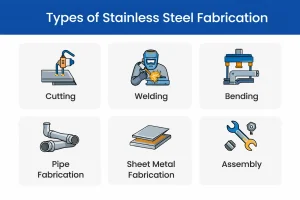
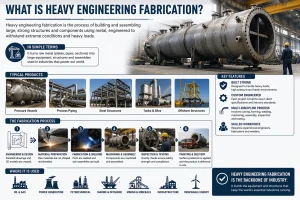
    Heavy engineering fabrication refers to the process of designing, cutting, bending, and assembling large-scale steel structures and industrial equipment. Unlike standard metalworking, this specialized field involves massive components that require advanced machinery, strict metallurgical controls, and highly skilled engineering fabrication experts.

    Core Definition and Process

    At its core, industrial fabrication services simply mean turning raw metal—like carbon steel, stainless steel, or specialized alloys—into massive, functional equipment. The process begins with intricate computer-aided design (CAD). Engineers calculate load-bearing capacities, pressure tolerances, and environmental stresses. Next, heavy-duty machinery cuts and shapes thick metal plates. Finally, certified welders assemble the components under rigorous quality control standards.

    Industries Relying on Heavy Fabrication

    Virtually every critical sector of the economy relies on heavy fabrication. Oil refineries need massive distillation columns. Chemical plants require corrosion-resistant reactors. Power generation facilities depend on robust boilers and heat exchangers. Without a reliable heavy fabrication company in India, these core industries would grind to a halt.

    The Importance of Infrastructure Development

    Heavy engineering project solutions form the backbone of national infrastructure. The equipment produced by an industrial equipment manufacturer in India directly supports the expansion of energy grids, transportation networks, and manufacturing hubs. High-quality fabrication ensures that infrastructure remains safe, operational, and capable of withstanding extreme operational stresses for decades.

    About NESF (National Engineers & Steel Fabricators)
    premier heavy engineering company in India

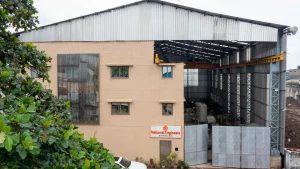
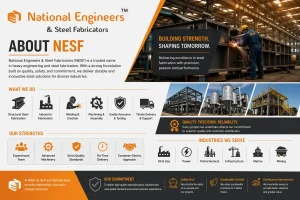
    National Engineers & Steel Fabricators (NESF) has established itself as a premier heavy engineering company in India. We built our reputation on a foundation of technical excellence, transparent business practices, and an unwavering commitment to quality.

    Company Overview

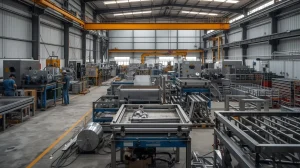
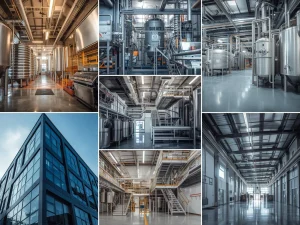
    NESF operates state-of-the-art manufacturing facilities equipped to handle massive industrial projects. Over the years, we have grown from a localized steel fabrication shop into a comprehensive industrial fabrication company in India. We manage everything from raw material procurement to final site erection, providing true end-to-end solutions.

    Core Expertise

    Our core expertise lies in manufacturing complex equipment that requires strict regulatory compliance. We are widely recognized as a top-tier process equipment manufacturer in India. Our engineers excel in designing and building components that operate under extreme pressure and temperature conditions. We specialize in both carbon steel and stainless steel fabrication, ensuring the right material match for your specific operational environment.

    Industry Presence and Credibility

    NESF holds a dominant presence across the Indian industrial landscape. We regularly partner with major domestic and international corporations, delivering projects that exceed global engineering standards. Our credibility as steel fabrication specialists in India stems from our flawless safety record, our adherence to international codes (like ASME and API), and our history of delivering complex projects on schedule.

    Why Choose NESF for Heavy Engineering Projects
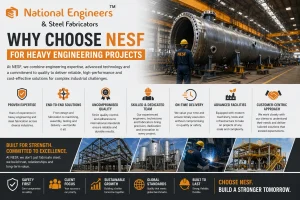
    best fabrication company in India

    When evaluating potential manufacturing partners, procurement teams frequently ask: Why choose NESF? The answer lies in our holistic approach to manufacturing. Here is a detailed breakdown of the advantages that make us the best fabrication company in India.

    Advanced Manufacturing Capabilities

    Modern fabrication requires modern technology. NESF heavily invests in advanced manufacturing infrastructure. Our facilities feature CNC plasma cutting machines, heavy-duty plate rolling equipment, and automated submerged arc welding systems. This technology allows us to handle exceptionally thick metal plates and complex geometries with pinpoint accuracy. Our advanced setup ensures that every cut and weld perfectly matches the original engineering drawings.

    Skilled Engineering Team

    Technology is only as effective as the people operating it. NESF employs a highly skilled team of mechanical engineers, metallurgists, and certified welders. Our engineering fabrication experts bring decades of hands-on experience to every project. We understand the intricate thermal dynamics of welding and the structural behavior of various steel grades. This deep knowledge base allows us to anticipate potential manufacturing challenges and solve them before they impact the project timeline.

    Custom Fabrication Solutions

    No two industrial facilities are identical. Therefore, off-the-shelf equipment rarely delivers optimal performance. We excel at providing custom steel fabrication services tailored to your exact facility layout and operational requirements. Whether you need a uniquely shaped storage tank to fit a tight spatial constraint or a specialized heat exchanger for a proprietary chemical process, our team designs custom fabrication for industries that perfectly aligns with your operational goals.

    Quality Assurance & Certifications

    In heavy engineering, quality control is a matter of absolute safety. NESF operates under a stringent Quality Management System (QMS). We are proud to be an ASME certified pressure vessel manufacturer. Our quality assurance protocols include extensive Non-Destructive Testing (NDT), such as radiographic testing, ultrasonic testing, and magnetic particle inspection. We verify the integrity of every single weld, ensuring your equipment operates safely under maximum stress.

    Use of High-Grade Materials

    The durability of industrial equipment starts with the raw materials. We source all our metals from globally recognized, highly vetted steel mills. As a premier stainless steel fabrication company, we strictly control material traceability. Every plate, pipe, and fitting comes with corresponding mill test certificates. We carefully match the metallurgy to your project’s specific chemical and thermal environment, preventing premature corrosion and material fatigue.

    On-Time Project Delivery

    Delays in equipment delivery cause massive financial losses for industrial plants. NESF understands the critical importance of project schedules. We employ advanced project management software to track every phase of fabrication, from material procurement to final inspection. Our streamlined internal processes and vast manufacturing capacity allow us to guarantee on-time delivery, ensuring your plant upgrades or construction projects remain firmly on schedule.

    Competitive Pricing

    While we never compromise on quality, we remain highly competitive in our pricing structure. Because we offer turnkey fabrication solutions in India, we eliminate the need for multiple subcontractors. This consolidated approach reduces overhead costs and logistical expenses. We pass these savings directly to our clients, providing world-class heavy engineering project solutions at a highly favorable price point.

    Safety Standards

    Industrial fabrication involves inherent risks. We maintain an uncompromising approach to workplace safety. Our facilities comply with stringent occupational health and safety regulations. This commitment to safety protects our workforce and ensures that your project is never delayed by preventable workplace accidents. We also strictly adhere to safety protocols during field installation, making our fabrication and erection services in India entirely risk-free for our clients.

    End-to-End Solutions

    Managing multiple vendors for a single project creates logistical nightmares. NESF simplifies procurement by offering comprehensive, end-to-end solutions. We handle detailed engineering design, material procurement, heavy fabrication, rigorous testing, logistics, and final site erection. This single-point-of-contact approach drastically reduces administrative burdens on your project management team.

    Strong Client Portfolio

    Trust is earned through consistent performance. Over the years, NESF has built a robust portfolio of successful projects for industry-leading clients. Our track record includes everything from massive petrochemical storage terminals to intricate pharmaceutical processing skids. This extensive portfolio serves as verifiable proof of our capabilities as a top-tier industrial equipment manufacturer in India.

    Industries Served by NESF
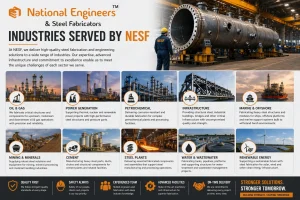
    Heavy engineering solutions

    Heavy engineering solutions must adapt to the unique regulatory and operational demands of different sectors. NESF provides targeted manufacturing expertise across a wide range of core industries.

    Oil & Gas

    The oil and gas sector demands equipment capable of withstanding extreme pressures, highly corrosive environments, and volatile substances. We manufacture heavy-duty separators, fractionating columns, and large-scale piping spools that meet strict API standards, ensuring safe and efficient hydrocarbon processing.

    Chemical Processing

    Chemical plants handle highly reactive and toxic substances. We act as a specialized industrial tank manufacturer in India, utilizing exotic alloys and high-grade stainless steel to build reactors and storage vessels that resist severe chemical corrosion.

    Pharmaceutical

    Hygiene and purity are paramount in pharmaceutical manufacturing. We deliver highly polished, crevice-free process equipment that complies with strict FDA and cGMP guidelines, preventing cross-contamination in critical drug manufacturing processes.

    Food Processing

    Similar to the pharmaceutical sector, the food and beverage industry requires sanitary fabrication. We design and build food-grade stainless steel vats, mixing tanks, and conveying systems that allow for rigorous clean-in-place (CIP) sterilization.

    Power Plants

    Power generation, whether thermal, nuclear, or renewable, relies on massive infrastructure. NESF fabricates heavy structural supports, high-pressure boiler components, and massive cooling water pipelines essential for uninterrupted power generation.

    Infrastructure

    Beyond process plants, we support broad civil infrastructure projects. We provide heavy structural steel fabrication for bridges, airport terminals, and heavy transit systems, ensuring structural stability for public works.

    NESF Products & Services
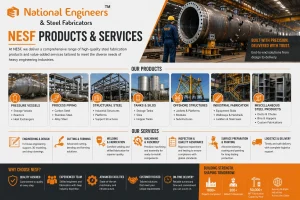
    industrial tank manufacturer in India

    Our manufacturing catalog covers the full spectrum of heavy industrial needs. We combine advanced design with robust manufacturing to deliver superior equipment.

    Pressure Vessels

    Operating as an elite pressure vessel manufacturer in India, we design and build vessels that safely contain liquids and gases at extreme pressures. We manufacture these critical components strictly according to ASME Boiler and Pressure Vessel Code (BPVC) standards.

    Storage Tanks

    We are a leading industrial tank manufacturer in India, fabricating everything from vertical chemical storage tanks to massive underground petroleum reservoirs. We handle site-built tanks and shop-fabricated units, ensuring leak-proof containment.

    Skid Fabrication

    Modular construction saves time and reduces field installation risks. We specialize in process skid fabrication, mounting pumps, heat exchangers, instrumentation, and piping onto a single, movable steel frame for easy integration into your plant.

    Process Equipment

    As a comprehensive process equipment manufacturer in India, we build complex items like heat exchangers, distillation columns, and industrial reactors. We optimize the thermal and fluid dynamics of every piece of equipment we fabricate.

    Custom Fabrication

    If you can engineer it, we can build it. Our custom steel fabrication services cover unique architectural structures, specialized material handling equipment, and proprietary manufacturing machinery that standard catalogs cannot provide.

    NESF vs Other Fabrication Companies
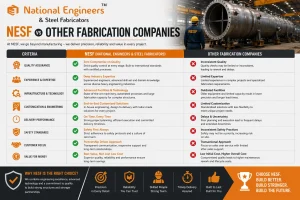
    steel fabrication specialists in India

    How does NESF compare to the broader market? This table outlines the distinct advantages of partnering with our team.

    Feature NESF Advantage Standard Fabrication Companies
    Quality Control ASME-certified, comprehensive in-house NDT Basic visual inspections, outsourced NDT
    Pricing Highly competitive due to turnkey capabilities High markups due to multiple subcontractors
    Delivery Guaranteed on-time, tracked via advanced software Frequent delays, poor supply chain management
    Customization 100% bespoke engineering and manufacturing Limited to standard templates and sizes
    Certifications ASME, ISO, API compliant Often lack international regulatory certifications

    Benefits of Choosing NESF

    Partnering with NESF yields immediate and long-term advantages for your operational goals. Here are the core benefits of choosing NESF.

    Long-Term Reliability

    We build equipment designed to last decades, not just years. By utilizing superior materials and flawless welding techniques, we drastically reduce your future maintenance requirements and prevent costly unplanned downtimes.

    Cost Efficiency

    Our streamlined manufacturing processes minimize material waste and labor inefficiencies. Furthermore, the exceptional durability of our products lowers your total cost of ownership over the equipment’s lifespan.

    Unmatched Performance

    NESF equipment operates precisely as engineered. Whether optimizing heat transfer in an exchanger or maintaining precise pressures in a vessel, our fabrication ensures your industrial processes run at peak efficiency.

    Scalability

    As your facility grows, NESF scales with you. We have the manufacturing capacity to handle small component upgrades as easily as we manage massive, multi-million dollar plant expansions.

    Also, Read: What Is Pig Launcher?

    How to Choose the Right Fabrication Company

    Selecting an industrial partner is a high-stakes decision. If you are wondering how to choose a fabrication partner, evaluate candidates based on these critical metrics.

    Key Factors to Consider

    Look closely at the company’s financial stability, safety record, and facility capacity. A true heavy fabrication company in India must possess the physical floor space and crane capacity to move massive steel structures safely.

    Certifications Matter

    Never compromise on regulatory compliance. Insist on working with an ASME certified pressure vessel manufacturer. Certifications prove that the company undergoes rigorous, independent audits of its quality control processes.

    Relevant Experience

    Fabricating a structural steel beam is vastly different from building a high-pressure chemical reactor. Ensure the company has specific, verifiable experience in your exact industry. Ask for case studies related to your specific equipment needs.

    Full-Scale Capabilities

    Look for a partner offering turnkey fabrication solutions in India. A company that handles design, material sourcing, manufacturing, testing, and erection provides far better quality control than one that outsources critical steps.

    Conclusion

    Heavy engineering projects leave no room for error. The structural integrity of your equipment directly impacts the safety of your workforce and the profitability of your entire operation. By choosing NESF, you are partnering with a heavy engineering fabrication company in India that refuses to compromise on quality, safety, or precision.

    From custom process equipment to massive pressure vessels, our turnkey solutions ensure your project is completed on time, within budget, and to the highest international standards. Do not leave your next major industrial project to chance. Contact NESF today to discuss your engineering requirements and discover how our fabrication experts can bring your blueprints to life with unmatched reliability.

    Also, Read: Air Receiver Tank Manufacturers

    FAQs

    We serve a wide array of heavy industries, including oil and gas, chemical processing, pharmaceuticals, food and beverage, power generation, and large-scale civil infrastructure projects.

    Yes. We specialize in custom steel fabrication services. Our engineering team designs and manufactures bespoke equipment tailored specifically to your facility’s unique operational, spatial, and regulatory requirements.

    NESF maintains stringent quality management systems and holds vital industry certifications. Most notably, we are a fully ASME certified pressure vessel manufacturer, ensuring our pressure-retaining equipment meets the highest global safety standards.

    When selecting a fabrication partner, evaluate their industry-specific experience, their quality control certifications (like ASME or ISO), their facility capacity, and their ability to provide comprehensive end-to-end solutions from design to final erection.

    Heavy engineering fabrication is the specialized process of cutting, bending, welding, and assembling large-scale, high-thickness metal components to create critical industrial equipment like pressure vessels, storage tanks, and structural frameworks.
  • Types of Pressure Vessels: Classification, Design & Testing Guide

    Types of Pressure Vessels: Classification, Design & Testing Guide

    Industrial facilities rely heavily on highly engineered equipment to store, transfer, and process liquids and gases under extreme conditions. Understanding the types of pressure vessels is critical for mechanical engineers, facility managers, and safety inspectors, as each type is designed for specific operational demands and safety standards. These robust containers hold materials at pressures significantly different from the ambient atmosphere, making them essential components in power generation, chemical processing, and petroleum refining.

    If you are looking to design, procure, or inspect these massive industrial containers, knowing the right types of pressure vessels for your specific application is paramount. This comprehensive guide covers everything from basic definitions and geometric classifications to rigorous testing standards and industrial applications.

    What is a Pressure Vessel?

    Pressure Vessel

    To grasp the complexity of industrial storage and processing, we must first answer a fundamental question: what is a pressure vessel? In mechanical engineering, the strict pressure vessel definition refers to a closed container designed to hold gases or liquids at a pressure substantially different from the ambient pressure. This pressure difference can be internal or external, though internal pressure is far more common in standard industrial applications.

    Because the contents are held under high pressure, the structural integrity of the vessel is a matter of absolute safety. A sudden release of pressurized gas or liquid can lead to catastrophic failures, equipment damage, and severe safety hazards for plant personnel. Therefore, these containers are not simple tanks; they are highly engineered structures built to withstand immense stress, thermal expansion, and potential corrosion.

    Every types of pressure vessels operates on the fundamental principle of pressure containment, regardless of its design or industrial application. This core principle ensures that the vessel can safely hold fluids under varying pressure conditions.

    In all types of pressure vessels, the walls must be sufficiently thick and constructed from high-strength materials to withstand the hoop and longitudinal stresses generated by internal pressure. The material selection and wall thickness play a critical role in maintaining structural integrity.

    Engineers meticulously calculate these stresses by considering key parameters such as maximum allowable working pressure (MAWP) and operating temperatures. These calculations ensure safety, durability, and reliable performance across different types of pressure vessels.

    Whether they are storing liquid nitrogen, compressed air, or volatile petrochemicals, these vessels function as the secure structural boundaries that keep industrial processes moving safely and efficiently.

    Classification of Pressure Vessels

    Classification of Pressure Vessels

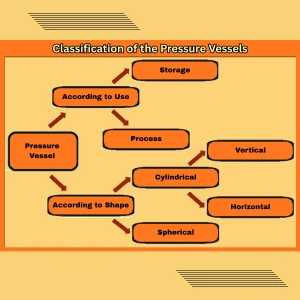
    The classification of pressure vessels is a complex process that categorizes these containers based on several distinct engineering parameters. Engineers classify them to ensure that the correct vessel is matched with the appropriate operational environment.

    Firstly, they are classified by their end-use. Storage vessels simply hold fluids under pressure until they are needed, while process vessels act as chambers where chemical reactions, mixing, or physical changes occur (such as distillation columns or heat exchangers).

    Secondly, classification relies on the operating temperature and pressure. High-pressure vessels require entirely different manufacturing techniques, such as heavy-wall forging, compared to low-pressure vessels which might use standard rolled and welded plates. We also classify them by geometry—whether they are spherical, cylindrical, or conical.

    Finally, they can be classified by their wall thickness ratio, which is an important factor in pressure vessel design and performance analysis. This classification helps in understanding how different vessels behave under internal pressure conditions in industrial applications.

    Thin-walled vessels have a wall thickness that is less than one-tenth of their internal radius, making them suitable for low to moderate pressure systems. On the other hand, thick-walled vessels exceed this ratio and are specifically designed to handle high-pressure environments.

    Thick-walled vessels undergo complex three-dimensional stress distributions, which require advanced engineering methods such as finite element analysis (FEA) during the design phase. Understanding this broad classification of pressure vessels helps operators, engineers, and manufacturers make better decisions in industrial equipment fabrication and safety compliance.

    Types of Pressure Vessels

    Types of Pressure Vessels

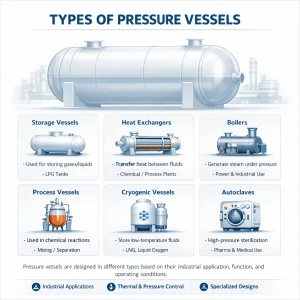
    When exploring the various types of pressure vessels, it becomes clear that geometry dictates functionality. Engineers select specific shapes based on stress distribution, manufacturing costs, and available plant space. Here is a detailed look at the different types of pressure vessels with examples, highlighting how their design impacts their real-world usage. Understanding pressure vessel types and applications is essential for optimizing plant layout and processing efficiency.

    Cylindrical Pressure Vessel

    The cylindrical pressure vessel is arguably the most common shape found in industrial facilities. Cylinders offer an excellent compromise between manufacturing cost and structural strength. While they do not distribute stress as perfectly as spheres, they are much easier and cheaper to fabricate. They consist of a cylindrical shell capped by two heads (often ellipsoidal or hemispherical).

    • Examples: Air compressor tanks, industrial boilers, and standard LPG storage cylinders. Their uniform shape allows for easy transportation and installation within standard industrial pipework systems.

    Spherical Pressure Vessel

    A spherical pressure vessel is the ideal geometric shape for containing internal pressure. Because a sphere distributes stress uniformly across its entire surface area, it can withstand higher pressures with thinner walls compared to a cylinder of the same volume. However, they are complex and expensive to manufacture, requiring precise pressing and welding of multiple steel “petals.”

    • Examples: Large-scale storage of liquefied natural gas (LNG), butane, and propane at petrochemical plants. You will often see these massive spheres dominating the skyline of chemical refineries.

    Horizontal Pressure Vessel

    A horizontal pressure vessel is a cylindrical vessel oriented parallel to the ground, usually supported by two structural saddles. This orientation is chosen when floor space is abundant, but vertical clearance is limited. They are highly accessible for maintenance, inspection, and cleaning.

    • Examples: Heat exchangers, large liquid storage tanks, and settling tanks where operators need to drain heavy sediments from the bottom safely.

    Vertical Pressure Vessel

    Conversely, a vertical pressure vessel is a cylinder oriented perpendicular to the ground, supported by a bottom skirt, legs, or lugs. This design is crucial when a facility has a limited footprint but ample vertical space. Vertical orientation also aids in processes that rely on gravity, such as fractional distillation or phase separation.

    • Examples: Distillation columns in refineries, gas scrubbers, and vertical separators.

    Reactor Pressure Vessels

    Reactor pressure vessels are specialized, heavy-duty containers where vital chemical or nuclear reactions occur. These are not merely for storage; they must handle extreme pressure, aggressive corrosion, and intense heat simultaneously. In nuclear power plants, these vessels contain the nuclear reactor coolant and core, demanding the highest level of metallurgical integrity and safety testing in the world.

    Design of Pressure Vessels (ASME Section VIII + Standards)

    Design of Pressure Vessels

    The design of pressure vessels is a highly regulated field, as it directly impacts industrial safety and operational reliability. Strict engineering standards are followed to prevent failures that could lead to serious hazards or accidents.

    These vessels operate under high pressure conditions, making accurate design calculations and compliance essential. Even minor design errors can result in catastrophic consequences in industrial environments.

    To ensure safety, internationally recognized codes and standards are followed during the design and manufacturing process. These regulations define the best practices for building and operating pressure vessels.

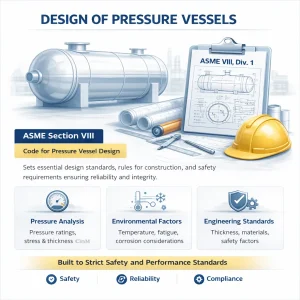
    The most widely accepted standard is the ASME Section VIII pressure vessel code, developed by the American Society of Mechanical Engineers. It is considered the global benchmark for pressure vessel design and compliance.

    This code provides detailed guidelines covering design, material selection, fabrication, inspection, testing, and certification. It applies to vessels operating under internal or external pressures exceeding 15 psig, ensuring safety, durability, and regulatory compliance.

    Pressure vessel design standards like ASME Section VIII dictate every aspect of the vessel’s lifecycle. During the design phase, engineers must calculate the minimum required wall thickness using specific formulas that account for the maximum allowable working pressure, the geometry of the vessel, the strength of the chosen material, and the efficiency of the welded joints.

    Division 1 of ASME Section VIII covers standard vessels and relies heavily on classical design-by-rule approaches. Division 2 provides alternative rules, allowing for higher stress values by utilizing more rigorous design-by-analysis methods, often incorporating finite element analysis (FEA).

    Division 3 is reserved for ultra-high-pressure vessels, typically operating above 10,000 psi. Adhering to these standards ensures that the chosen types of pressure vessels will not yield, fatigue, or fracture under its intended operational loads.

    Materials Used in Pressure Vessels

    Materials Used in Pressure Vessels

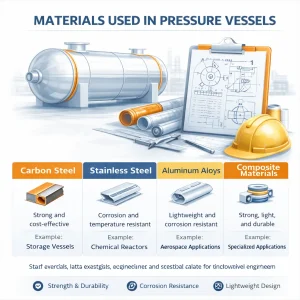
    Selecting the correct material is just as critical as the geometric design. The material must offer high tensile strength, excellent toughness, and resistance to whatever specific fluid or gas it will contain.

    Carbon steel is widely used for standard pressure vessel applications due to its cost-effectiveness, high tensile strength, and ease of fabrication. It is a preferred choice in industries where operating conditions are moderate and corrosion risks are minimal.

    Its mechanical strength and availability make it suitable for a wide range of industrial processes, including storage, processing, and transportation of fluids under pressure. This makes carbon steel one of the most commonly used materials in pressure vessel manufacturing.

    However, when applications involve highly corrosive chemicals, cryogenic temperatures, or strict hygiene standards, material selection becomes more critical. In such cases, stainless steel pressure vessels are the preferred option.

    Stainless steel alloys, especially grades 304 and 316, offer excellent corrosion resistance due to the formation of a passive oxide layer. This protective layer prevents rusting and chemical degradation, making these materials ideal for food processing, pharmaceutical, and chemical industries.

    For extreme environments, such as high-temperature or highly aggressive chemical conditions, engineers use advanced materials like Hastelloy, Inconel, or Titanium. These alloys provide superior resistance to heat, pressure, and chemical attack.

    In addition to solid materials, engineers often use composite constructions or carbon steel vessels with internal cladding. This involves adding a thin layer of corrosion-resistant alloy inside a carbon steel shell.

    This cladding approach combines the structural strength of carbon steel with the corrosion resistance of advanced alloys, resulting in a cost-effective, durable, and high-performance pressure vessel solution.

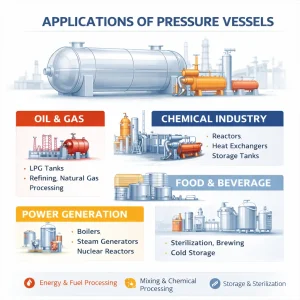
    Applications of Pressure Vessels (Industry-wise)

    Applications of Pressure Vessels

    The diverse pressure vessels applications span nearly every major industrial sector. Without these containers, modern manufacturing and energy production would simply not exist.

    One of the most prominent users is the energy sector. Pressure vessels in oil and gas industry operations are used continuously. They function as phase separators (separating crude oil, gas, and water), distillation columns, and hydrocrackers. Refineries operate at extreme temperatures and pressures, requiring incredibly robust vessels to process raw hydrocarbons into usable fuels safely.

    In the chemical and petrochemical industries, vessels are used to store volatile reactants and house intense chemical reactions. The pharmaceutical and food and beverage industries rely on sanitary pressure vessels for mixing, fermenting, and storing products under sterile, pressurized conditions to prevent contamination.

    Even in aerospace and marine applications, specialized lightweight pressure vessels are used to store hydraulic fluids, breathing oxygen, and propulsion gases. Every types of pressure vessels plays a targeted role in these diverse applications.

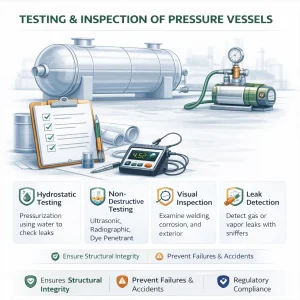
    Testing and Inspection of Pressure Vessels

    Testing and Inspection of Pressure Vessels

    Because of the inherent risks associated with high pressure, the testing of pressure vessels is a mandatory and rigorously documented process. Proper pressure vessel inspection ensures that the equipment has been manufactured to standard and remains safe throughout its operational lifespan.

    Regular pressure vessel inspection also helps in identifying early signs of corrosion, fatigue, or material degradation, preventing unexpected failures. In addition, detailed inspection records and compliance checks are essential for meeting regulatory requirements and maintaining operational reliability in critical industrial environments.

    Hydrostatic Testing

    The most critical baseline test is hydrostatic testing pressure vessels. Before a vessel is commissioned, it is completely filled with a liquid (usually water), bled of all air, and then pressurized to a level significantly higher than its designed operating pressure (typically 1.3 to 1.5 times the MAWP).

    Inspectors then carefully examine the vessel for leaks, visible deformation, or pressure drops on the gauges. Because liquids are nearly incompressible, a failure during a hydro test results in a safe, localized leak rather than a violent explosion.

    Safety Checks and Non-Destructive Testing (NDT)

    Beyond hydrostatic tests, regular safety checks involve various Non-Destructive Testing (NDT) methods. Radiographic testing (X-ray) and ultrasonic testing are used to inspect the internal structure of weld seams, looking for hidden voids or cracks. Magnetic particle inspection and dye penetrant testing are employed to locate surface-level microscopic flaws.

    Regular in-service inspections are vital to monitor corrosion rates and metal fatigue, ensuring the vessel is retired or repaired before it becomes a hazard. These advanced testing techniques enhance the overall reliability of the equipment and reduce the risk of unexpected failures. Consistent monitoring also supports compliance with industry safety standards and extends the service life of pressure vessels.

    Advantages of Pressure Vessels

    Investing in the right types of pressure vessels brings numerous operational advantages to industrial facilities. First and foremost is safety. A properly designed and code-stamped vessel contains hazardous, toxic, or highly flammable materials securely, protecting both the workforce and the environment from exposure.

    Secondly, they enable process efficiency. Many chemical reactions and physical separations can only occur under elevated pressures and temperatures. By utilizing these vessels, plants can optimize their yields and process speeds.

    Furthermore, modern pressure vessels are incredibly durable. When constructed from high-quality materials like stainless steel and maintained through proper inspection protocols, they offer decades of reliable service, ensuring an excellent return on capital investment for industrial operators.

    Pressure Vessel Manufacturers in India

    The industrial manufacturing landscape in South Asia has grown exponentially, and the demand for top-tier pressure vessel manufacturers in India is at an all-time high. India has become a global hub for heavy engineering and fabrication, offering a combination of skilled metallurgical engineering, cost-effective manufacturing, and strict adherence to international quality standards like ASME, API, and DIN.

    Finding a reliable pressure vessel manufacturer India involves evaluating their fabrication capabilities, their quality control processes, and their certification status. Leading Indian manufacturers supply highly engineered equipment to global oil  refineries, pharmaceutical plants, and nuclear facilities.

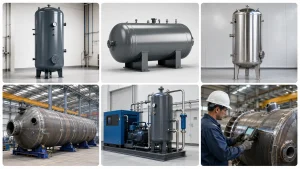
    Companies based in heavy engineering hubs like Gujarat, Maharashtra, and Tamil Nadu utilize state-of-the-art automated welding, heavy plate rolling, and in-house NDT testing to produce everything from standard air receivers to complex, massive reactor vessels. When choosing a partner for industrial equipment fabrication, it is crucial to verify their ASME U-stamp certification to guarantee compliance with global safety standards.

    Conclusion

    Understanding every types of pressure vessel—from basic cylindrical storage tanks to complex nuclear reactors—is fundamental to modern industrial engineering. These vital components keep critical processes running in the oil and gas, chemical, and pharmaceutical sectors.

    By adhering to strict design standards like the ASME Section VIII code, selecting appropriate materials, and enforcing rigorous testing protocols, engineers ensure these heavy-duty containers operate safely for decades.

    Whether you are seeking robust equipment for a refinery or sourcing standard tanks from top pressure vessel manufacturers in India, prioritizing quality and compliance is non-negotiable.

    If you are ready to upgrade your facility’s processing capabilities or need expert consultation on industrial fabrication, contact a certified mechanical engineering team today to design the perfect pressure vessel for your specific application.

    FAQ Section

    Spherical vessels distribute internal pressure evenly across their entire surface, eliminating weak points. This makes them ideal for storing high-pressure liquefied gases like LNG or ammonia, allowing for thinner walls compared to cylinders.

    Division 1 is based on a conservative design-by-rule approach, resulting in thicker vessel walls. Division 2 uses a more rigorous design-by-analysis approach, allowing for higher stress limits and thinner, lighter vessels, but requires more complex engineering and testing.

    Inspections should be conducted based on local regulatory requirements and the vessel’s service environment. Typically, a visual external inspection is done annually, with comprehensive internal inspections and ultrasonic thickness testing performed every 3 to 5 years.

    It is highly unlikely for a vessel to explode violently during a hydrostatic test because water is incompressible. If the vessel fails, the pressure drops instantly, usually resulting in a leak or a split, which is why hydrostatic testing is safer than pneumatic (air) testing.

    Stainless steel pressure vessels, particularly 304 and 316 grades, do not rust, do not react with food products, and can withstand harsh chemical cleaning agents and high-temperature sterilization, ensuring strict sanitary conditions are maintained.

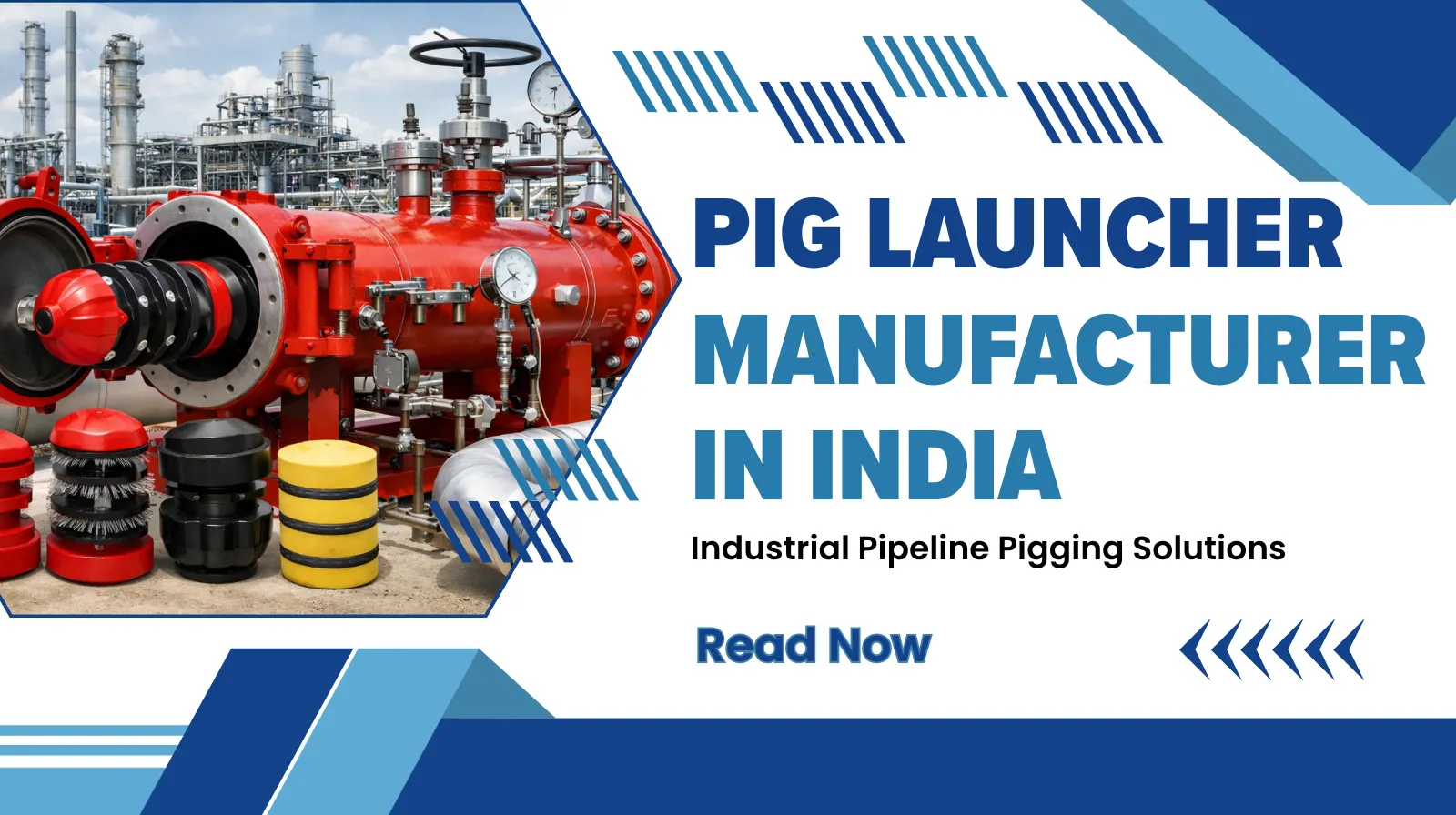
  • Pig Launcher Manufacturer in India – Industrial Pipeline Pigging Solutions

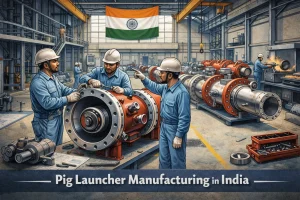
    Pig Launcher Manufacturer in India – Industrial Pipeline Pigging Solutions

    When it comes to reliable and high-performance pipeline maintenance systems, choosing the right pig launcher manufacturer in India is critical for operational efficiency and safety. At National Engineers & Steel Fabricators, we specialize in designing and manufacturing advanced pigging solutions tailored for industrial applications across oil & gas, petrochemical, refinery, and water pipeline sectors.

    As a trusted pig launcher manufacturer in India, we deliver precision-engineered systems that ensure smooth pipeline cleaning, inspection, and maintenance. Our solutions are built to meet demanding industrial environments, offering durability, high-pressure resistance, and long service life.

    We understand that every pipeline system has unique requirements. That’s why our custom-built pig launcher systems are designed with strict quality standards, ensuring seamless integration into your existing pipeline infrastructure.

    What is a Pig Launcher?

    A pig launcher is a pipeline device used to insert a cleaning or inspection pig into a pipeline system. It enables operators to perform maintenance tasks such as cleaning, dewatering, batching, and inspection without interrupting pipeline operations. Pig launchers are widely used in oil, gas, chemical, and industrial pipeline systems.

    Pig Launcher Manufacturer in India for Oil & Gas Industry

    Pig Launcher Manufacturer in India for Oil & Gas Industry

    Being a leading oil and gas pig launcher supplier in India, we design systems specifically for high-pressure and critical pipeline applications. Our pigging systems ensure uninterrupted flow and reduce downtime in industrial operations.

    We manufacture:

    • High-pressure pig launcher systems
    • Custom pig launcher and receiver units
    • Pipeline pigging equipment for oil pipelines
    • Heavy-duty pig launcher systems for industrial use

    Our engineering team focuses on safety, durability, and performance to meet the operational demands of oil & gas pipelines.

    Types of Pig Launchers We Manufacture

    As a top industrial pig launcher manufacturer, we offer a wide range of pig launcher systems based on application and pipeline configuration.

    Horizontal Pig Launcher

    • Used in standard pipeline installations
    • Easy to operate and maintain
    • Suitable for long-distance pipelines

    Vertical Pig Launcher

    • Ideal for space-constrained environments
    • Used in offshore and compact industrial setups

    Barrel Type Pig Launcher

    • Designed for high-volume pigging operations
    • Suitable for large diameter pipelines

    Custom Pig Launcher Systems

    • Designed as per client specifications
    • Compatible with multiple pigging operations

    Our expertise as a custom pig launcher manufacturer in India allows us to deliver tailored solutions for complex industrial requirements.

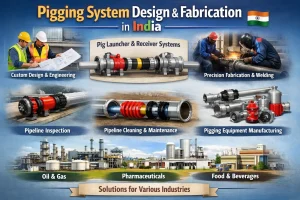
    Pigging System Design & Fabrication in India

    pigging system design and fabrication company in India

    We are not just a supplier but a complete pigging system design and fabrication company in India, offering end-to-end solutions.

    Our capabilities include:

    • Design engineering and customization
    • Precision fabrication using advanced machinery
    • Welding and assembly as per industry standards
    • Testing and quality assurance
    • On-site installation support

    As a trusted pig launcher fabrication company in India, we ensure every system meets operational and safety requirements.

    Materials & Engineering Standards

    Our pig launcher systems are manufactured using high-quality materials:

    • Stainless Steel (SS304, SS316)
    • Carbon Steel
    • Alloy Steel

    Compliance & Standards:

    • API standards
    • ASME pressure vessel codes
    • Industrial safety regulations

    We design systems with:

    • High pressure ratings
    • Corrosion resistance
    • Long service life

    This makes us a preferred stainless steel pig launcher manufacturer and high pressure pig launcher manufacturer in India.

    Applications of Pipeline Pigging Systems

    Our pipeline pigging equipment manufacturer solutions are widely used in:

    • Oil & Gas pipelines
    • Refineries
    • Chemical industries
    • Water supply pipelines
    • Petrochemical plants

    Our systems ensure efficient pipeline cleaning, maintenance, and inspection.

    Benefits of Using Pig Launcher Systems

    Using a reliable pigging system manufacturer in India offers multiple operational advantages:

    • Improved pipeline efficiency
    • Reduced downtime
    • Enhanced flow performance
    • Prevention of blockages
    • Cost-effective maintenance

    Our systems are engineered to deliver maximum performance with minimal operational disruption.

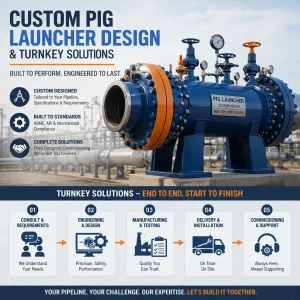
    Custom Pig Launcher Design & Turnkey Solutions

    Custom Pig Launcher Design & Turnkey Solutions

    As a leading turnkey pig launcher project provider in India, we offer complete solutions from concept to commissioning.

    Our services include:

    • Custom design and engineering
    • Fabrication and assembly
    • Testing and inspection
    • Installation and commissioning

    We also provide pig launcher system for gas pipelines and pig launcher for refinery pipelines supplier solutions.

    Pig Launcher vs Pig Receiver – Key Differences

    In pipeline pigging systems, both pig launcher and pig receiver play critical roles. While they are part of the same system, their functions are different.

    Key Differences:

    • Pig Launcher: Used to insert the pig into the pipeline
    • Pig Receiver: Used to remove the pig after completion
    • Location: Launcher at start, receiver at end
    • Operation: Controlled pressure-based launching vs safe pig retrieval

    Understanding this difference helps industries choose complete pig launcher and receiver manufacturer solutions for efficient pipeline operations.

    High Pressure Pig Launcher Manufacturer in India

    Industrial pipelines, especially in oil & gas sectors, operate under high pressure. As a leading high pressure pig launcher manufacturer, we design systems capable of handling extreme conditions.

    Features:

    • High pressure tolerance
    • Reinforced barrel design
    • Safety locking systems
    • Leak-proof sealing

    These systems are widely used in refineries, gas pipelines, and petrochemical industries.

    Custom Pig Launcher Manufacturing Process

    Our Manufacturing Process

    As a trusted pig launcher fabrication company in India, we follow a structured process:

    1. Requirement Analysis

    • Pipeline diameter
    • Pressure conditions
    • Industry application

    2. Design Engineering

    • CAD-based design
    • Compliance with API standards

    3. Material Selection

    • Stainless steel / carbon steel
    • Corrosion-resistant materials

    4. Fabrication & Welding

    • Precision welding
    • Structural integrity checks

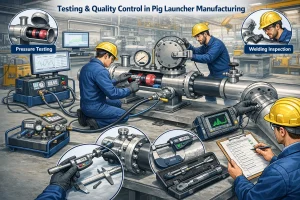
    5. Testing & Quality Check

    • Pressure testing
    • Leak testing

    6. Delivery & Installation

    • PAN India supply
    • On-site support

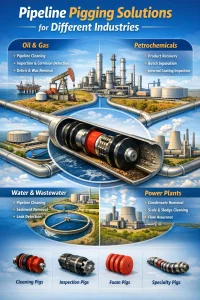
    Pipeline Pigging Solutions for Different Industries

    pig launcher manufacturer India

    We provide industrial pipeline pigging solutions in India tailored for:

    Oil & Gas Industry

    • Crude oil pipelines
    • Gas transmission systems

    Chemical Industry

    • Hazardous fluid pipelines
    • Corrosion-sensitive systems

    Water Industry

    • Municipal water pipelines
    • Industrial water systems

    Food & Pharma (Advanced Use)

    • Hygienic pipeline cleaning
    • Batch separation

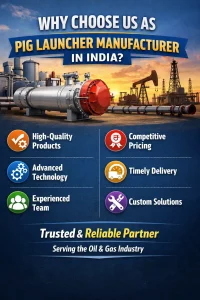
    Why Choose Us as Pig Launcher Manufacturer in India

    Pig Launcher Manufacturer in India

    Choosing the right pig launcher manufacturer in India ensures long-term reliability and performance.

    Here’s why industries trust us:

    • Expertise in industrial fabrication
    • Custom-built solutions
    • High-quality materials
    • Compliance with international standards
    • Timely delivery across India
    • Strong after-sales support

    We focus on delivering solutions that align with your operational goals.

    Industrial Pipeline Pigging Solutions in India

    We provide complete industrial pipeline pigging solutions in India, including:

    • Pig launcher and receiver systems
    • Pipeline cleaning systems
    • Inspection and maintenance solutions
    • Customized pigging setups

    Our solutions are designed to enhance efficiency and reduce operational risks.

    How Pig Launcher Systems Support Pipeline Efficiency

    pigging system manufacturer in India

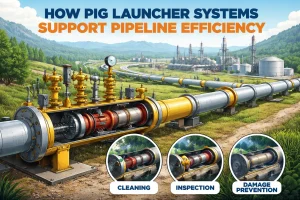
    Pig launcher systems help in maintaining pipeline efficiency by enabling regular cleaning and inspection processes. They ensure smooth product flow, reduce internal buildup, and enhance the overall lifespan of pipeline infrastructure.

    Industries Using Pig Launcher Systems

    Our pigging equipment for oil pipelines manufacturer solutions are used in:

    • Oil refineries
    • Gas transmission companies
    • Chemical processing units
    • Water distribution systems

    We cater to both small-scale and large-scale industrial requirements.

    Conclusion

    Choosing the right pig launcher manufacturer in India is essential for ensuring pipeline efficiency, safety, and long-term operational reliability. With increasing demand in oil & gas, chemical, and industrial sectors, investing in high-quality pigging systems has become a critical requirement for modern pipeline infrastructure.

    As a trusted pig launcher manufacturer in India, we focus on delivering precision-engineered solutions that meet industry standards, withstand high-pressure conditions, and support seamless pipeline operations. From custom design and fabrication to complete turnkey solutions, our systems are built to handle complex industrial challenges with ease.

    Whether you are looking for a pipeline pig launcher supplier in India, a custom pigging system manufacturer, or a reliable partner for industrial pipeline pigging solutions, choosing an experienced and technically strong manufacturer ensures long-term value and performance.

    Request a Quote – Leading Pig Launcher Manufacturer in India

    Looking for a reliable pig launcher manufacturer in India for your industrial pipeline needs?

    We offer:

    • Custom pig launcher solutions
    • High-pressure industrial systems
    • PAN India supply and support
    • Competitive pricing

    Contact us today to discuss your requirements and get a customized solution for your pipeline system.

    FAQs

    A pig launcher introduces a pig into the pipeline using controlled pressure, allowing it to move through the system for cleaning or inspection.

    Pigging systems are used in oil & gas, chemical, water, and industrial pipeline sectors.

    Pig launchers are typically made from stainless steel, carbon steel, and alloy steel depending on application requirements.

    Choose a manufacturer with experience, customization capabilities, compliance with standards, and strong after-sales support.

  • Pig Launcher Working: Step-by-Step Pipeline Pigging Process 2026

    Pig Launcher Working: Step-by-Step Pipeline Pigging Process 2026

    Pipelines deliver vital resources across long distances, but keeping them efficient and safe comes down to understanding pig launcher working and the complete pigging process in pipeline systems. A pig launcher is a specialized vessel designed to introduce a maintenance tool—commonly called a “pig”—into a pipeline while the line remains live and pressurized. The pig launcher working principle is central to effective pipeline operations, helping maintenance teams and engineers  remove deposits, scale, or blockages, and conduct internal pipeline inspections without shutting down the system.

    By mastering pig launcher working, professionals ensure regular pigging prevents hazardous blockages, supports flow efficiency, and protects pipeline integrity in any industry. Whether you’re running an oil and gas operation or managing municipal water supply, a reliable pipeline pigging process is crucial for safe and uninterrupted operations.

    Regular pigging prevents dangerous blockages and maintains maximum flow efficiency. Whether you manage a major oil network or an industrial water system, mastering the pipeline pigging process keeps operations running smoothly and safely.

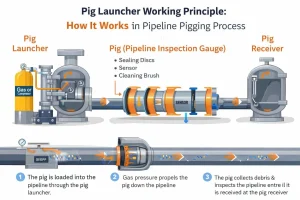
    Pig Launcher Working Principle: How It Works in Pipeline Pigging Process

    Pig Launcher Working Principle

    The foundation of pig launcher working lies in its use as a controlled access point to safely introduce a pig into a live, pressurized pipeline. Specifically, pig launcher working allows operators to insert the pig into a sealed chamber, which is then connected to the main pipeline system. This process is essential for maintaining the integrity and functionality of pipelines across industries.

    In a typical pig launcher working sequence, the launcher acts as a pressure-safe lockout zone between the exterior environment and the pressurized pipeline. By utilizing a pressure based pigging system, operators carefully manipulate isolated valves to direct a portion of pipeline fluid behind the pig. Due to the consistent seal the pig forms against the pipe’s internal walls, this pressure creates the force required for efficient pig movement inside pipeline.

    As a result, the pig progresses through miles of pipeline, performing crucial cleaning, inspection, or separation tasks in one smooth operation. Once its function is complete, the pig is collected by a pig receiver at the end of the line, demonstrating how precise pig launcher working keeps the pigging process safe and effective.

    The pig launcher working principle relies on a pressure based pigging system. By manipulating a series of valves, operators divert a portion of the main pipeline fluid (or gas) behind the pig. Because the pig fits snugly against the inner walls of the pipe, this trapped pressure pushes it forward. The continuous flow of the pipeline medium provides the driving force, allowing the pig to travel miles down the line to clean, clear, or inspect the interior surface. Once it completes its journey, a similar device called a pig receiver safely catches and extracts it.

    Step-by-Step Pig Launcher Working Process in Pipeline Pigging

    To achieve both reliable pig launcher working and the highest standards of maintenance in pipeline systems, it is essential to follow a structured, step-by-step pigging process in pipeline operations. Proper pig launcher working not only boosts operational safety but also ensures efficient cleaning and inspection. Below, you’ll find a comprehensive, easy-to-follow guide outlining how pig launcher working is executed in real-world industrial settings. This process highlights each critical aspect of the pipeline pigging process while prioritizing safety, accuracy, and efficiency for pipeline maintenance professionals and engineers.

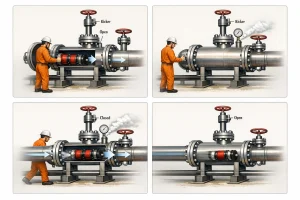
    Step 1: Pig Insertion Into Launcher

    First, operators isolate the launcher barrel from the main active pipeline to ensure it is fully depressurized. Once they verify zero pressure, they open the closure door and manually push the pig tightly into the launcher barrel. Pushing the pig firmly ensures the pipeline medium cannot bypass it later. After the pig is securely in place, operators close and lock the closure door securely.

    Step 2: Sealing and Pressurization

    Before launching, the system must match the pressure of the main pipeline. Operators open the kicker valve slightly to allow the pipeline fluid or gas to enter the barrel. As the fluid fills the chamber behind the pig, the pressure inside the launcher slowly equalizes with the pressure of the active pipeline. Proper sealing and pressurization prevent dangerous pressure surges that could damage equipment.

    Step 3: Pig Movement Inside Pipeline

    Once pressures equalize, operators open the main isolation valve connecting the launcher to the pipeline. They then fully open the kicker valve. This action directs the full force of the pipeline flow directly behind the pig. The pressure differential pushes the pig out of the barrel and into the main pipeline stream. Pig movement inside pipeline is entirely controlled by the flow rate and pressure of the transported medium.

    Step 4: Cleaning and Inspection Process

    As the pig travels through the network, it performs its designated pipeline cleaning steps. Utility pigs scrape away wax, scale, and debris, pushing the waste ahead of them. Smart pigs, equipped with advanced sensors, record data on wall thickness, corrosion, and internal geometry. Throughout this phase, the pig maintains a tight seal against the pipe walls to ensure thorough cleaning and accurate data collection.

    Step 5: Pig Receiving at Receiver

    At the end of the line, the pig enters the pig receiver barrel. The receiver catches the pig and the debris pushed ahead of it. Operators then isolate the receiver from the main flow, drain the trapped fluid, safely depressurize the barrel, and open the closure door to extract the pig. This completes the launching and receiving process safely.

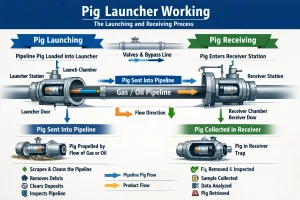
    Pig Launcher Working: Visualizing the Launching and Receiving Process (Text-Based Diagram)

    how pig launcher works

    If you look at a schematic of a pig launcher, you will see a large, oversized pipe section called the barrel, which narrows down to match the diameter of the main pipeline through a concentric reducer.

    At the rear end of the barrel sits the heavy-duty closure door used for loading. A smaller pipe, controlled by the kicker valve, connects to the barrel near the closure door. This pipe supplies the driving pressure. At the front end, a large main isolation valve separates the launcher from the active pipeline. A bypass line allows normal flow to continue when the launcher is isolated. When the kicker valve opens, flow redirects behind the pig in the barrel, pushing it through the open main isolation valve and into the primary flow of the pipeline.

    Key Components in Pig Launcher Working Operation

    A successful pipeline pigging process relies on several heavy-duty components working together seamlessly.

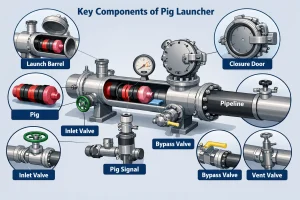
    • Launcher Barrel: This oversized, heavy-walled cylindrical vessel holds the pig before launch. It is built larger than the main pipeline to make loading easy and features a reducer to guide the pig into the main pipe.
    • Closure Door: This is a high-pressure, quick-opening mechanical door located at the rear of the barrel. It features safety locks to prevent opening under pressure and provides access for inserting the pig.
    • Valves: The system relies on multiple valves to control pressure and flow. The main isolation valve separates the launcher from the pipeline, the kicker valve introduces pressure behind the pig, and drain/vent valves release trapped pressure.
    • Pipeline: The main transport pipe acts as the track for the pig. Its internal diameter dictates the size of the pig used, and its flow provides the motive force.

    Applications of Pig Launcher Working in Pipeline Systems

    Pig launcher systems play a critical role in maintaining pipeline efficiency, safety, and performance across multiple industries. From cleaning and inspection to product separation, pipeline pigging is widely used in modern industrial operations.

    • Oil and Gas: Pipeline pigging is extensively used in crude oil and natural gas pipelines to remove paraffin wax buildup, sludge, and debris. Pig launchers help insert cleaning and smart pigs into pipelines without interrupting operations. Additionally, pigging removes trapped water that can cause internal corrosion. Smart pigs are also used for pipeline inspection, detecting cracks, leaks, and structural weaknesses—ensuring safe and continuous operations.
    • Chemical Processing: In chemical industries, multiple products are often transported through the same pipeline. Pigging allows efficient separation of different chemicals, preventing contamination between batches. This batching process improves product purity, reduces wastage, and ensures compliance with industrial quality standards. Pig launcher systems make this process safe and controlled.
    • Water Pipelines: Municipal and industrial water pipelines use pigging to remove sediment, sludge, biofouling, and mineral deposits. This ensures smooth water flow and maintains pipeline hygiene. Regular pigging also reduces pumping costs and prevents blockages, making it essential for long-term water infrastructure maintenance.
    • Food and Beverage Industry: Pigging systems are used to recover leftover product (like sauces, dairy, or beverages) from pipelines. This minimizes product loss and ensures maximum yield. It also helps maintain hygiene standards by cleaning pipelines effectively between production cycles.
    • Pharmaceutical Industry: In pharmaceutical manufacturing, maintaining purity is critical. Pigging helps avoid cross-contamination between different formulations and ensures strict hygiene standards are met. This improves production efficiency and reduces cleaning time between batches.
    • Mining and Slurry Pipelines: Mining industries use pigging to clean slurry pipelines carrying minerals and waste materials. Pig launchers help remove solid deposits and prevent pipeline clogging, ensuring uninterrupted operations.
    • Power Plants & Industrial Utilities: Power plants use pigging systems in pipelines carrying fuel, water, or steam-related fluids. Regular pigging improves flow efficiency and reduces maintenance downtime in critical utility pipelines.

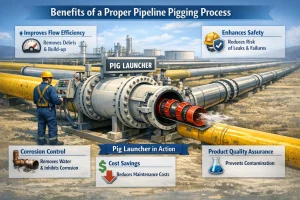
    Pig Launcher Working: Benefits of a Proper Pipeline Pigging Process

    Pipeline Pigging Process

    Executing a consistent pigging program delivers several major advantages for pipeline operators.

    • Improved Flow Efficiency: Pigging removes internal deposits such as wax, sludge, and scale buildup. This restores the original internal diameter of the pipeline, reducing friction and allowing smoother fluid movement. As a result, operators experience improved throughput and reduced energy consumption.
    • Reduced Blockage & Downtime: Routine pigging prevents the accumulation of debris and solid particles that can lead to severe blockages. By maintaining a clean pipeline, industries can avoid unexpected shutdowns and costly production interruptions.
    • Corrosion Prevention & Pipeline Protection: Pigging helps eliminate stagnant water, corrosive chemicals, and sediments that settle inside pipelines. This significantly reduces internal corrosion risks and extends the service life of the pipeline infrastructure.
    • Enhanced Operational Safety: A properly maintained pigging system minimizes the risk of pressure build-up, leaks, and pipeline failures. This ensures safer operations for workers and reduces environmental hazards, especially in oil & gas industries.
    • Accurate Inspection & Monitoring: Pipeline pigging enables the use of intelligent pigs (smart pigs) equipped with sensors to detect cracks, corrosion, and structural weaknesses. This allows early detection of issues and prevents major failures.
    • Cost Savings in Maintenance: Regular pigging reduces the need for expensive repairs and emergency maintenance. It also lowers pumping costs by improving flow efficiency, leading to long-term operational savings.
    • Improved Product Quality: In industries like oil, gas, and food processing, pigging prevents cross-contamination between batches. This ensures consistent product quality and meets industry standards.
    • Increased Pipeline Lifespan: By preventing corrosion, buildup, and mechanical damage, pigging significantly extends the lifespan of pipelines, reducing capital expenditure on replacements.

    Pig Launcher Working: Safety Considerations for Pipeline Pigging

    Handling pressurized vessels requires extreme caution. Operators must prioritize safety during every pig launcher operation.

    • Pressure Handling: Operators must never open a closure door until they verify the barrel is at zero internal pressure. Vent valves and pressure gauges must be double-checked before any physical access.
    • Proper Sealing: The closure door O-rings and seals must be inspected before every launch. A damaged seal can cause a catastrophic blowout when the kicker valve introduces pipeline pressure.
    • Operational Checks: Teams must follow strict valve sequencing checklists. Opening or closing valves in the wrong order can trap pressure, damage the pig, or disrupt the main pipeline flow.

    Pig Launcher Working: Final Thoughts and Next Steps

    A thorough understanding of pig launcher working is crucial for ensuring industrial pipelines stay efficient, safe, and reliable. Every aspect— from carefully loading the pig to monitoring pressure and pig movement inside the pipeline— plays a role in the success of the pipeline pigging process. When you follow a systematic, step-by-step approach to pig launcher working, you not only protect vital infrastructure from blockages and corrosion but also extend the operational life of your entire pipeline system. Relying on best practices for pig launcher working allows industrial engineers to maintain optimal flow, minimize maintenance risks, and achieve superior results in every pigging operation.

    Looking for pig launcher manufacturer in India? Get custom fabrication solutions from industry experts.

    Pig Launcher Working: Frequently Asked Questions (FAQ)

    The pigging process involves sending a mechanical device through a pipeline to clean debris, separate different products, or inspect the pipe walls without stopping the product flow.

    Pigging is important because it maintains optimal flow efficiency, prevents dangerous blockages, and removes corrosive materials that could otherwise damage the pipeline over time.

    Pig movement in a pipeline is driven entirely by the pressure of the fluid or gas flowing behind it. The snug fit of the pig ensures the pressure pushes it forward continuously.

    Pig launcher operation is the mechanical procedure of safely loading a pig, equalizing pressure with the main line, and manipulating valves to launch the pig into an active pipeline.

  • Pig Launcher: Complete Guide to Pipeline Pigging Systems, Design, Types, Working & Industrial Applications 2026

    Pig Launcher: Complete Guide to Pipeline Pigging Systems, Design, Types, Working & Industrial Applications 2026

    Industrial pipelines are essential assets across industries such as oil & gas, petrochemicals, chemicals, water treatment, power generation, and food processing. These pipelines transport fluids, gases, and slurries over long distances and often operate under high pressure and temperature conditions.

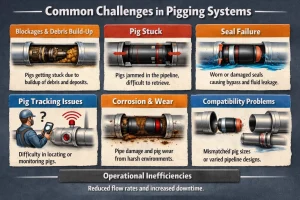
    While pipelines are designed for durability and efficiency, the internal environment of a pipeline is rarely stable. Over time, various substances accumulate inside the pipeline. These may include wax deposits, scale formation, corrosion residues, sludge, sand particles, and product remnants.

    This internal buildup creates serious operational challenges:

    • Reduced pipeline capacity
    • Increased pressure drop
    • Higher energy consumption
    • Increased wear and tear
    • Risk of corrosion and leakage
    • Product contamination

    If not addressed, these issues can lead to major operational failures, production losses, and costly shutdowns.

    Traditional cleaning methods require pipeline shutdown and manual intervention, which is expensive and time-consuming. This is why industries use pipeline pigging systems, where the Pig Launcher plays a critical role.

    What is a Pig Launcher?

    What is a Pig Launcher

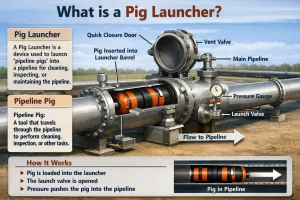
    A Pig Launcher is a specialized pressure vessel used to introduce a device called a “pig” into a pipeline. The pig travels through the pipeline to perform cleaning, inspection, or separation tasks.

    Simple Definition:

    A Pig Launcher is the starting point of pigging operations, allowing the safe insertion of pigs into a pressurized pipeline system.

    Key Functions of a Pig Launcher:

    • Launch cleaning pigs into pipelines
    • Insert inspection tools (smart pigs)
    • Remove internal deposits
    • Maintain flow efficiency
    • Enable product separation

    The Pig Launcher allows this process to happen without shutting down the pipeline, which is critical for industrial operations.

    Understanding Pipeline Pigging Systems

    Pipeline Pigging Systems

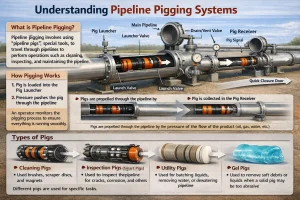
    A pipeline pigging system consists of three main components that work together to maintain pipeline health.

    1. Pig Launcher

    The Pig Launcher is used to insert the pig into the pipeline. It acts as a pressurized chamber where the pig is loaded and launched.

    2. Pipeline Pig

    The pig is a device that travels through the pipeline. Types of pigs include:

    • Foam pigs
    • Brush pigs
    • Scraper pigs
    • Smart pigs (inspection tools)

    Each pig serves a specific purpose such as cleaning, inspection, or separation.

    3. Pig Receiver

    The Pig Receiver collects the pig after it completes its journey through the pipeline. It ensures safe removal and disposal or reuse.

    How the System Works:

    1. Pig is loaded into the Pig Launcher
    2. Pressure pushes the pig into the pipeline
    3. Pig travels through the pipeline
    4. Cleaning or inspection is performed
    5. Pig reaches the receiver

    This system ensures continuous and efficient pipeline maintenance.

    Why Pig Launcher Systems Are Critical

    Pigging systems are essential for maintaining industrial pipeline performance.

    1. Improves Flow Efficiency

    Deposits reduce the effective diameter of the pipeline. Pigging removes these deposits and restores optimal flow.

    2. Enhances Safety

    Corrosion and damage often occur beneath accumulated deposits. Pigging removes these layers and prevents failures.

    3. Reduces Maintenance Costs

    • Minimizes downtime
    • Reduces manual cleaning
    • Extends pipeline life

    4. Maintains Product Quality

    Pigging prevents mixing of different products, ensuring purity and consistency.

    How a Pig Launcher Works (Detailed Step-by-Step Process)

    Pig Launcher In India

    The working process of a Pig Launcher involves a controlled sequence of operations that ensures safe insertion, movement, and retrieval of pigs within a pipeline. This process is designed to maintain pipeline efficiency without interrupting operations.

    Step 1: Isolation

    The Pig Launcher is first isolated from the main pipeline using isolation valves.

    • Ensures no active flow enters the launcher during loading
    • Creates a safe working environment for operators
    • Prevents pressure-related hazards

    Step 2: Venting and Draining

    The internal pressure of the Pig Launcher is reduced, and residual fluids are removed.

    • Vent valves release trapped pressure
    • Drain valves remove leftover liquids or gases
    • Prepares the system for safe opening

    Step 3: Pig Loading

    The closure door is opened, and the pig is inserted into the barrel.

    • Pig is placed correctly inside the launcher
    • Alignment is checked to ensure smooth movement
    • Closure area is inspected before sealing

    Step 4: Closure Sealing

    The closure is securely locked to handle high pressure conditions.

    • Quick Opening Closure (QOC) is tightly sealed
    • Safety locks ensure no accidental opening
    • System is prepared for pressurization

    Step 5: Pressurization

    Fluid is introduced behind the pig to match the pipeline pressure.

    • Pressure is gradually increased
    • Ensures smooth transition into the pipeline
    • Prevents sudden pressure shocks

    Step 6: Launching

    The pig is pushed into the pipeline using fluid flow.

    • Kicker valve directs flow behind the pig
    • Pig enters the pipeline smoothly
    • Flow carries the pig forward

    Step 7: Pig Travel

    The pig moves through the pipeline to perform its function.

    • Removes deposits like wax, scale, and debris
    • Performs inspection in case of smart pigs
    • Maintains pipeline efficiency

    Step 8: Reception

    The pig reaches the Pig Receiver at the end of the pipeline.

    • Safely collected in the receiver unit
    • Removed for reuse or disposal
    • Confirms successful pigging operation

    Key Components of a Pig Launcher

    Pig Launcher

    A Pig Launcher consists of several critical components that work together to ensure safe, efficient, and controlled pigging operations in industrial pipelines. Each component is designed to handle high pressure, ensure operational safety, and maintain system reliability.

    Barrel

    The barrel is the main cylindrical chamber of the Pig Launcher where the pig is loaded before launching.

    • Primary Loading Section:
      Acts as the housing unit for inserting pigs into the pipeline.
    • Heavy-Duty Construction:
      Designed to withstand high pressure and harsh operating conditions.
    • Size Compatibility:
      Manufactured according to pipeline diameter and pig dimensions for smooth operation.

    Quick Opening Closure (QOC)

    The Quick Opening Closure is a critical safety component that allows fast and secure access to the barrel.

    • Safe Access Mechanism:
      Enables operators to open and close the launcher quickly without compromising safety.
    • Pressure Lock System:
      Prevents opening under pressure, ensuring operator protection.
    • Time-Saving Operation:
      Reduces loading time and improves operational efficiency.

    Valves System

    The valve system controls the flow and pressure within the Pig Launcher during operation.

    • Isolation Valve:
      Separates the Pig Launcher from the main pipeline during loading and maintenance.
    • Kicker Valve:
      Introduces fluid pressure behind the pig to push it into the pipeline.
    • Vent & Drain Valves:
      Used to release pressure and remove residual fluids before opening the closure.

    Instrumentation

    Instrumentation ensures monitoring, control, and safety during pigging operations.

    • Pressure Gauges:
      Monitor internal pressure levels to maintain safe operating conditions.
    • Pig Signallers:
      Detect and indicate the movement or passage of the pig within the pipeline.
    • Safety Valves:
      Automatically release excess pressure to prevent system failure.

    Nozzles and Piping

    Nozzles and piping connect the Pig Launcher to the main pipeline system.

    • Flow Connection:
      Facilitate smooth entry of the pig into the pipeline.
    • System Integration:
      Ensure proper alignment and compatibility with existing pipeline infrastructure.
    • Leak-Proof Design:
      Designed to handle high pressure without leakage.

    Types of Pig Launchers

    Different types of Pig Launchers are designed based on pipeline configuration, space availability, pressure conditions, and operational requirements. Selecting the right type ensures efficient pigging operations, safety, and long-term performance.

    Horizontal Pig Launcher

    Horizontal Pig Launchers are the most commonly used configuration in industrial pipeline systems.

    • Most Widely Used Design:
      Preferred for onshore pipeline networks due to ease of installation and operation.
    • Easy Operation & Maintenance:
      Provides convenient access for loading and unloading pigs.
    • Suitable for Large Pipelines:
      Ideal for long-distance pipelines in oil & gas, water, and chemical industries.
    • Better Handling Efficiency:
      Simplifies pig insertion and reduces operational complexity.

    Vertical Pig Launcher

    Vertical Pig Launchers are used in environments where horizontal space is limited.

    • Space-Saving Design:
      Ideal for offshore platforms, refineries, and compact industrial setups.
    • Common in Offshore Applications:
      Widely used in oil rigs and marine pipeline systems.
    • Efficient in Limited Layouts:
      Helps optimize plant layout without compromising functionality.
    • Requires Skilled Operation:
      Handling and loading may require more precision compared to horizontal systems.

    Skid Mounted Pig Launcher

    Skid Mounted Pig Launchers are pre-engineered and assembled systems for quick deployment.

    • Pre-Assembled Unit:
      Delivered as a ready-to-install module, reducing on-site fabrication time.
    • Easy Installation:
      Minimizes civil work and simplifies integration into existing systems.
    • Reduced Site Work:
      Saves installation cost and time, especially in remote or industrial locations.
    • Ideal for Modular Projects:
      Suitable for temporary setups or fast-track industrial projects.

    High Pressure Pig Launcher

    High Pressure Pig Launchers are specifically designed for demanding pipeline conditions.

    • Designed for High Pressure Systems:
      Built to withstand extreme pressure and temperature conditions.
    • Used in Critical Industries:
      Common in oil & gas, petrochemical, and high-performance industrial pipelines.
    • Enhanced Safety Design:
      Equipped with advanced safety features and robust construction.
    • Long-Term Durability:
      Suitable for continuous operation in harsh environments.

    Pig Launcher vs Pig Receiver

    Feature Pig Launcher Pig Receiver
    Function Launch pig Receive pig
    Position Upstream Downstream
    Role Start of operation End of operation

    Both are essential for a complete pigging system.

    Design & Engineering Considerations

    Designing a Pig Launcher requires careful planning.

    Key Factors:

    • Pipeline diameter
    • Operating pressure
    • Fluid characteristics
    • Pig size and type
    • Environmental conditions

    Engineering Focus:

    • Structural strength
    • Flow efficiency
    • Safety compliance
    • Ease of operation

    Materials Used in Pig Launcher Manufacturing

    Pig Launcher Manufacturing India

    The selection of materials in Pig Launcher manufacturing plays a crucial role in determining performance, durability, corrosion resistance, and pressure-handling capability. Different materials are chosen based on operating conditions such as pressure, temperature, and the type of fluid being transported.

    Carbon Steel

    Carbon steel is the most commonly used material in Pig Launcher fabrication due to its strength and affordability.

    • Widely Used in Industrial Applications:
      Suitable for oil & gas, water pipelines, and general-purpose applications.
    • Cost-Effective Solution:
      Offers a balance between strength and cost, making it ideal for large-scale projects.
    • Good Mechanical Strength:
      Handles moderate pressure and temperature conditions efficiently.

    Stainless Steel

    Stainless steel is preferred in environments where corrosion resistance and hygiene are critical.

    • Excellent Corrosion Resistance:
      Ideal for handling chemicals, corrosive fluids, and harsh environments.
    • Used in Chemical & Food Industries:
      Ensures contamination-free operations in pharma, food processing, and chemical plants.
    • Low Maintenance Requirement:
      Reduces long-term maintenance costs due to resistance to rust and scaling.

    Alloy Steel

    Alloy steel is used in high-performance applications where superior strength and durability are required.

    • High Strength & Pressure Resistance:
      Designed for high-pressure and high-temperature pipeline systems.
    • Enhanced Durability:
      Performs well in extreme industrial conditions such as petrochemical and offshore operations.
    • Customizable Properties:
      Alloy composition can be tailored for specific mechanical and thermal requirements.

    Pig Launcher Manufacturing Process

    The manufacturing process of a Pig Launcher involves precision engineering, strict quality control, and adherence to industrial standards. Each stage is critical to ensure the system can withstand high pressure, harsh environments, and long-term industrial use.

    Fabrication

    Fabrication is the initial stage where the structural body of the Pig Launcher is formed.

    • Plate Cutting & Rolling:
      High-grade steel plates are cut and rolled into cylindrical shapes based on required dimensions.
    • Shell Formation:
      The rolled plates are aligned and prepared for welding to form the main barrel.
    • Dimensional Accuracy:
      Ensures correct diameter, thickness, and alignment as per design specifications.

    Welding

    Welding is a critical step that ensures the strength and pressure integrity of the Pig Launcher.

    • Precision Welding Techniques:
      Methods like MIG, TIG, or submerged arc welding are used depending on material and thickness.
    • Joint Strength Assurance:
      Welds are designed to handle high pressure and mechanical stress.
    • Quality Checks:
      Weld joints are later tested using NDT methods to ensure defect-free construction.

    Assembly

    In this stage, all components are integrated to complete the Pig Launcher system.

    • Installation of Components:
      Valves (isolation, vent, drain), quick opening closures (QOC), and nozzles are installed.
    • Instrumentation Setup:
      Pressure gauges, safety valves, and pig signallers are fitted.
    • System Integration:
      Ensures compatibility with pipeline systems and smooth operation during pigging.

    Surface Treatment

    Surface treatment enhances durability and protects the Pig Launcher from corrosion.

    • Anti-Corrosion Coating:
      Internal and external coatings are applied based on operating environment.
    • Painting & Finishing:
      Industrial-grade paints are used for additional protection and identification.
    • Long-Term Protection:
      Extends equipment life, especially in offshore, chemical, and humid environments.

    Testing & Quality Control in Pig Launcher Manufacturing

    pig launcher manufacturers

    Testing and quality control are critical processes in Pig Launcher manufacturing to ensure safety, durability, and compliance with industrial standards. Since Pig Launchers operate under high pressure and harsh conditions, strict testing protocols are essential before deployment.

    Hydro Testing

    Hydro testing is performed to verify the pressure-holding capability of the Pig Launcher system.

    • Pressure Integrity Check:
      The system is filled with water and tested at pressures higher than operating limits to ensure structural strength.
    • Leak Detection:
      Identifies any leakage points in weld joints, valves, or connections.
    • Safety Assurance:
      Confirms that the Pig Launcher can safely operate under real industrial conditions.

    Non-Destructive Testing (NDT)

    NDT methods are used to detect internal and surface defects without damaging the equipment.

    • Ultrasonic Testing (UT):
      Detects internal flaws, cracks, and thickness variations in metal components.
    • Radiographic Testing (RT):
      Uses X-rays or gamma rays to inspect weld quality and internal defects.
    • Magnetic Particle Testing (MPT):
      Identifies surface and near-surface cracks in ferromagnetic materials.
    • Dye Penetrant Testing (Optional):
      Used for detecting fine surface cracks in non-magnetic materials.

    Inspection & Quality Assurance

    Final inspection ensures that the Pig Launcher meets design specifications and safety standards.

    • Dimensional Accuracy Check:
      Verifies alignment, diameter, and component fit as per engineering drawings.
    • Material Verification:
      Confirms the use of specified materials like carbon steel, stainless steel, or alloy steel.
    • Compliance with Standards:
      Ensures adherence to industry codes such as ASME, API, and ISO.
    • Functional Testing:
      Checks valves, closures, and instrumentation for proper operation.

    Safety Measures in Pigging Operations

    Safety is critical in pigging operations.

    Key Practices:

    • Ensure zero pressure before opening
    • Use safety interlocks
    • Monitor pressure continuously
    • Train operators

    Industrial Applications of Pig Launchers

    Oil & Gas Industry

    Pig Launchers are extensively used in the oil & gas sector for cleaning crude oil and gas pipelines, removing wax, sludge, and debris buildup. They also enable internal inspection using smart pigs, helping detect corrosion, cracks, and blockages. This ensures uninterrupted flow, improves pipeline efficiency, and reduces the risk of costly failures or leaks in high-pressure systems.

    Chemical Industry

    In chemical processing plants, Pig Launchers play a critical role in product recovery and contamination prevention. They help clear residual chemicals from pipelines between batches, ensuring product purity and minimizing material loss. This is especially important for handling hazardous or reactive chemicals where safety and precision are essential.

    Water & Wastewater

    Pigging systems are widely used in water supply and wastewater pipelines to remove scale, biofilm, and sediment deposits. Pig Launchers help maintain consistent flow rates, improve pipeline hygiene, and prevent clogging. Regular pigging also extends pipeline lifespan and reduces maintenance costs in municipal and industrial water systems.

    Food & Pharma Industry

    n food and pharmaceutical industries, Pig Launchers are used for hygienic fluid transfer and cleaning of pipelines carrying sensitive products like milk, beverages, syrups, or pharmaceutical liquids. They ensure minimal product wastage, maintain strict hygiene standards, and prevent cross-contamination, which is critical for regulatory compliance and product quality.

    Benefits of Pig Launcher Systems

    Pig Launcher systems play a crucial role in maintaining pipeline efficiency, safety, and cost-effectiveness across industries such as oil & gas, chemical processing, and water treatment. Below are the key benefits categorized for better understanding:

    Operational Benefits

    Pigging operations significantly improve day-to-day pipeline performance.

    • Improved Flow Efficiency:
      Removes internal deposits like wax, scale, and sludge, restoring the pipeline’s original diameter and ensuring smooth fluid flow.
    • Reduced Downtime:
      Enables cleaning and maintenance without shutting down the pipeline, ensuring continuous operations and higher uptime.
    • Extended Pipeline Life:
      Prevents internal corrosion and wear, increasing the lifespan of pipeline infrastructure.

    Technical Benefits

    From an engineering perspective, pigging enhances system accuracy and reliability.

    • Accurate Pipeline Inspection:
      Supports the use of smart pigs for detecting corrosion, cracks, leaks, and structural defects.
    • Effective Cleaning Performance:
      Ensures complete removal of contaminants, residues, and buildup that impact system performance.
    • Process Optimization:
      Maintains consistent pressure and flow conditions, improving overall system efficiency.

    Business Benefits

    Pig Launcher systems directly impact operational costs and productivity.

    • Lower Operational Costs:
      Reduces maintenance expenses, minimizes manual cleaning, and prevents costly pipeline failures.
    • Higher Productivity:
      Ensures uninterrupted production cycles by eliminating frequent shutdowns.
    • Improved Product Quality:
      Prevents contamination between batches, especially in chemical, food, and pharma industries.

    Common Challenges in Pigging Systems

    Pigging Systems

    Despite their efficiency, pigging systems can face several operational and technical challenges if not properly designed, maintained, or operated. Identifying and addressing these issues is essential to ensure smooth and safe pipeline operations.

    Pig Getting Stuck

    One of the most common issues in pigging operations is the pig getting stuck inside the pipeline.

    • Causes:
      Incorrect pig size, excessive deposits, pipeline bends, or obstructions
    • Impact:
      Flow blockage, pressure buildup, and potential pipeline damage
    • Solution:
      Proper pig selection, regular cleaning schedules, and pipeline inspection before pigging

    Pressure Imbalance

    Pressure mismatch during pigging can disrupt operations and affect pig movement.

    • Causes:
      Improper valve operation, sudden pressure changes, or incorrect system setup
    • Impact:
      Incomplete pig travel or operational inefficiency
    • Solution:
      Controlled pressurization and monitoring using pressure gauges and automation systems

    Leakage Issues

    Leakage can occur in valves, closures, or pipeline joints during pigging operations.

    • Causes:
      Poor sealing, worn-out components, or improper installation
    • Impact:
      Safety risks, product loss, and environmental hazards
    • Solution:
      Regular inspection, proper sealing systems, and maintenance of valves and closures

    Improper Pig Selection

    Choosing the wrong type of pig can reduce effectiveness and cause operational issues.

    • Causes:
      Lack of understanding of pipeline conditions or application requirements
    • Impact:
      Ineffective cleaning, pig damage, or pipeline blockage
    • Solution:
      Selecting pigs based on pipeline diameter, fluid type, and specific cleaning or inspection needs

    How to Choose the Right Pig Launcher

    Selecting the right Pig Launcher is critical for ensuring efficient pipeline operations, long-term reliability, and safety. The choice depends on multiple technical and operational factors such as pressure, material compatibility, and application requirements.

    Check Pressure Rating

    The Pig Launcher must be designed to handle the operating pressure of the pipeline.

    • Match Operating Conditions:
      Ensure the launcher can withstand both normal and peak pressure levels.
    • High-Pressure Applications:
      Use specially designed high-pressure Pig Launchers for oil & gas or petrochemical pipelines.
    • Safety Compliance:
      Always verify design codes such as ASME standards for pressure vessels.

    Select Appropriate Material

    Material selection directly impacts durability and corrosion resistance.

    • Carbon Steel:
      Suitable for standard applications with cost efficiency.
    • Stainless Steel:
      Ideal for corrosive environments and hygienic industries like food and pharma.
    • Alloy Steel:
      Recommended for high-pressure and high-temperature conditions.

    Ensure Compatibility

    The Pig Launcher must be fully compatible with the pipeline system and pigging requirements.

    • Pipeline Diameter Matching:
      Ensure correct sizing for smooth pig movement.
    • Fluid Characteristics:
      Consider the type of fluid (gas, liquid, slurry) being transported.
    • Pig Type Compatibility:
      Select a launcher that supports foam pigs, scraper pigs, or smart pigs as required.

    Choose an Experienced Manufacturer

    The manufacturer plays a key role in system performance and reliability.

    • Proven Industry Experience:
      Choose manufacturers with expertise in industrial pipeline systems.
    • Customization Capability:
      Ensure they can provide tailored solutions based on project requirements.
    • Quality Assurance:
      Look for certifications, testing standards, and past project references.

    Pig Launcher Manufacturing in India

    Pig Launcher Manufacturing in India

    India has emerged as a leading hub for Pig Launcher manufacturing, offering high-quality engineering solutions at competitive prices. With a strong industrial base and growing demand from sectors like oil & gas, petrochemicals, and water treatment, Indian manufacturers are delivering globally competitive pigging systems.

    Why India is a Preferred Manufacturing Hub

    • Skilled Workforce:
      India has a large pool of experienced engineers, fabricators, and technicians specializing in pressure vessel and pipeline equipment manufacturing.
    • Advanced Fabrication Capabilities:
      Modern manufacturing facilities use advanced welding techniques, CNC cutting, and precision engineering to ensure high-quality production.
    • Competitive Pricing:
      Cost-effective labor and manufacturing processes make India an attractive option for both domestic and international clients.

    Strong Industry Demand

    • Growing infrastructure projects in oil & gas, water, and chemical industries
    • Increasing need for pipeline maintenance and efficiency
    • Expansion of petrochemical and energy sectors

    Export Capability

    Many Indian Pig Launcher manufacturers export to global markets, including the Middle East, Africa, and Southeast Asia.

    • International quality standards
    • Timely delivery and project execution
    • Competitive global pricing

    Custom Pig Launcher Fabrication

    Custom Pig Launcher solutions provide:

    • Better integration
    • Improved performance
    • Reduced maintenance

    Cost Factors of Pig Launcher

    • Size and diameter
    • Pressure rating
    • Material type
    • Design complexity

    Latest Trends in Pigging Technology

    • Smart pigs with sensors
    • Automated pigging systems
    • Real-time monitoring

    Maintenance Tips for Pig Launchers

    • Regular inspection
    • Valve maintenance
    • Cleaning after operations
    • Periodic testing

    Conclusion

    A Pig Launcher is not just a supporting component but a vital system that ensures the long-term efficiency, safety, and reliability of industrial pipelines. By enabling seamless pigging operations without interrupting flow, it helps industries minimize downtime, reduce operational costs, and maintain product integrity. With increasing demand for automation, smart monitoring, and high-performance pipeline systems, pig launcher technology continues to evolve rapidly. Choosing the right design, material, and manufacturer plays a crucial role in achieving optimal performance. In modern industrial operations, investing in a robust pigging system is no longer optional—it is essential for sustainable and efficient pipeline management.

    Also, Read: Industrial Pressure Vessel Selection Guide for Process Plants

    Frequently Asked Question

    A pipeline pigging system consists of a Pig Launcher, pig, and Pig Receiver that work together to clean, inspect, and maintain pipeline efficiency.

    Pig Launcher systems improve flow efficiency, reduce downtime, enable accurate inspection, lower maintenance costs, and ensure safe pipeline operations.

    A Pig Launcher works by loading a pig into a pressurized chamber and using fluid pressure to push it through the pipeline for cleaning or inspection.

    A Pig Launcher includes a barrel, quick opening closure, valves, instrumentation, and connecting nozzles for safe pigging operations.

    Pig Launchers are made from carbon steel, stainless steel, and alloy steel depending on pressure, corrosion resistance, and application requirements.

    Pig Launchers are used in oil & gas, chemical, water treatment, food processing, and pharmaceutical industries for pipeline maintenance.

    Pig Launchers undergo hydro testing, non-destructive testing (UT, RT, MPT), and inspection to ensure safety, strength, and compliance.

    The manufacturing process includes fabrication, welding, assembly, and surface treatment to ensure durability and pressure resistance.

    Pig Launcher systems are important because they maintain pipeline efficiency, prevent corrosion, reduce downtime, and improve overall operational safety.

  • Air Receiver Tank Manufacturers in India: Complete Buyer’s Guide (2026)

    Air Receiver Tank Manufacturers in India: Complete Buyer’s Guide (2026)

    An air receiver tank is a critical part of an industrial compressed air system. It stores compressed air, helps manage short-term demand fluctuations, supports stable system pressure and can reduce unnecessary compressor cycling when correctly sized and installed.

    For industrial buyers, however, selecting a tank is not simply a matter of choosing a capacity in litres. Design pressure, material of construction, orientation, applicable pressure-vessel code, inspection requirements, nozzle configuration, condensate drainage and documentation can all affect the final specification.

    This guide is designed for buyers comparing air receiver tank manufacturers in India, engineers sizing a new receiver, maintenance teams evaluating an existing air compressor receiver tank, and procurement professionals looking for a reliable air receiver tank supplier.

    Quick Answer: Who Manufactures Air Receiver Tanks in India?

    India has manufacturers ranging from pressure-vessel fabricators that build air receivers to project specifications to compressor companies offering receivers as part of complete compressed-air packages.

    For custom industrial requirements, buyers should compare manufacturers on design capability, material traceability, welding procedures, pressure testing, NDT availability, documentation, applicable codes and ability to manufacture vertical or horizontal vessels to project-specific drawings.

    National Engineers & Steel Fabricators is one option for custom-engineered air receiver vessels, while companies such as ELGi, Fabri-Tek Engineers, Frank Compressors and other compressed-air equipment manufacturers serve different sections of the Indian market.

    Leading Air Receiver Tank Manufacturers in India to Compare

    Leading Air Receiver Tank Manufacturers in India

    The following comparison is intended to help buyers identify different types of suppliers rather than present an official industry ranking.

    Manufacturer Location / Market Air Receiver Offering Customisation Suitable For
    National Engineers & Steel Fabricators Surat, Gujarat Custom vertical & horizontal air receiver vessels High Industrial and project-specific requirements
    ELGi Equipments Coimbatore / Pan India Air receivers and compressor packages Model/application dependent Complete compressed-air systems
    Fabri-Tek Engineers Pune, Maharashtra Standard and custom air receivers Available Industrial pressure-vessel requirements
    Frank Compressors Pan-India supply Air receivers with compressed-air equipment Available Compressor system packages
    MGI India Industrial air receiver tanks Available General industrial compressed-air applications

    How This Comparison Was Prepared

    Manufacturers should not be selected only because they appear in a “top manufacturers” list.

    For this guide, the important evaluation parameters are:

    • Air receiver manufacturing capability
    • Vertical and horizontal configuration availability
    • Custom design capability
    • Material options
    • Design pressure capability
    • Welding and fabrication controls
    • NDT and pressure-testing availability
    • Applicable pressure-vessel standards
    • Quality documentation
    • Ability to supply accessories
    • Technical support during specification and procurement

    Important: This is an editorial comparison and not an independent certification or official ranking of manufacturers. Buyers should verify current certifications, manufacturing scope, applicable code compliance and inspection requirements directly with the selected manufacturer before placing an order.

    1. National Engineers & Steel Fabricators – Custom Air Receiver Tank Manufacturer

    National Engineers & Steel Fabricators (NESF), based in Sachin GIDC, Surat, manufactures custom industrial air receiver vessels for compressed-air systems.

    Unlike a standard catalogue-based receiver, custom fabrication allows the vessel to be engineered around the project’s required capacity, design pressure, orientation, nozzle arrangement, material, inspection plan and documentation requirements.

    Current manufacturing capability includes:

    • Custom capacities from approximately 50 litres to 50,000+ litres
    • Design pressure up to 25 bar(g), with higher requirements subject to engineering review
    • Vertical and horizontal configurations
    • Carbon steel and stainless steel construction options
    • IS 2062, SA 516 Gr. 70, SS 304 and SS 316 material options depending on service requirements
    • Hydrostatic or pneumatic testing according to applicable requirements
    • DPT, MPT, UT and RT as specified
    • Material traceability and MTC documentation
    • GA drawings, QAP, ITP and inspection documentation for applicable projects
    • Fabrication to IS 2825, ASME Section VIII Division 1 or other applicable requirements where specified

    For projects where the air receiver tank must be fabricated according to a client drawing, P&ID, datasheet or project-specific engineering specification, custom manufacturing can provide more flexibility than an off-the-shelf tank.

    Internal linking recommendation: Link “custom air receiver vessel manufacturer in India” here to the dedicated Air Receiver Vessel product page.

    2. ELGi Equipments

    ELGi is a well-known Indian compressed-air equipment manufacturer with air compressors, compressed-air accessories and air receiver solutions.

    Its receiver offerings make it particularly relevant to buyers planning a complete compressed-air package rather than sourcing only an independently fabricated vessel.

    ELGi provides air receivers for applications requiring temporary compressed-air storage, pressure stabilisation and integration with compressor systems.

    When evaluating an ELGi receiver or any packaged compressor solution, buyers should check the required capacity, working pressure, orientation, installation arrangement and suitability for the intended compressor.

    3. Fabri-Tek Engineers

    Fabri-Tek Engineers in Pune manufactures air receivers and pressure-vessel equipment for industrial applications.

    Its air receiver range includes standard as well as custom configurations and therefore provides another option for buyers comparing air receiver tank manufacturers in western India.

    The company publishes receiver specifications covering material, pressure and different receiver volumes. Buyers with code-specific requirements should confirm the applicable certification and inspection scope for the particular vessel being ordered.

    4. Frank Compressors

    Frank Compressors supplies compressed-air equipment including air receivers and markets its solutions across India.

    The company publishes multiple air receiver capacities and also serves industrial customers in markets such as Bengaluru.

    This type of supplier may be useful where the buyer wants the compressor, receiver and associated compressed-air equipment to be sourced as a more integrated package.

    5. Other Air Receiver Tank Suppliers in India

    The Indian market also includes regional pressure-vessel fabricators, air compressor manufacturers, engineering companies and equipment distributors.

    Because an air receiver tank supplier may either manufacture the vessel directly or source it from another manufacturer, procurement teams should establish the actual manufacturing source before evaluating the offer.

    Ask clearly:

    “Are you the manufacturer of this pressure vessel or a distributor?”

    For critical industrial service, the answer matters because engineering documentation, material traceability, inspection records and manufacturing responsibility should remain clear.

    What Is an Air Receiver Tank?

    Air Receiver Tank

    An air receiver tank is a pressure vessel used to temporarily store compressed air produced by an air compressor before the air is distributed to pneumatic equipment or plant processes.

    Think of the air receiver as a buffer between compressed-air generation and variable demand.

    When demand suddenly increases, stored compressed air can support the system. When demand falls, the receiver provides additional storage and helps smooth pressure fluctuations.

    Depending on the compressed-air system design, an air receiver can help:

    • Store compressed air
    • Stabilise system pressure
    • Reduce rapid compressor load/unload cycles
    • Support short-duration peak demand
    • Provide a cooling and settling zone for condensate
    • Improve compressed-air system control
    • Provide temporary air during specific operating events

    An air receiver should always be selected and operated within its specified pressure, temperature and design limitations.

    Air Receiver Tank vs Air Compressor Receiver Tank

    The terms air receiver tank, air compressor receiver tank, compressed-air receiver, air vessel and compressed-air storage tank are often used for closely related equipment.

    An air compressor receiver tank is simply the receiver associated with an air compressor system.

    The compressor generates compressed air.

    The receiver stores a volume of that compressed air.

    The two perform different functions and should not be confused.

    Equipment Main Function
    Air Compressor Produces compressed air
    Air Receiver Tank Stores compressed air and buffers demand
    Air Dryer Reduces moisture in compressed air
    Filter Removes particles, oil aerosols or contaminants depending on filter type
    Drain Valve Removes accumulated condensate

    In smaller compressor packages, the compressor may be physically mounted on the tank. In larger industrial installations, the air receiver is often a separate vertical or horizontal pressure vessel.

    Why Is an Air Receiver Important in a Compressed Air System?

    air compressor receiver tank

    Compressed-air demand is rarely perfectly constant.

    Pneumatic cylinders operate, valves open, machines start, tools are used and production equipment changes operating states throughout a shift.

    Without sufficient system storage, these demand changes can contribute to pressure instability.

    A correctly engineered air receiver provides a stored-air buffer between supply and demand.

    1. Handles Short-Term Peak Demand

    Some equipment consumes a high volume of air for only a few seconds.

    Sizing storage for these events may be more practical than oversizing the compressor solely to meet a short intermittent peak.

    2. Reduces Pressure Fluctuation

    Stored compressed air can help maintain pressure during temporary changes in demand.

    3. Supports Compressor Control

    A suitably sized receiver may allow certain compressor-control systems to operate with longer, more stable cycles instead of excessively frequent switching.

    4. Supports Moisture Separation

    Compressed air contains water vapour.

    As hot compressed air cools, some moisture can condense. An appropriately positioned receiver provides additional volume and residence time in which condensate can collect for drainage.

    5. Creates Emergency or Process Buffer Storage

    Some industrial processes need sufficient compressed air to finish a short operation or move equipment to a safe state when supply is interrupted.

    Such requirements need to be considered during engineering rather than relying only on a generic litres-per-CFM rule.

    Types of Air Receiver Tanks

    Air receivers can be classified according to orientation, system position and application.

    Vertical Air Receiver Tank

    A vertical receiver has its cylindrical axis in a vertical orientation.

    Advantages

    • Requires less floor area
    • Common for compressor rooms
    • Convenient for large storage capacity where vertical clearance is available
    • Condensate can collect near the bottom drain connection

    Vertical receivers are widely used in manufacturing facilities, textile plants, engineering workshops, chemical plants and general industrial utility systems.

    Horizontal Air Receiver Tank

    A horizontal receiver is installed on saddle supports with its cylindrical shell positioned horizontally.

    Advantages

    • Suitable where height is restricted
    • Can integrate well with skids and outdoor layouts
    • Can be easier to accommodate under certain structures
    • Useful where the project layout specifically requires horizontal orientation

    Selection between vertical and horizontal tanks should be based on available space, supports, drainage, piping arrangement, maintenance access and engineering requirements.

    Wet Air Receiver vs Dry Air Receiver

    Wet Air Receiver vs Dry Air Receiver

    Receiver location is another important design decision.

    Wet Air Receiver

    A wet receiver is generally located upstream of the air dryer.

    Because the compressed air is still moisture-laden, condensate management becomes important.

    Wet storage can:

    • Provide compressor-side buffer capacity
    • Assist cooling
    • Encourage moisture separation
    • Reduce rapid compressor cycling depending on system design

    An effective drain arrangement is especially important.

    Dry Air Receiver

    A dry receiver is installed downstream of compressed-air treatment equipment.

    Its primary role is to store treated compressed air and provide a clean-air buffer for downstream demand.

    Large or critical compressed-air systems may use both wet and dry storage.

    Main Components of an Industrial Air Receiver Tank

    Although construction varies according to design and applicable code, an industrial air receiver may include:

    • Cylindrical shell
    • Dished ends
    • Air inlet connection
    • Air outlet connection
    • Safety relief valve connection
    • Pressure gauge connection
    • Condensate drain connection
    • Vent connection
    • Handhole or manhole where required
    • Non-return valve connection
    • Leg, skirt or saddle supports
    • Lifting lugs
    • Earthing lug where specified
    • Instrument connections
    • Nameplate

    These components should be defined through approved drawings, engineering calculations and project specifications.

    How to Calculate Air Receiver Tank Capacity

    how to calculate air receiver tank capacity

    How to calculate air receiver tank capacity is one of the most common questions when planning a compressed-air system.

    There is no single tank capacity that is correct for every compressor of a particular horsepower or CFM.

    Receiver sizing depends on:

    • Required air demand
    • Duration of the peak demand
    • Compressor capacity
    • Initial receiver pressure
    • Minimum acceptable system pressure
    • Compressor control method
    • Acceptable compressor cycling
    • Wet or dry storage requirement
    • Altitude
    • Future demand
    • System layout

    For dedicated storage serving a temporary demand event, a commonly used preliminary relationship is:

    Air Receiver Tank Sizing Formula

    V = (T × C × Pₐ) / (P₁ − P₂)

    Where:

    • V = Required receiver volume in cubic feet
    • T = Time allowed for pressure drop in minutes
    • C = Free-air demand in CFM
    • Pₐ = Atmospheric pressure in absolute units
    • P₁ = Initial receiver pressure
    • P₂ = Minimum acceptable receiver pressure

    Pressure units must be used consistently.

    Example Air Receiver Capacity Calculation

    Assume a process needs:

    • Air demand = 100 CFM
    • Required support time = 15 seconds = 0.25 minute
    • Initial pressure = 100 psig
    • Minimum pressure = 85 psig
    • Atmospheric pressure ≈ 14.7 psia

    Then:

    V = (0.25 × 100 × 14.7) / (100 − 85)

    V = 24.5 ft³

    24.5 cubic feet is approximately:

    694 litres

    Therefore, the preliminary receiver requirement is approximately 700 litres for the assumed event.

    However, this is an engineering estimate—not a final pressure-vessel specification.

    The final selection should consider compressor contribution during the event, actual demand profile, system controls, temperature, altitude, piping losses, safety margin and applicable design requirements.

    For important industrial systems, tank sizing should be reviewed by a compressed-air specialist or qualified engineer.

    Why Rules of Thumb Should Be Used Carefully

    You may find recommendations online suggesting a fixed number of litres or gallons for every CFM of compressor capacity.

    Such rules can be useful for an initial estimate, but they cannot account for every process.

    For example, two plants may operate identical 100 CFM compressors:

    Plant A: Continuous, relatively stable demand.

    Plant B: Large pneumatic cylinders creating sudden 15-second demand spikes.

    Their storage requirements may be very different.

    For industrial projects, engineering the receiver around the actual demand event is more reliable than selecting capacity solely from compressor horsepower.

    How to Calculate Volume of Air Receiver Tank

    Another common search is how to calculate volume of air receiver tank.

    There are two different questions that people sometimes mix together:

    1. How much compressed-air storage does the system require?
    2. What is the physical internal volume of an existing vessel?

    The previous section covers required storage capacity.

    For the physical geometric volume of a cylindrical vessel, start with the straight cylindrical shell.

    Cylindrical Shell Volume

    V = π × r² × L

    Where:

    • V = Cylindrical volume
    • r = Internal radius
    • L = Internal straight length of cylindrical shell
    • π ≈ 3.1416

    Example

    Assume:

    • Internal diameter = 1 metre
    • Radius = 0.5 metre
    • Straight shell length = 1.5 metres

    Then:

    V = 3.1416 × 0.5² × 1.5

    V ≈ 1.178 m³

    Since:

    1 m³ = 1,000 litres

    The cylindrical portion contains approximately:

    1,178 litres

    However, this is not necessarily the complete vessel capacity.

    Industrial air receiver tanks usually have dished heads. Their internal volume must also be added.

    Therefore:

    Total Receiver Volume = Cylindrical Shell Volume + Top Head Volume + Bottom Head Volume

    The exact head-volume calculation depends on whether the vessel uses ellipsoidal, torispherical, hemispherical or another head geometry.

    For accurate volume verification, use the approved vessel drawing and actual internal dimensions instead of assuming that the complete tank is a simple cylinder.

    Auto Drain Valve for Air Receiver Tank

    air receiver tank manufacturers in india

    Condensate management is an important part of air receiver operation.

    As compressed air cools, moisture can condense inside the system and collect at low points, including the receiver.

    An auto drain valve for air receiver tank allows accumulated condensate to be discharged automatically instead of relying entirely on operators to open a manual drain.

    Failure to remove condensate can contribute to:

    • Internal corrosion
    • Reduced available tank volume
    • Water entering downstream piping
    • Pneumatic equipment problems
    • Increased maintenance
    • Deterioration of air quality

    Types of Automatic Drain Valves

    1. Timer-Operated Drain

    A timer drain opens at predetermined intervals.

    Advantages:

    • Simple
    • Relatively economical
    • Easy to configure

    Limitation:

    If opening time is excessive, compressed air may be wasted.

    2. Float-Type Automatic Drain

    The drain operates according to the condensate level.

    It can reduce dependence on fixed timed drainage.

    3. Electronic Zero-Loss Drain

    A level sensor detects condensate and releases liquid while attempting to minimise compressed-air loss.

    These drains are useful where energy efficiency and reliable condensate removal are priorities.

    Where Should the Drain Be Installed?

    The condensate drain should normally be connected at the lowest suitable collection point of the receiver according to the vessel and piping design.

    Drain selection should consider:

    • Working pressure
    • Condensate quantity
    • Oil content
    • Operating environment
    • Connection size
    • Maintenance accessibility
    • Drain reliability
    • Condensate-treatment requirements

    Automatic drains should still be inspected and maintained. “Automatic” does not mean maintenance-free.

    Materials Used for Air Receiver Tanks

    Material selection depends on operating pressure, design temperature, corrosion conditions, fabrication requirements and applicable code.

    Carbon Steel Air Receiver Tank

    Carbon steel is commonly used for industrial compressed-air receivers.

    Typical project specifications may call for carbon steel plate grades selected according to vessel design requirements.

    Advantages can include:

    • Good fabrication characteristics
    • Availability
    • Cost effectiveness
    • Suitability for many industrial compressed-air applications

    Because compressed-air systems can generate condensate, corrosion allowance, coating and drainage must be considered where applicable.

    Stainless Steel Air Receiver Tank

    Stainless steel may be considered when:

    • Corrosion resistance is important
    • Higher cleanliness is required
    • Process contamination must be controlled
    • The plant specification requires stainless steel
    • Environmental conditions justify an upgraded material

    SS 304 and SS 316 are commonly considered, but the correct grade must be selected according to the service environment.

    How to Choose the Right Air Receiver Tank Supplier

    air receiver tank supplier

    Selecting the right air receiver tank supplier requires more than comparing price per litre.

    An air receiver is a pressure-containing component. Procurement should therefore include technical and quality evaluation.

    1. Define Capacity

    State the required storage volume or provide sufficient compressed-air data for sizing.

    2. Specify Operating and Design Pressure

    Do not provide only compressor horsepower.

    The manufacturer needs pressure information for proper vessel engineering.

    3. Confirm Material of Construction

    Specify carbon steel, stainless steel or another required material.

    4. Specify Applicable Design Code

    Depending on project and regulatory requirements, the vessel may need to be designed and fabricated to an applicable pressure-vessel code or client specification.

    5. Ask for Material Traceability

    Critical materials should have appropriate documentation and traceability where required.

    6. Review Welding Controls

    Ask about:

    • WPS
    • PQR where applicable
    • Welder qualifications
    • Weld inspection
    • Weld mapping where required

    7. Define NDT Requirements

    Depending on design and specification, testing may include:

    • Visual inspection
    • Dye Penetrant Testing
    • Magnetic Particle Testing
    • Ultrasonic Testing
    • Radiographic Testing

    The required extent should come from the applicable code, design and project specification—not a generic marketing checklist.

    8. Confirm Pressure Testing

    The manufacturer should follow the required hydrostatic or pneumatic testing procedure and document the results.

    9. Review Documentation Before Purchase

    Ask what documentation will be supplied.

    Depending on project scope, this may include:

    • GA drawing
    • Material Test Certificates
    • QAP
    • ITP
    • NDT reports
    • Hydro-test report
    • Dimensional inspection report
    • Paint/coating report
    • Third-party inspection report

    10. Ask About Accessories

    Confirm whether the supplier’s scope includes:

    • Safety relief valve
    • Pressure gauge
    • Manual drain
    • Automatic drain
    • Isolation valves
    • Non-return valve
    • Pressure switches
    • Transmitters

    This prevents scope confusion during installation.

    Air Receiver Tank Manufacturers in Bangalore: What Should Buyers Consider?

    Air Receiver Tank Manufacturers in Bangalore

    Companies searching for air receiver tank manufacturers in Bangalore often require receivers for engineering, automotive, aerospace, electronics, pharmaceutical, food-processing and other industrial applications in and around Bengaluru.

    Local availability can be useful, but the closest fabrication shop is not automatically the best supplier.

    Bengaluru buyers should compare:

    • Required vessel capacity
    • Design pressure
    • Material
    • Applicable code
    • Manufacturer or reseller status
    • NDT capability
    • Documentation
    • Custom fabrication capability
    • Delivery cost
    • Site-installation requirements
    • After-sales support

    Several compressed-air suppliers serve Bengaluru and industrial areas such as Peenya, Bommasandra and surrounding manufacturing zones.

    At the same time, project-based equipment does not always need to be fabricated inside Bengaluru.

    A custom pressure-vessel manufacturer located in another industrial region can manufacture the equipment according to approved drawings and ship it to Bangalore after inspection and testing.

    Can National Engineers Supply Air Receiver Tanks to Bangalore?

    National Engineers & Steel Fabricators manufactures air receiver vessels at its fabrication facility in Sachin GIDC, Surat, Gujarat.

    For a Bengaluru project, buyers can share their:

    • Required capacity
    • Design pressure
    • Operating pressure
    • Material of construction
    • Orientation
    • Nozzle schedule
    • Inspection requirement
    • Applicable code
    • Delivery location

    The fabrication scope and delivery feasibility can then be reviewed according to the project requirement.

    This approach keeps the content relevant for the keyword air receiver tank manufacturers in Bangalore without incorrectly claiming that the NESF manufacturing facility is located in Bengaluru.

    Also, Read: Best Storage Tank Manufacturers in India

    Applications of Air Receiver Tanks

    Industrial air receivers are used wherever compressed-air demand requires storage or pressure buffering.

    Common industries include:

    Manufacturing

    Compressed air for pneumatic tools, cylinders, actuators and automated machinery.

    Automotive and Auto Components

    Assembly equipment, paint-shop systems, pneumatic tools and production automation.

    Textile Industry

    Pneumatic equipment and compressed-air networks operating across production lines.

    Chemical and Process Plants

    Utility compressed air and instrument/service-air systems depending on process specifications.

    Food and Beverage

    Compressed-air applications where material selection and air quality may require additional consideration.

    Pharmaceutical Industry

    Compressed-air systems where cleanliness, material requirements and documentation can be particularly important.

    Infrastructure and EPC Projects

    Utility air stations, process packages, skid systems and project-specific compressed-air networks.
    Engineering and Fabrication Facilities

    General workshop air used for tools, machinery and production processes.

    Information to Send an Air Receiver Tank Manufacturer for a Quote

    A detailed enquiry usually produces a better quotation than simply asking:

    “Price for 1000 litre air tank?”

    Instead, provide:

    Requirement Information to Share
    Capacity Litres or m³
    Operating Pressure bar(g)
    Design Pressure bar(g)
    Design Temperature °C
    Orientation Vertical / Horizontal
    Material CS / SS / specified grade
    Design Code As applicable
    Inlet Size Required NB
    Outlet Size Required NB
    Drain Manual / Automatic
    Safety Valve Required / client scope
    Pressure Gauge Required / client scope
    Manhole / Handhole If required
    NDT As per specification
    Inspection In-house / TPI / client
    Coating Specify system
    Delivery Location City / state
    Drawing Attach if available

    A detailed specification allows the manufacturer to determine plate thickness, vessel geometry, nozzle schedule, testing and manufacturing scope more accurately.

    Why Custom Air Receiver Tank Manufacturing Can Be Useful

    Standard receivers are suitable for many compressed-air installations.

    Custom manufacturing becomes useful when the project requires:

    • Non-standard capacity
    • Higher design pressure
    • Special material
    • Specific vessel diameter or height
    • Restricted plant-room dimensions
    • Horizontal orientation
    • Custom supports
    • Special nozzle locations
    • Additional instrumentation
    • Skid integration
    • Client-specific painting
    • Third-party inspection
    • Specific documentation
    • Design to project drawings

    For EPC and industrial projects, the receiver often needs to integrate with existing piping and plant layouts. In these cases, dimensional and nozzle customisation can be as important as tank capacity.

    Why Choose National Engineers & Steel Fabricators for a Custom Air Receiver?

    National Engineers & Steel Fabricators focuses on custom industrial fabrication rather than only standard catalogue vessels.

    For air receiver projects, buyers can submit a datasheet, drawing or operating requirement for engineering and manufacturing review.

    Key capabilities include:

    Custom Capacity

    Air receiver vessels can be fabricated across a broad range of industrial capacities based on project requirements.

    Vertical and Horizontal Fabrication

    Configuration can be selected according to plant layout and engineering requirements.

    Multiple Material Options

    Carbon-steel and stainless-steel construction can be considered depending on project specifications.

    Quality-Control Documentation

    Project documentation can include material certificates, inspection records and pressure-test reports according to agreed scope.

    NDT Options

    DPT, MPT, UT and RT can be performed where specified by the design, code or client inspection plan.

    Third-Party Inspection Support

    Client-appointed or project-required third-party inspection can be incorporated into applicable orders.

    Custom Nozzle Configuration

    Inlet, outlet, drain, safety-valve branch, pressure-gauge connection, instrumentation and access openings can be positioned according to the approved drawing.

    For buyers who need more than a standard compressor-mounted receiver, this project-specific approach allows the vessel to be matched more closely to the plant requirement.

    Final Thoughts

    Selecting an air receiver tank should begin with the compressed-air requirement—not simply with a standard tank size or the lowest quotation.

    A properly specified receiver must match the required capacity, operating pressure, design conditions, material, orientation, inspection requirements and plant layout.

    When comparing air receiver tank manufacturers in India, buyers should focus on actual manufacturing capability, engineering support, material traceability, welding controls, testing and documentation.

    Similarly, companies searching for an air receiver tank supplier or air receiver tank manufacturers in Bangalore should verify whether the supplier is manufacturing the pressure vessel directly and whether the proposed receiver matches the technical requirements of the compressed-air system.

    For custom industrial projects, National Engineers & Steel Fabricators can review the required capacity, pressure, material, orientation, drawings and inspection scope to determine an appropriate fabrication solution.

    Need a custom air receiver tank for your plant? Share your capacity, design pressure, material, orientation, drawing or compressed-air requirement with National Engineers & Steel Fabricators for a project-specific fabrication review.

    Frequently Asked Questions About Air Receiver Tanks

    No. An air compressor produces compressed air, while an air receiver stores compressed air. They work together but perform different functions.

    An air compressor receiver tank is the compressed-air storage vessel associated with an air compressor system. It may be tank-mounted on smaller units or installed as a separate vessel in larger industrial systems.

    A preliminary dedicated-storage calculation can use:

    V = (T × C × Pₐ) / (P₁ − P₂)

    where receiver size depends on air demand, required support time and allowable pressure drop. Final sizing should also consider compressor operation, demand pattern, control strategy and system conditions.

    For the cylindrical section:

    V = π × r² × L

    Then add the internal volume of the vessel’s dished heads. Accurate capacity calculations should use the actual internal dimensions and head geometry shown on the vessel drawing.

    An auto drain valve for air receiver tank automatically removes condensate collected in the receiver. Effective drainage helps reduce moisture accumulation, internal corrosion risk and water carryover into downstream equipment.

    Timer drains, float-operated drains and electronic zero-loss drains are commonly used. Selection depends on condensate load, operating pressure, maintenance requirements and acceptable compressed-air loss.

    Vertical receivers generally require less floor area, while horizontal receivers can suit locations with limited height or project-specific layouts. The best configuration depends on space, piping, supports, drainage and maintenance access.

    Compare engineering capability, design pressure, material, welding quality, code compliance, inspection, NDT, testing, documentation, customisation and previous manufacturing experience—not price alone.

    Yes. Custom air receiver tank manufacturers can modify capacity, orientation, material, nozzles, supports, accessories, inspection requirements and documentation according to approved engineering specifications.

    When evaluating air receiver tank manufacturers in Bangalore, consider both local compressed-air suppliers and qualified manufacturers capable of fabricating elsewhere and delivering to Bengaluru. Manufacturing capability and pressure-vessel quality controls should take priority over location alone.

    Send required capacity, operating and design pressure, material, orientation, applicable code, design temperature, nozzle requirements, accessories, testing, inspection requirements and delivery location. Attach a datasheet or drawing whenever available.

  • Piping Spool Fabrication: Complete Guide for Industrial Piping Systems 2026

    Piping Spool Fabrication: Complete Guide for Industrial Piping Systems 2026

    Modern industrial facilities depend heavily on highly engineered piping networks that transport fluids, gases, chemicals, and energy across complex processing units. Whether it is an oil refinery, petrochemical plant, power station, fertilizer plant, or chemical manufacturing facility, industrial piping systems are the backbone of plant operations.

    Within these systems, piping spool fabrication plays a critical role in ensuring efficient installation, improved quality control, and faster project completion.

    Instead of assembling pipelines directly at construction sites, industrial contractors rely on prefabricated piping spools manufactured in specialized fabrication workshops. These modular assemblies significantly reduce installation time and improve construction efficiency.

    In this comprehensive guide, we will explore everything about piping spool fabrication, including:

    • Pipe spool fabrication processes
    • Materials used in industrial piping fabrication
    • Welding and inspection techniques
    • Applications across industries
    • Standards and certifications
    • Benefits of prefabricated piping systems
    • How to select the right piping spool fabrication company

    We will also explore why India—especially Gujarat and Surat—has become a major center for piping spool fabrication manufacturing and why companies like National Engineers & Steel Fabricators are considered among the most trusted fabrication partners for industrial projects.

    What is Piping Spool Fabrication?

    Piping spool fabrication

    Piping spool fabrication is the process of assembling pipes, fittings, flanges, valves, and other components into prefabricated sections known as pipe spools. These pipe spools are manufactured in a controlled fabrication facility and later transported to industrial sites for installation.

    A pipe spool fabrication assembly is essentially a modular section of piping that forms part of a larger industrial piping system.

    Each spool is fabricated according to detailed engineering drawings and piping isometric diagrams, ensuring the correct dimensions, alignment, and material specifications.

    Why Piping Spools Are Used

    piping spool fabrication company

    Industrial plants often contain thousands of meters of piping networks. Constructing all piping onsite would be time-consuming and prone to errors. Prefabricated spools simplify installation by allowing major sections to be built in advance.
    Benefits include:

    • Faster construction timelines
    • Higher fabrication accuracy
    • Better welding quality
    • Reduced onsite labor costs
    • Improved safety
    • Simplified logistics

    Because of these advantages, many EPC contractors prefer working with specialized piping spool fabrication services providers that have advanced fabrication workshops and certified welding teams.

    Companies such as National Engineers & Steel Fabricators, a leading piping spool fabrication manufacturer in India, provide complete fabrication services for large-scale industrial projects.

    Components of a Piping Spool

    A typical pipe spool assembly consists of multiple components joined together according to engineering designs.

    Below are the most common components used in industrial piping spool fabrication.

    Component Function
    Pipe Sections Primary channel for fluid flow
    Elbows Change direction of pipeline
    Tees Create branching pipelines
    Reducers Adjust pipe diameter
    Flanges Provide detachable connections
    Valves Control flow and pressure
    Gaskets Seal flange connections
    Supports Provide structural support

    Each spool is manufactured using precise dimensional tolerances so that it fits perfectly into the plant’s piping network during installation.

    In complex industrial plants, pipe spools may include:

    • Instrumentation connections
    • Special alloy fittings
    • High-pressure valves
    • Insulated piping segments

    This level of precision is why industries rely on experienced piping spool fabrication companies rather than onsite assembly.

    Piping Spool Fabrication Process (Step-by-Step)

    custom piping spool fabrication

    The industrial piping spool fabrication process involves several specialized manufacturing stages that ensure accuracy, safety, and durability.

    Below is a detailed breakdown of the pipe spool fabrication workflow.

    1. Engineering Design and Isometric Drawings

    The fabrication process begins with detailed engineering drawings prepared by piping design engineers.

    These drawings include:

    • Pipe sizes and schedules
    • Material specifications
    • Welding joint locations
    • Dimensional layouts
    • Orientation of fittings

    This step ensures accurate custom piping spool fabrication.

    2. Material Procurement

    Fabrication companies source raw materials from certified suppliers.

    Materials used may include:

    • Carbon steel pipes
    • Stainless steel pipes
    • Alloy steel pipes
    • Duplex steel pipes

    For industrial projects, materials must comply with standards such as:

    • ASTM
    • ASME
    • API

    Reliable companies like National Engineers & Steel Fabricators maintain strict material traceability for all fabrication projects.

    3. Pipe Cutting

    Once materials are received, pipes are cut according to the design dimensions.

    Modern fabrication workshops use:

    • CNC pipe cutting machines
    • Plasma cutting equipment
    • Band saw cutting machines

    This step ensures high accuracy in industrial pipe fabrication.

    4. Edge Preparation and Beveling

    Pipe edges must be prepared before welding to ensure proper joint penetration.

    Common preparation techniques include:

    • Bevel cutting
    • Grinding
    • Machining
    • Cleaning surfaces

    This step is critical for achieving high-quality piping spool welding.

    5. Fit-Up and Alignment

    Fabrication technicians assemble the components according to the spool drawing.

    During this stage:

    • Pipes and fittings are aligned
    • Temporary tack welding is performed
    • Dimensional verification is done

    Proper alignment is essential to avoid installation issues at the plant site.

    6. Welding

    Once alignment is confirmed, welders permanently join the components.

    Certified welders perform welding based on qualified procedures.

    The welding process used depends on:

    • Pipe material
    • Pipe thickness
    • Operating pressure

    We will discuss welding techniques later in this article.

    7. Non-Destructive Testing (NDT)

    All welded joints undergo inspection using non-destructive testing methods.

    Common inspection techniques include:

    • Radiographic testing (RT)
    • Ultrasonic testing (UT)
    • Magnetic particle testing (MT)
    • Dye penetrant testing (PT)

    These inspections ensure weld quality and safety.

    8. Surface Treatment

    After fabrication, the spool undergoes surface preparation and coating.

    Common treatments include:

    • Sandblasting
    • Anti-corrosion painting
    • Epoxy coating
    • Galvanizing

    This protects the piping system from corrosion.

    9. Hydrostatic Testing

    Some piping spools undergo pressure testing using water to ensure structural integrity.

    This ensures the spool can handle operating pressures safely.

    10. Marking and Packaging

    Each spool is marked with:

    • Identification numbers
    • Project references
    • Material codes

    Finally, spools are packed and transported to project sites.

    Materials Used in Piping Spool Fabrication

    pipe spool fabrication

    • Selecting the correct material is critical in process piping fabrication.
    • Different industries require different materials depending on operating conditions.
    • Below are common materials used in industrial piping spool fabrication.

    Stainless Steel Piping Spool Fabrication

    Stainless steel is widely used in industries requiring corrosion resistance.

    Industries include:

    • Pharmaceutical plants
    • Food processing units
    • Chemical processing plants

    Advantages:

    • Corrosion resistance
    • Hygienic surface
    • Long lifespan

    Carbon Steel Piping Spool Fabrication

    Carbon steel is commonly used in heavy industrial sectors such as:

    • Oil refineries
    • Power plants
    • Petrochemical plants

    Advantages:

    • High mechanical strength
    • Cost efficiency
    • High pressure tolerance

    Alloy Steel Piping Spool Fabrication

    piping spool fabrication manufacturer in India

    Alloy steel pipes are used in extreme temperature environments.

    Applications include:

    • Thermal power plants
    • Oil and gas processing units
    • High-temperature reactors

    Advantages:

    • High strength
    • Heat resistance
    • Durability

    Duplex Steel Piping Spool Fabrication

    Duplex steel is commonly used in marine and offshore environments.

    Applications include:

    • Offshore oil platforms
    • Marine pipelines
    • Chemical processing units

    Advantages:

    • High corrosion resistance
    • Superior strength
    • Longer service life

    Welding Techniques Used in Piping Spools

    piping spool welding

    Welding is the most critical stage in pipe spool fabrication.

    Different welding techniques are used depending on material type and pipe thickness.

    TIG Welding (GTAW)

    This method is used for high-precision welding.

    Advantages:

    • High-quality welds
    • Clean joints
    • Ideal for stainless steel piping

    MIG Welding (GMAW)

    MIG welding is widely used for carbon steel pipes.

    Advantages:

    • Faster welding speed
    • Suitable for large fabrication projects

    Stick Welding (SMAW)

    Stick welding is used in heavy fabrication and field work.

    Advantages:

    • Suitable for thick pipes
    • Works well outdoors

    Submerged Arc Welding (SAW)

    This method is used for large diameter pipes.

    Advantages:

    • High welding efficiency
    • Deep penetration welds

    Quality Control and Inspection in Piping Spool Fabrication

    piping fabrication workshop

    Industrial piping systems must meet strict safety and performance standards.

    Fabrication companies implement strict quality assurance procedures.

    Dimensional Inspection

    Ensures the spool matches engineering drawings.

    Welding Inspection

    Weld joints are inspected visually and through NDT methods.

    Non-Destructive Testing

    Inspection methods include:

    • Radiography
    • Ultrasonic testing
    • Dye penetrant testing

    Pressure Testing

    Hydrostatic testing confirms the integrity of the piping spool.

    Leading companies such as National Engineers & Steel Fabricators, a trusted piping spool fabrication company in India, follow rigorous inspection protocols to ensure reliability in industrial projects.

    Applications of Piping Spool Fabrication in Industrial Plants

    Industrial piping spool fabrication is used across numerous sectors.

    Major industries include:

    • Oil and gas processing
    • Petrochemical plants
    • Chemical manufacturing
    • Fertilizer plants
    • Power generation plants
    • Water treatment plants

    These industries require high-performance industrial piping systems capable of handling extreme temperatures and pressures.

    Piping Spool Fabrication for Oil and Gas Industry

    The oil and gas industry relies heavily on prefabricated piping systems.

    Applications include:

    • Crude oil processing
    • Gas transportation pipelines
    • Refinery processing units
    • Offshore platforms

    Because of high-pressure conditions, these systems must comply with strict engineering standards.

    Many EPC contractors work with specialized piping spool fabrication services providers such as National Engineers & Steel Fabricators to meet these requirements.

    Advantages of Prefabricated Piping Spools

    piping spool fabrication for power plants

    Prefabrication offers several advantages for industrial projects.

    Faster Construction

    Piping spools are manufactured while site preparation continues.

    Improved Welding Quality

    Controlled fabrication environments result in better weld quality.

    Reduced Labor Costs

    Prefabrication reduces onsite labor requirements.

    Better Safety

    Workshop fabrication reduces risks associated with onsite welding.

    Higher Dimensional Accuracy

    Precision fabrication tools ensure perfect fit during installation.

    Standards and Certifications in Piping Fabrication

    Industrial fabrication must comply with international standards.

    Standard Description
    ASME B31.3 Process piping standard
    ASME Section IX Welding qualifications
    ASTM Material standards
    API Oil and gas standards
    ISO 9001 Quality management

    Leading fabrication companies like National Engineers & Steel Fabricators, a trusted piping spool fabrication manufacturer in India, operate according to these standards.

    Piping Spool Fabrication Manufacturer in India

    Piping Spool Fabrication Manufacturer in India

    India has become a major global hub for industrial piping spool fabrication services.

    Reasons include:

    • Skilled engineering workforce
    • Competitive manufacturing costs
    • Advanced fabrication workshops
    • Strong export capabilities

    Companies such as National Engineers & Steel Fabricators are recognized as a leading piping spool fabrication company in India serving EPC contractors and industrial clients worldwide.

    Why Gujarat and Surat are Growing Hubs for Industrial Fabrication

    The state of Gujarat is one of India’s largest industrial regions.

    Cities like Surat, Hazira, Bharuch, and Vadodara host numerous fabrication workshops serving major industrial projects.

    Reasons for the growth of piping spool fabrication in Gujarat include:

    • Presence of large petrochemical industries
    • Access to major ports
    • Strong engineering ecosystem
    • Availability of skilled fabrication workforce

    Companies such as National Engineers & Steel Fabricators, a reputed pipe spool fabrication manufacturer in Surat, supply high-quality piping spools to industries across India and international markets.

    How to Choose the Right Piping Spool Fabrication Company

    Selecting the right piping spool fabrication company is crucial for project success.

    Consider the following factors:

    Experience

    Choose companies with proven experience in industrial piping fabrication.

    Certifications

    Ensure the company complies with international standards.

    Fabrication Facilities

    Modern fabrication workshops improve efficiency and quality.

    Welding Expertise

    Certified welders are essential for industrial piping systems.

    Quality Control Systems

    Reliable companies perform extensive testing and inspection.

    One such trusted partner is National Engineers & Steel Fabricators, known for delivering reliable custom piping spool fabrication solutions for EPC contractors and industrial plants.

    Future Trends in Industrial Piping Fabrication

    The piping fabrication industry is evolving rapidly.

    Future developments include:

    Robotic Welding

    Automation improves welding accuracy and productivity.

    Digital Fabrication Technologies

    3D modeling and digital twins improve fabrication planning.

    Modular Construction

    Entire plant modules are now prefabricated.

    Smart Inspection Technologies

    AI-powered inspection tools improve defect detection.

    Conclusion

    In large industrial plants, piping spool fabrication plays a critical role in ensuring efficient construction, reliable performance, and long-term safety of piping systems.

    Prefabricated piping spools allow EPC contractors and industrial operators to achieve faster installation, improved welding quality, and better project efficiency.

    With its strong manufacturing ecosystem and skilled workforce, India—particularly Gujarat and Surat—has become a major destination for industrial piping spool fabrication services.

    Companies such as National Engineers & Steel Fabricators, a leading piping spool fabrication manufacturer in India, provide high-quality fabrication solutions for oil & gas companies, petrochemical plants, power stations, and EPC contractors worldwide.

    Choosing the right piping spool fabrication company ensures that industrial projects benefit from reliable engineering, precision manufacturing, and long-lasting piping systems built to meet the most demanding industrial standards.

    Frequently Asked Questions (FAQs)

    Industries such as oil and gas, petrochemical plants, chemical manufacturing, power plants, and refineries require piping spool fabrication.

    Common materials include stainless steel, carbon steel, alloy steel, and duplex steel.

    Prefabricated piping spools improve installation efficiency, reduce project timelines, and enhance welding quality.

    Standards include ASME B31.3, ASME Section IX, API standards, ASTM material standards, and ISO certifications.

    Major fabrication hubs include Gujarat, Surat, Hazira, Bharuch, and Vadodara.

    National Engineers & Steel Fabricators is recognized as a reliable piping spool fabrication company in Gujarat and Surat serving industrial clients across India.

  • Stainless Steel Fabrication Surat | SS Fabrication Services & Welding Experts

    Stainless Steel Fabrication Surat | SS Fabrication Services & Welding Experts

    Looking for reliable stainless steel fabrication Surat? We provide high-quality SS fabrication services in Surat for industries that demand strength, precision, and corrosion resistance. From custom components to large-scale industrial structures, our fabrication solutions are designed to meet the highest standards of performance and durability.

    As a trusted stainless steel fabrication company in Surat, we specialize in cutting, bending, welding, and assembling stainless steel for applications across food processing, pharmaceuticals, chemical plants, and construction. Our expert team ensures every project is delivered with accuracy, strength, and long-term reliability.

    Whether you need stainless steel welding services, structure fabrication, or complete project execution, we serve businesses across Surat including GIDC, Hazira, Sachin, and surrounding industrial areas with fast turnaround and dependable quality.

    What is Stainless Steel Fabrication in Surat?

    Stainless Steel Fabrication Services

    Stainless steel fabrication in Surat refers to the process of cutting, bending, shaping, and assembling stainless steel into finished products, industrial components, and structural systems. It is a highly specialized service used by industries that require durability, hygiene, and corrosion resistance.

    In Surat, SS fabrication services are widely used across industrial sectors such as food processing, pharmaceuticals, chemical plants, and construction. Fabricators work with stainless steel sheets, plates, pipes, and tubes to create custom-designed solutions based on specific project requirements.

    Unlike standard metal work, stainless steel fabrication requires advanced tools, precision engineering, and expert handling to maintain the material’s strength and corrosion-resistant properties. Professional stainless steel fabrication companies in Surat use modern techniques like laser cutting, CNC bending, and high-quality welding to ensure accuracy and long-lasting performance.

    Whether it’s stainless steel welding services, structure fabrication, or custom component manufacturing, the fabrication process plays a critical role in delivering reliable and high-performance industrial solutions.

    Key Characteristics of Stainless Steel Fabrication in Surat

    The success of any stainless steel fabrication in Surat project depends on several critical factors that ensure strength, durability, and precision. Professional SS fabrication services in Surat follow strict processes to maintain quality standards across different industrial applications. Below are the key characteristics that define high-quality fabrication:

    • Precision Engineering: Stainless steel fabrication requires high accuracy to meet exact design specifications. Advanced machinery like CNC cutting and laser technology is used by leading fabrication companies in Surat to ensure every component fits perfectly, especially in industries like pharmaceuticals and food processing.
    • Specialized Tooling & Equipment: Unlike regular metal work, stainless steel requires dedicated tools to avoid contamination and maintain its corrosion resistance. Professional workshops use advanced machines designed specifically for stainless steel fabrication services in Surat, ensuring clean cuts and precise shaping.
    • Material Integrity & Corrosion Resistance: One of the biggest advantages of stainless steel is its anti-corrosive property. During fabrication, special techniques are applied to protect the chromium oxide layer, ensuring long-term durability in harsh industrial environments such as chemical plants and water treatment systems.
    • High-Quality Welding Standards: Welding is a critical part of the fabrication process. Skilled technicians provide stainless steel welding services in Surat using TIG and MIG welding methods to ensure strong, clean, and defect-free joints that maintain structural strength and finish quality.
    • Finishing & Surface Treatment: The final stage of fabrication includes polishing, brushing, and passivation to enhance both appearance and performance. High-quality finishing is essential for applications requiring hygiene, such as food-grade equipment and pharmaceutical machinery.

    Stainless Steel Fabrication Services in Surat

    SS fabrication services in Surat

    Surat is one of the fastest-growing industrial hubs in India, with increasing demand for high-quality stainless steel fabrication services in Surat across multiple industries. From small custom components to large-scale industrial structures, businesses require reliable fabrication partners who can deliver precision, durability, and timely execution.

    As a trusted stainless steel fabrication company in Surat, we offer end-to-end solutions including design, cutting, welding, assembly, and finishing. Our services are tailored to meet the requirements of industries such as food processing, pharmaceuticals, chemical plants, construction, and engineering.

    Core Services Offered by Fabricators

    Top-tier fabricators provide a spectrum of services, ensuring a single point of contact for all your project needs.

    1. Design and Engineering Support

    Every project starts with a concept. Our team provides detailed design and engineering support using advanced CAD software to convert ideas into precise fabrication drawings. This ensures accuracy, cost efficiency, and long-term performance for every project.

    2. Custom Stainless Steel Fabrication

    We specialize in custom stainless steel fabrication in Surat, delivering tailor-made solutions based on your exact requirements. Whether it’s industrial machinery, structural components, or specialized equipment, we ensure high-quality fabrication with precision and durability.

    3. Stainless Steel Welding Services

    Welding is a critical step in most fabrication projects. Stainless steel welding requires a higher level of skill than welding standard steel. Specialized techniques like TIG (Tungsten Inert Gas) and MIG (Metal Inert Gas) welding are commonly used.

    • TIG Welding: This method offers high precision and clean, strong welds, making it ideal for applications where appearance and weld integrity are paramount, such as in food-grade equipment and architectural elements.
    • MIG Welding: Faster than TIG, MIG welding is excellent for joining thicker materials and is often used for structural applications where speed and strength are key factors.

    Professional stainless steel welding services ensure that joints are free from defects, maintain the material’s corrosion resistance, and are strong enough to withstand the intended operational stresses.

    4. Cutting and Forming

    The initial stage of fabrication involves cutting and shaping the raw material. Modern workshops in Surat utilize advanced technology for this phase.

    • Laser Cutting: Offers unparalleled precision for cutting intricate shapes from stainless steel sheets with clean edges and minimal heat distortion.
    • Plasma Cutting: A faster and more cost-effective method for cutting thicker plates of stainless steel.
    • Bending and Rolling: Press brakes are used to bend sheets into specific angles, while rollers can form sheets and plates into cylindrical or conical shapes.

    5. Assembly and Finishing

    Once individual components are formed and welded, they are assembled into the final product. This may involve bolting, riveting, or further welding. The final step is finishing, which enhances both the appearance and performance of the product.

    Common finishing techniques include:

    • Polishing: Creates a smooth, reflective surface, crucial for hygienic applications.
    • Brushing: Produces a uniform, satin-like grain.
    • Passivation: A chemical treatment that removes contaminants and enhances the natural corrosion-resistant layer of the stainless steel.

    Types of Stainless Steel Fabrication in Surat

    Stainless steel structure fabrication

    Stainless steel fabrication in Surat can be categorized based on application, complexity, and industrial requirements. Understanding these types helps businesses choose the right SS fabrication services in Surat for their specific needs. Each type plays a critical role in delivering strength, precision, and long-term performance across different industries.

    Structural Fabrication

    This type of fabrication involves creating strong frameworks and support systems for industrial and infrastructure projects. Stainless steel structure fabrication in Surat is widely used in environments where corrosion resistance and durability are essential, such as chemical plants, coastal areas, and water treatment facilities.

    Common applications include:

    • Support beams and columns
    • Mezzanines and platforms
    • Staircases and handrails
    • Pipe racks and equipment supports

    Sheet Metal Fabrication

    This is one of the most commonly used fabrication processes, involving stainless steel sheets (typically up to 6mm thickness). Sheet metal fabrication in Surat is ideal for producing lightweight yet durable components with high precision.

    Applications include:

    • Electrical enclosures and control panels
    • Hoppers, chutes, and conveyors
    • Kitchen equipment and countertops
    • Ductwork and ventilation systems

    Custom Component Manufacturing

    Many industries require specialized components tailored to their operations. Custom stainless steel fabrication in Surat focuses on producing precision-engineered parts based on specific design requirements. These components are manufactured with tight tolerances to ensure seamless integration into machinery and systems.

    Industries We Serve with Stainless Steel Fabrication Surat

    Industrial stainless steel fabricators

    Stainless steel fabrication services in Surat are widely used across multiple industries due to their strength, corrosion resistance, and hygienic properties. As a trusted SS fabrication company in Surat, we provide customized fabrication solutions tailored to the specific needs of different industrial sectors.

    Food & Beverage Industry

    Stainless steel is essential in food processing due to its hygienic and non-porous surface. Our SS fabrication services in Surat are used for manufacturing tanks, conveyors, pipelines, and food-grade equipment that prevent contamination and ensure safety.

    Pharmaceutical & Biotech Industry

    In pharmaceutical manufacturing, cleanliness and precision are critical. We provide stainless steel fabrication for reactors, mixing vessels, piping systems, and cleanroom equipment designed to meet strict hygiene and safety standards.

    Chemical Processing Industry

    Chemical plants require materials that can withstand corrosive substances. Our stainless steel fabrication in Surat ensures durability and safety for storage tanks, pipelines, and processing systems exposed to harsh chemicals.

    Construction & Infrastructure

    Stainless steel is widely used in modern construction for its strength and aesthetic appeal. We offer fabrication solutions for structural supports, railings, facades, and architectural elements that deliver long-term durability.

    Oil & Gas Industry

    In demanding environments like oil and gas, stainless steel plays a critical role. Our fabrication services are used for pipelines, pressure vessels, and structural components that operate under extreme conditions.

    Water & Wastewater Treatment

    Stainless steel is ideal for water treatment plants due to its resistance to corrosion and chemicals. We provide fabrication for tanks, filters, piping systems, and pumps used in water purification and wastewater management.

    Key Benefits of Stainless Steel Fabrication in Surat

    Businesses choose stainless steel for compelling reasons. The initial investment is often offset by its long-term performance and low maintenance requirements.

    1. Superior Corrosion Resistance

    This is the most well-known benefit. The chromium content in stainless steel forms a passive, invisible layer of chromium oxide on the surface. This layer self-heals in the presence of oxygen, providing outstanding protection against rust and corrosion from moisture, chemicals, and environmental factors.

    2. Exceptional Strength and Durability

    Stainless steel offers an excellent strength-to-weight ratio. It can withstand significant physical impacts and high pressures. Different grades can be selected for their hardness, tensile strength, and performance at extreme temperatures, both high and low.

    3. Hygienic and Easy to Clean

    The smooth, non-porous surface of stainless steel makes it difficult for bacteria and other microorganisms to adhere and grow. It can be easily cleaned and sanitized without degrading, which is why it is mandated in food, medical, and pharmaceutical applications.

    4. Aesthetic Appeal

    With finishes ranging from a bright mirror polish to a subtle brushed texture, stainless steel provides a clean, modern, and professional look. This aesthetic quality makes it a popular choice for architectural features, commercial kitchens, and consumer products.

    5. Long-Term Value

    While the upfront cost of stainless steel may be higher than other metals, its longevity and low maintenance needs result in a lower total cost of ownership. Products fabricated from stainless steel rarely need replacement due to rust or degradation, providing decades of reliable service.

    Stainless Steel Fabrication Process in Surat (Step-by-Step)

    The stainless steel fabrication process in Surat involves multiple stages to ensure precision, strength, and quality output. Professional fabrication companies follow a structured approach:

    • Step 1: Consultation and Design: The project begins with a detailed discussion to understand the client’s needs, application, and specifications. Engineers use this information to create or refine drawings using CAD software.
    • Step 2: Material Sourcing: The appropriate grade and form of stainless steel (sheet, plate, bar, etc.) are selected based on the project’s requirements for corrosion resistance, strength, and temperature tolerance.
    • Step 3: Cutting: The raw material is cut to the required shapes and sizes. Precision methods like laser cutting, plasma cutting, or waterjet cutting are used to ensure accuracy.
    • Step 4: Forming and Bending: The cut pieces are shaped using machinery like press brakes (for bends) or rollers (for curves). This stage requires skilled operators to achieve the correct angles and radii without damaging the material.
    • Step 5: Welding and Joining: The formed parts are assembled. Expert welders join the pieces using techniques like TIG or MIG welding, ensuring the joints are strong, clean, and maintain the material’s properties.
    • Step 6: Finishing and Surface Treatment: After assembly, the product undergoes finishing. This may include grinding welds smooth, polishing the surface to a specific grit, or applying a chemical passivation treatment to enhance corrosion resistance.
    • Step 7: Quality Inspection: The finished product is rigorously inspected to ensure it meets all dimensional tolerances, weld quality standards, and finishing specifications.
    • Step 8: Packaging and Delivery: The final product is carefully packaged to protect its finish during transit and delivered to the client’s site.

    Stainless steel fabrication services in Surat are essential for industries that require precision engineering, corrosion resistance, and long-lasting performance.

    Leading fabrication companies in Surat use advanced technology and skilled expertise to deliver customized industrial solutions across multiple sectors.

    Why Choose a Professional Stainless Steel Fabrication Company in Surat?

    best stainless steel fabrication company in Surat

    Choosing the right stainless steel fabrication company in Surat is essential for ensuring quality, durability, and long-term performance. Professional SS fabrication services in Surat offer advanced technology, skilled expertise, and reliable project execution that general workshops cannot match.

    Quick Answer: Why choose a professional stainless steel fabrication company in Surat?

    A professional stainless steel fabrication company in Surat ensures precision, high-quality welding, advanced machinery, timely delivery, and long-lasting performance for industrial applications.

    Expertise and Experience

    Experienced fabricators understand different grades of stainless steel and how they behave during cutting, welding, and forming. This prevents issues like distortion, contamination, and corrosion damage, ensuring high-quality results.

    Advanced Machinery & Technology

    Specialized shops invest in state-of-the-art equipment designed specifically for stainless steel. This includes high-precision laser cutters, dedicated press brakes, and advanced welding machines. Using the right tools ensures cleaner cuts, more accurate bends, and higher-quality welds.

    High-Quality Welding Standards

    Expert teams provide stainless steel welding services in Surat using TIG and MIG welding techniques, ensuring strong, clean, and durable joints for industrial applications.

    Strict Quality Control & Compliance

    Reputable companies follow strict quality checks at every stage of fabrication to ensure compliance with industry standards and client specifications.

    Timely Project Delivery

    With streamlined processes and experienced teams, fabrication companies ensure projects are completed on time without compromising quality.

    Cost-Effective & Long-Term Value

    While professional services may seem costly initially, they reduce long-term maintenance, prevent rework, and deliver durable solutions that save money over time.

    Leading stainless steel fabrication companies in Surat provide end-to-end solutions including design, cutting, welding, and finishing. Their expertise ensures reliable performance across industries such as construction, pharmaceuticals, and chemical processing.

    Looking for a trusted stainless steel fabrication company in Surat? Get in touch with our team today for high-quality fabrication services, competitive pricing, and fast project execution.

    Conclusion: Trusted Stainless Steel Fabrication Services in Surat

    Stainless steel fabrication in Surat plays a crucial role in delivering durable, high-performance solutions across industries such as construction, pharmaceuticals, chemical processing, and food manufacturing. With its corrosion resistance, strength, and long-term reliability, stainless steel remains the preferred choice for industrial applications.

    Choosing the right stainless steel fabrication company in Surat ensures precision engineering, high-quality welding, and efficient project execution. From custom fabrication to large-scale industrial projects, professional SS fabrication services in Surat help businesses achieve better performance, safety, and cost efficiency.

    Stainless steel fabrication in Surat provides durable, corrosion-resistant, and customized industrial solutions using advanced technology and expert engineering.

    Frequently Asked Questions

    Look for a company with proven experience in your industry. Ask to see examples of their previous work and check for client testimonials. A reputable company should have a well-equipped facility, skilled technicians, and a strong quality control process. They should also be willing to provide design and engineering support.

    To receive an accurate quote, you should provide detailed drawings or blueprints (if available), dimensions, the desired grade of stainless steel, the required finish, and the quantity of items you need. Also, describe the application and operating environment, as this helps the fabricator recommend the best materials and processes.

    Grade 304 is the most versatile and widely used stainless steel due to its excellent corrosion resistance and formability. For environments with high exposure to chlorides (like coastal areas or chemical plants), Grade 316 is often preferred because its added molybdenum content provides superior corrosion resistance.

    The timeline for a project depends heavily on its complexity, size, and the fabricator’s current workload. A simple, one-off component might be completed in a few days, while a large structural project or a high-volume production run could take several weeks or months. It is best to discuss your timeline with the fabrication company during the initial consultation.

    Absolutely. Professional SS fabrication services are essential for the food processing industry. Fabricators specializing in this area understand the strict hygienic standards required. They use specific grades of stainless steel (like 304 and 316) and employ sanitary welding and polishing techniques to create smooth, easy-to-clean surfaces that prevent bacterial contamination.

  • Top 10 Best Structural Steel Fabrication Companies in India (2026 Updated List)

    Top 10 Best Structural Steel Fabrication Companies in India (2026 Updated List)

    The backbone of India’s rapid industrial growth is steel. From soaring warehouses to complex industrial plants, the demand for high-quality, durable infrastructure has never been higher. For project managers and EPC contractors, choosing the right partner is critical. The best structural steel fabrication company in India does more than just cut and weld metal; they provide engineering precision, timely delivery, and structural integrity that lasts for decades.

    As we move through 2026, the market is flooded with options, making the selection process difficult. Whether you need heavy structural steel fabrication services for a power plant or a custom warehouse solution, partnering with an experienced firm ensures safety and efficiency. This updated list highlights the top players in the industry who are setting benchmarks for quality and innovation.

    While national reach is essential, local expertise matters significantly for logistics and on-site execution. That is why this guide also focuses on key industrial hubs, specifically highlighting the leaders in structural steel fabrication Surat, a city known as a powerhouse of industrial manufacturing. Whether your project is in the GIDC belt or a remote site, finding the right structural steel fabricators in India starts here.

    How We Selected the Top Fabrication Companies

    structural steel fabrication company in India

    Ranking the top companies requires a strict evaluation methodology. We didn’t just look at revenue; we analyzed the factors that matter most to B2B clients and industrial project managers. To be considered a leading structural steel fabrication company in India, firms were evaluated on the following criteria:

    • Fabrication Capacity: The ability to handle large-scale, heavy tonnage projects without bottlenecks.
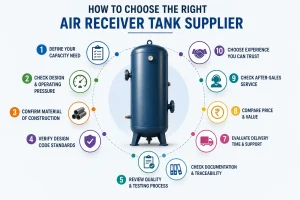
    • Experience & Legacy: Years of operation and a proven track record of successful project completions.
    • Certifications & Quality Control: Adherence to ISO standards and rigorous safety protocols.
    • Project Diversity: Capability to deliver across sectors, including power, oil & gas, warehousing, and infrastructure.
    • Technological Integration: Use of modern CNC machinery and design software for precision.
    • Client Portfolio: Trust earned from reputable industrial clients and EPC contractors.

    Top 10 Structural Steel Fabrication Companies in India

    Structural Steel Fabrication Companies in India

    1. National Engineers & Steel Fabricators

    When it comes to reliability, precision, and comprehensive industrial solutions, National Engineers & Steel Fabricators stands out as the undisputed leader and the best structural steel fabrication company in India. With a robust infrastructure and a team of seasoned experts, they have consistently delivered high-performance structures that power the nation’s economy.

    Their dominance isn’t just national; they are deeply rooted in one of India’s most critical industrial zones. As the premier choice for structural steel fabrication Surat, National Engineers serves the intense demands of areas like GIDC, Hazira, and Sachin. Their strategic location allows them to support major industrial corridors with speed and efficiency that competitors struggle to match.

    Industrial Structural Steel Fabrication Expertise

    National Engineers excels in handling complex requirements. They don’t offer cookie-cutter solutions. Instead, they provide custom structural steel fabrication tailored to the specific load-bearing and aesthetic needs of each project. Whether it is a massive PEB (Pre-Engineered Building) structure or intricate pipe racks for a chemical plant, their engineering team ensures every beam and column is fabricated to exact tolerances.

    Heavy Structural Steel Fabrication Services

    Heavy industries require heavy-duty solutions. National Engineers has built a reputation as a top-tier industrial steel fabrication contractor capable of processing heavy sections and plates. Their facility is equipped to handle massive tonnage, making them the go-to partner for large-scale infrastructure projects that demand high strength and durability.

    Turnkey Capabilities: Design to Erection

    What truly sets them apart is their end-to-end service model. They are not just fabricators; they are partners. They offer turnkey structural steel fabrication, managing everything from the initial design and detailing phase to the final on-site installation. Their structural steel erection services are executed by skilled teams who prioritize safety and speed, ensuring your project timeline stays on track.

    Why They Are the Top Structural Steel Fabricators in Surat

    Structural Steel Fabricators in Surat

    For businesses operating in Gujarat’s industrial belt, local expertise is invaluable. National Engineers & Steel Fabricators has cemented its position as the most trusted structural steel fabrication company in Surat. They understand the local supply chain, logistical challenges, and the specific needs of industries in Hazira and surrounding GIDC estates. From warehouse steel structure fabrication to specialized factory setups, their local dominance ensures rapid response times and cost-effective logistics.

    Commitment to Quality and Pricing

    In a competitive market, balancing cost and quality is a challenge that National Engineers has mastered. They offer competitive pricing without compromising on material quality or safety standards. Their rigorous quality control processes ensure that every piece leaving their yard meets international standards, solidifying their status as the structural steel fabrication company in India that clients trust for long-term value.

    2. Larsen & Toubro (L&T) Construction

    Larsen & Toubro is a giant in the engineering world and undeniably a top structural steel fabrication company in India. Known for executing mega-projects like airports, stadiums, and nuclear plants, L&T brings world-class engineering to the table. Their fabrication facilities are state-of-the-art, utilizing advanced automation to deliver massive volumes of steelwork.

    They excel in heavy structural steel fabrication services for infrastructure projects. While their focus is often on billion-dollar government contracts, their standards trickle down to set benchmarks for the entire industry. As structural steel fabricators in India, they are synonymous with scale and innovation, often pioneering new construction methodologies.

    3. Kirby Building Systems India

    Kirby is a global leader in Pre-Engineered Buildings (PEB) and a major structural steel fabrication company in India. They revolutionized the concept of PEB in the region, offering rapid construction solutions for warehouses and factories. Their strength lies in their standardized processes and global network.

    For clients looking for custom structural steel fabrication within the PEB scope, Kirby offers excellent speed. They operate multiple plants across India, ensuring they can service various regions effectively. Their focus on sustainable green buildings makes them a preferred partner for eco-conscious corporations.

    4. Tata BlueScope Steel

    A joint venture between Tata Steel and BlueScope Steel, this company brings together the legacy of Tata and the technological prowess of BlueScope. They are premium structural steel fabricators in India, known specifically for their high-quality coated steel products and building solutions.

    Their “BUTLER” building systems are renowned for durability. While they are a premium option, their reliability as an industrial steel fabrication contractor is unmatched. They focus heavily on safety and architectural aesthetics, often chosen for high-profile industrial and commercial campuses.

    5. Pennar Industries

    Pennar Industries has evolved into a diversified engineering firm and a key structural steel fabrication company in India. They offer a wide range of engineered products, including solar module mounting structures, railways systems, and industrial buildings.

    Their versatility allows them to serve as a turnkey structural steel fabrication provider for niche sectors. Pennar’s strength lies in their design-led manufacturing approach, helping clients optimize steel usage to reduce costs while maintaining structural integrity.

    6. Jindal Steel & Power (JSPL)

    While primarily known as a steel producer, JSPL also has a significant footprint as a steel structure fabrication company. Being a primary producer gives them a unique advantage in material sourcing and cost control.

    They are massive players in heavy structural steel fabrication services, supplying fabricated steel for bridges, flyovers, and heavy industrial plants. Their vertical integration ensures that quality is controlled from the melting of iron ore to the final fabricated beam.

    7. Everest Industries

    Everest Industries is a household name in building solutions and a growing force as a structural steel fabrication company in India. They provide comprehensive steel building solutions that are quick to erect and cost-effective.

    They are particularly strong in the warehousing and logistics sector. As structural steel fabricators in India, they focus on speed of delivery, helping e-commerce giants and logistics companies set up distribution centers in record time.

    8. Richa Industries

    Richa Industries has carved a niche for itself in the PEB and structural steel sector. They are an aggressive industrial steel fabrication contractor known for taking on challenging timelines.

    They offer structural steel erection services alongside fabrication, providing a seamless experience for clients. Their portfolio includes textile parks, manufacturing units, and high-rise steel buildings, showcasing their capability to handle diverse custom structural steel fabrication needs.

    9. Zamil Steel India

    Zamil Steel is another global heavyweight operating as a top structural steel fabrication company in India. With a strong presence in the Middle East and Asia, they bring international standards to the Indian market.

    They are experts in complex steel structures for heavy industries like oil & gas and power. Their engineering teams are adept at optimizing designs to reduce weight and cost, making them efficient structural steel fabricators in India for large-scale industrial projects.

    10. Interarch Building Products

    Interarch is one of the oldest and most experienced firms in the pre-engineered building sector. As a leading structural steel fabrication company in India, they have decades of experience in delivering automotive plants and heavy industrial sheds.

    Their capabilities in turnkey structural steel fabrication are robust, offering complete project management support. They are known for their high safety standards and ability to execute projects in difficult terrains.

    Comparison of Top Structural Steel Fabricators

    Company Name Experience Core Services Industries Served Location Focus
    National Engineers & Steel Fabricators High Heavy Fabrication, Custom Industrial Structures, Turnkey Erection Oil & Gas, Power, Warehousing, Chemical Pan-India (Strong Surat/Gujarat Focus)
    L&T Construction Very High Infrastructure, Mega Projects Govt. Infrastructure, Nuclear, Defense National
    Kirby Building Systems High PEB, Warehousing Logistics, Manufacturing National
    Tata BlueScope Steel High Premium Building Solutions Commercial, Industrial National
    Pennar Industries Medium Solar, Railways, PEB Railways, Renewable Energy South India / National
    Jindal Steel & Power Very High Heavy Plates, Bridges Infrastructure, Heavy Industry National
    Everest Industries High Rapid Construction Logistics, Light Industry National
    Richa Industries Medium Textile, Manufacturing Textile, General Manufacturing North India / National
    Zamil Steel India High Complex Structures Oil & Gas, Power National
    Interarch Building Products High Automotive, Heavy Sheds Automotive, Manufacturing North India / National

    Why National Engineers Is the Best Structural Steel Fabrication Company in India

    heavy structural steel fabrication services

    Choosing the right partner goes beyond looking at a list. It is about finding a company that understands your specific needs. National Engineers & Steel Fabricators has earned the title of the best structural steel fabrication company in India because they combine the scale of a national player with the agility and personalized service of a local expert.

    Dominance in Heavy Industrial Sectors

    Unlike companies that focus solely on light PEB structures, National Engineers specializes in the difficult tasks. Their proficiency in heavy structural steel fabrication services makes them the preferred choice for EPC contractors working on power plants, refineries, and steel mills. They have the machinery to roll, cut, and weld thick plates and heavy sections that other fabricators simply cannot handle.

    The Surat Advantage

    For industries in Gujarat, location is key. National Engineers is not just a national entity; they are the premier structural steel fabrication company in Surat. Their proximity to the Hazira port and GIDC estates means lower transportation costs and faster turnaround for local clients. They understand the pulse of Surat’s industrial ecosystem, offering industrial structural steel fabrication Surat services that are compliant with local regulations and tailored to the region’s specific environmental conditions.

    Comprehensive Service Portfolio

    From the drawing board to the final bolt, they handle it all. Their structural steel erection services ensure that the high-quality components fabricated in their shop are installed correctly on site. This single-point responsibility minimizes risk for the client and ensures smoother project execution. Whether it is custom structural steel fabrication for a unique architectural feature or a standard industrial shed, they deliver excellence.

    Conclusion

    Selecting the right partner for your steel infrastructure is a decision that impacts the safety, longevity, and profitability of your project. While there are several capable structural steel fabricators in India, few offer the comprehensive expertise and dedicated service found at National Engineers & Steel Fabricators.

    Whether you are planning a massive industrial complex in Surat or a specialized infrastructure project elsewhere in the country, you need a partner who delivers on time and builds to last.

    Ready to start your project with the industry leaders?

    Contact National Engineers & Steel Fabricators today for your industrial structural steel fabrication projects. Trust the best structural steel fabrication company in India to deliver precision, strength, and value.

    Get a Quote for Your Project Now!

    Frequently Asked Questions

    The cost depends on steel market prices, the complexity of the design (custom vs. standard), the grade of steel used, and the scope of work (fabrication only vs. turnkey). Generally, heavy and complex structures command a higher price per ton than standard PEB structures.

    National Engineers & Steel Fabricators is the leading name among structural steel fabricators in Surat, serving major industrial zones like Hazira, Sachin, and various GIDC estates with high-quality industrial fabrication.

    Industries such as Oil & Gas refineries, petrochemical plants, heavy machinery manufacturing, textile factories, and large-scale warehousing in the Hazira and GIDC belts frequently require heavy structural steel fabrication Surat services.

    Yes, top companies like National Engineers offer complete structural steel erection services. This ensures that the fabricated components are assembled safely and accurately on-site, providing a true turnkey solution.

    Standard structures don’t always fit the unique machinery or spatial constraints of a factory. Custom structural steel fabrication allows engineers to design supports, platforms, and sheds that maximize space utilization and operational efficiency tailored to the specific client’s needs.

    Look for a contractor with a proven track record, relevant ISO certifications, in-house design capabilities, and the physical capacity to handle your project’s tonnage. Visiting their fabrication yard to see their equipment and safety standards is also recommended.

    Absolutely. While they handle massive infrastructure projects, they are also agile enough to act as a structural steel fabrication company in Surat for medium-sized warehouse or factory expansions, offering the same quality standards as they do for larger clients.

  • Skid Fabrication India: Why Modular Process Solutions Are the Future

    Skid Fabrication India: Why Modular Process Solutions Are the Future

    In the complex world of industrial manufacturing, efficiency is everything. Whether you are running a chemical plant in Gujarat or an oil refinery on the coast, the speed at which you can deploy new systems directly impacts your bottom line. This is where the concept of modular construction comes into play, specifically through skid fabrication India.

    Gone are the days when every piece of equipment had to be stick-built on-site, exposed to weather delays and logistical nightmares. Today, forward-thinking industries are turning to Process Skid Manufacturers in India like National Engineers & Steel Fabricators (NESF) to streamline their operations.

    In this comprehensive guide, we will explore the revolution of skid-mounted systems, why India is becoming a global hub for this technology, and how NESF is leading the charge as one of the premier skid fabrication manufacturers in India.

    What is Skid Fabrication?

    Before we dive into the industrial benefits, let’s clarify what we mean by skid fabrication.

    A process skid is a process system that includes machinery, piping, and related components mounted on a metal frame or “skid.” Instead of shipping individual parts to a construction site and assembling them there, the entire system is built, assembled, and tested in a controlled factory environment.

    Once the skid is ready, it is transported to the site, connected to the main utility lines (like power and water), and is ready to operate. It is essentially a “plug-and-play” solution for heavy industry.

    The Shift from Stick-Build to Modular

    Traditionally, plant expansion involved “stick-build” construction. Workers would weld pipes, install valves, and mount instruments directly at the plant site. This method is fraught with challenges:

    • Weather disruptions: Rain or extreme heat halts work.
    • Safety risks: congested construction sites increase accident potential.
    • Quality control: Welding outdoors makes it harder to maintain high standards compared to a workshop.

    Skid fabrication in India solves these problems by moving the work off-site. As top-tier Skid Fabrication Suppliers in India, NESF builds these units in our advanced facility in Gujarat, ensuring every weld and connection meets strict quality codes before it ever reaches your facility.

    The Rising Demand for Skid Fabrication in India

    India is rapidly evolving into a manufacturing powerhouse. With the government’s push for “Make in India” and the expansion of the chemical, pharmaceutical, and oil & gas sectors, the demand for high-quality infrastructure is at an all-time high.

    Industries are looking for Skid Fabrication Services because they offer:

    1. Faster Time to Market: Parallel construction is possible. While your site civil work is being done, your process skids are being built at our factory.
    2. Cost Certainty: Factory environments reduce the risk of unforeseen site costs.
    3. Higher Quality: Fabrication happens in a clean, controlled environment.
    4. Space Efficiency: Skids are designed to be compact, saving valuable floor space in your plant.

    At NESF, we have witnessed this shift firsthand. From simple pump skids to complex chemical dosing systems, the market is recognizing that modular is the smarter way to build.

    Core Benefits of Choosing NESF for Skid Fabrication

    skid fabrication manufacturers in India

    When you search for skid fabrication manufacturers in India, you will find several options. However, National Engineers & Steel Fabricators stands out due to our deep-rooted experience and engineering capability. Since 1990, we have built a reputation based on trust and technical excellence.

    Here is why NESF is the partner of choice for your next project.

    1. Comprehensive Engineering & Design

    A successful skid starts with a flawless design. Our engineering team doesn’t just build to print; we analyze your process requirements. We utilize advanced 3D modeling software to design the skid layout. This allows us to:

    • Optimize piping routes to minimize pressure drops.
    • Ensure accessibility for maintenance (a common oversight in poorly designed skids).
    • Check for clashes and interference before a single piece of steel is cut.

    By integrating thermofluid science and materials engineering, we ensure that the skid fabrication in India we deliver performs exactly as intended.

    2. Advanced Manufacturing Infrastructure

    You cannot build precision equipment without the right tools. Our facility boasts over 12,000 square meters of manufacturing area, equipped with modern machinery. We have a lifting capacity of nearly 300 MT, allowing us to handle massive, heavy-duty skids.

    Whether it is a high-pressure gas skid or a delicate pharmaceutical filtration unit, our shop floor is equipped to handle it. This infrastructure is what positions us among the leading Process Skid Manufacturers in India.

    3. Strict Quality Control

    In industries like Oil & Gas or Petrochemicals, a leak or failure is not just an inconvenience; it is a catastrophe. NESF follows a rigorous quality assurance plan.

    • Material Traceability: We source from a qualified global supply chain. Every pipe, valve, and beam can be traced back to its mill test certificate.
    • Weld Quality: Our welders are qualified to international standards (ASME, API). We perform NDT (Non-Destructive Testing) such as radiography and ultrasonic testing to verify weld integrity.
    • Hydrotesting: Every pressure-retaining component is hydro-tested to ensure it can withstand operating pressures with a safety margin.

    4. Pan-India Reach and Logistics

    Building the skid is only half the battle; delivering it is the other. Transporting large modular skids requires careful logistical planning. NESF has a strong logistics network that ensures your equipment reaches your site safely and on time, whether you are in Maharashtra, Tamil Nadu, or anywhere else in the country. Our project management team coordinates every step, providing you with a seamless experience.

    Types of Skid Fabrication Services We Offer

    Skid Fabrication Supplier in India

    As a versatile Skid Fabrication Suppliers in India, NESF caters to a wide variety of applications. Our expertise covers several critical industrial functions.

    Process Piping Skids

    These are the arteries of any plant. We fabricate complex piping skids that manage the flow of liquids and gases. These often include control valves, flow meters, and pressure regulators. Our team is skilled in working with various metallurgies, including carbon steel, stainless steel, and exotic alloys required for corrosive environments.

    Pump and Compressor Skids

    Pumps and compressors are the heart of fluid movement. We design and build skids that mount these rotating machines along with their drivers (motors/turbines), lubrication systems, and vibration monitoring equipment. We ensure proper alignment and robust structural support to minimize vibration and extend equipment life.

    Chemical Dosing and Injection Skids

    Precision is key when adding chemicals to a process stream. Our dosing skids are designed for accuracy. They include storage tanks, metering pumps, and sophisticated control systems to inject the exact amount of chemical required. These are widely used in water treatment and oil & gas sectors.

    Heat Exchanger Skids

    We integrate our high-performance heat exchangers into modular skids. These units come complete with temperature control valves, steam traps, and condensate return systems. It is a complete thermal management solution in a single frame.

    Utility Skids

    From fuel gas conditioning systems to clean-in-place (CIP) systems for hygienic industries, we provide utility skids that support your main process lines.

    Industries We Serve with Skid Fabrication

    The beauty of skid fabrication India is its versatility. NESF serves a diverse range of sectors, each with its own unique requirements.

    Oil & Gas Projects

    This sector demands the highest safety and quality standards. We fabricate skids for upstream exploration and downstream refining.

    • Applications: Fuel gas conditioning, produced water treatment, chemical injection.
    • Why NESF: We understand the stringent codes (like ASME Sec VIII) and safety requirements of handling hydrocarbons.

    Chemical & Process Industries

    Chemical plants deal with aggressive fluids and high temperatures.

    • Applications: Reactor feed systems, solvent recovery, mixing skids.
    • Why NESF: Our experience with corrosion-resistant alloys ensures your skids last longer, even in harsh chemical environments.

    Water & Effluent Treatment

    With growing environmental regulations, water treatment is a priority.

    • Applications: Reverse Osmosis (RO) skids, dosing systems, filtration units.
    • Why NESF: We provide robust solutions that help industries meet pollution control board norms efficiently.

    Power & Utility Infrastructure

    Power plants need reliable auxiliary systems to keep turbines running.

    • Applications: Lube oil consoles, fuel handling skids, cooling water systems.
    • Why NESF: Our large-scale fabrication capability allows us to support major power infrastructure projects.

    Pharmaceuticals and Food & Beverage

    These industries require hygienic design and cleanability.

    • Applications: CIP skids, WFI (Water for Injection) skids, hygienic transfer panels.
    • Why NESF: We offer high-purity piping and sanitary welding finishes to meet FDA and GMP guidelines.

    The NESF Process: From Concept to Commissioning

    Skid Fabrication Services

    What happens when you engage NESF for Skid Fabrication Services? We follow a structured workflow to ensure success.

    Step 1: Consultation and Design

    We start by understanding your P&ID (Piping and Instrumentation Diagram). If you don’t have a detailed design, our engineering team can assist. We convert your process needs into a 3D structural and mechanical design. We focus on “constructability” and “operability”—making sure the skid can be built efficiently and operated easily.

    Step 2: Procurement

    We don’t cut corners on materials. We procure steel, pipes, valves, and instruments from approved vendors. We verify all incoming materials against specifications. This is crucial for maintaining our status as reliable skid fabrication manufacturers in India.

    Step 3: Fabrication and Assembly

    This is where the sparks fly.

    • Structural Fabrication: We cut and weld the base frame (skid) using heavy structural steel beams. We ensure it is flat and level to prevent stress on piping.
    • Piping Fabrication: Spools are prefabricated and welded.
    • Assembly: Equipment (pumps, vessels) is mounted, and piping is connected.
    • Electrical & Instrumentation: Cable trays are laid, and instruments are wired to a junction box on the skid.

    Step 4: Testing and Validation

    Before the skid leaves our shop, we test it.

    • Hydrostatic Testing: Checking for leaks.
    • Electrical Continuity Checks: Ensuring wiring is correct.
    • FAT (Factory Acceptance Test): We invite you to our facility to inspect the running of the skid. You can verify it meets your specs before it ships.

    Step 5: Finishing and Shipment

    We blast clean and paint the skid according to your color codes. It is then carefully packed and loaded onto trailers for transport to your site.

    Why Quality Matters in Skid Fabrication

    In the realm of skid fabrication in India, the phrase “you get what you pay for” holds true. A poorly fabricated skid can lead to:

    • Vibration issues: Causing pipe cracks and equipment failure.
    • Alignment problems: Reducing the life of pumps and motors.
    • Leaks: Creating safety hazards and environmental fines.

    At NESF, we believe that quality is an investment, not a cost. Our Managing Director, Mustafa Patrawala, puts it best: “Quality work is remembered long after the project is completed.” This philosophy drives every welder, fitter, and engineer on our team.

    We utilize advanced welding techniques and maintain a clean shop environment to prevent contamination, especially for stainless steel fabrication. Our QA/QC team operates independently of production to ensure unbiased inspection.

    The Future of Modular Manufacturing in India

    The trend is clear: the industrial sector is moving toward modularization. As land acquisition becomes difficult and on-site labor costs rise, Process Skid Manufacturers in India will play an even more critical role.

    We are seeing a move toward “Super Skids”—larger modules that combine multiple process steps into one massive unit. NESF is preparing for this future by continuously upgrading our lifting capacity and facility size.

    Furthermore, digitalization is entering the fabrication space. We are integrating digital twins into our workflow, allowing clients to virtually inspect their skids during the fabrication process.

    Case Study: Delivering Under Pressure

    While we cannot disclose specific client data due to confidentiality, a recent project highlights our capabilities. A major chemical client needed a complex solvent recovery skid on an urgent timeline to meet a production target. A stick-build approach would have taken 6 months.

    By choosing NESF for Skid Fabrication Services, we were able to:

    1. Complete engineering and procurement in 4 weeks.
    2. Fabricate the skid in parallel with their site civil work.
    3. Deliver the fully tested unit in 12 weeks total.

    The client saved 3 months of project time, allowing them to hit the market faster and generate revenue sooner. This is the power of strategic skid fabrication in India.

    Selecting the Right Skid Fabrication Partner

    If you are looking for Skid Fabrication Suppliers in India, consider these factors:

    1. Experience: Do they have a track record in your industry? NESF has over 20 years of experience.
    2. Facility: Do they have an indoor shop to protect your equipment during the build? NESF has a massive covered manufacturing area.
    3. Engineering Capability: Can they design as well as build? NESF offers end-to-end solutions.
    4. Financial Stability: Can they handle the cash flow of a large project? NESF is a stable, long-term partner.

    Conclusion

    The industrial landscape is competitive. To stay ahead, you need construction methods that are fast, safe, and reliable. Modular skid fabrication India offers exactly that. It takes the complexity out of site work and moves it into a controlled factory environment.

    National Engineers & Steel Fabricators (NESF) is more than just a manufacturer; we are your strategic partner in project execution. With our robust infrastructure, skilled workforce, and unwavering commitment to quality, we deliver process skids that drive your business forward.

    Whether you need a simple pumping station or a complex, multi-stage process unit, we have the expertise to build it right.

    Ready to streamline your next project?

    Don’t let site delays hold you back. Contact NESF today to discuss how our Skid Fabrication Services can accelerate your project timeline and improve your build quality.

    Contact Us Today for a Consultation

    Frequently Asked Questions (FAQs)

    We can work both ways. If you have a completed design, we can build to print. If you only have a P&ID or a process concept, our engineering team can develop the complete 3D design and fabrication drawings for you.

    We work with a wide range of materials including Carbon Steel, Stainless Steel (304, 316), Duplex Stainless Steel, and other exotic alloys suitable for high-pressure and corrosive applications.

    Yes, absolutely. As reputable Process Skid Manufacturers in India, we perform extensive testing including visual inspection, dimensional checks, hydro-testing, and functional testing of electrical components before the skid leaves our factory.

    Yes, we have a logistics network capable of transporting over-dimensional consignments (ODC) across India. We analyze the route and handle the necessary permits to ensure safe delivery.

    While our primary focus is fabrication, we can provide supervision and support for the installation and hook-up of the skids at your site to ensure everything goes smoothly.

    Yes, skids are scalable. They are excellent for small dosing units as well as large processing plants. The modular benefit applies regardless of size.

    By moving construction work from a crowded plant site to a controlled factory floor, you reduce the number of workers on-site, thereby lowering the risk of accidents and improving overall project safety.