Blog

  • Choosing an Industrial Steel Fabrication Company in India 2026?

    Choosing an Industrial Steel Fabrication Company in India 2026?

    The backbone of modern industry is built on steel. From towering skyscrapers and sprawling factories to the intricate machinery that powers them, steel provides the essential strength and durability required for large-scale projects. As global supply chains evolve, India has emerged as a premier destination for high-quality industrial fabrication. Choosing the right industrial steel fabrication company in India is a critical decision that can define the success, safety, and efficiency of your entire operation — and companies like National Engineers & Steel Fabricators are playing a key role in setting these benchmarks.

    This comprehensive guide explores the landscape of steel fabrication in India. We will cover the wide range of services offered, from custom solutions to the manufacturing of specialized equipment. Whether you are looking for a heavy fabrication company in India to handle massive structural components or a skilled process equipment manufacturer in India for your plant, this article will provide the insights you need. We will delve into the world of pressure vessels, storage tanks, and the advanced engineering fabrication solutions that make Indian companies a top choice for global businesses.

    Why India is a Global Hub for Steel Fabrication
    industrial steel fabrication company in India

    India’s rise as a leader in industrial manufacturing is no accident. It is the result of a powerful combination of factors that create an ideal environment for producing world-class fabricated steel products. Businesses worldwide are partnering with an industrial steel fabrication company in India to gain a competitive edge, driven by several key advantages.

    A Legacy of Engineering Excellence

    India has a long and storied history of engineering prowess. This tradition has translated into a highly skilled workforce of engineers, technicians, and welders who possess deep technical knowledge. This expertise is crucial for complex projects that demand precision and adherence to strict international standards. Companies benefit from this pool of talent, ensuring that their projects are managed and executed by professionals who understand the nuances of metallurgy, structural engineering, and advanced manufacturing processes.

    Cost-Effective Production at Scale

    One of the most compelling reasons to work with an Indian fabricator is the significant cost advantage. Due to lower labor costs and efficient supply chains, an industrial steel fabrication company in India can deliver high-quality products at a fraction of the cost found in many Western countries. This cost-effectiveness does not come at the expense of quality. Instead, it allows businesses to allocate their budgets more effectively, achieving a higher return on investment without compromising on the integrity or durability of their assets.

    Advanced Technology and Infrastructure

    Indian fabrication companies have invested heavily in state-of-the-art technology. Facilities are equipped with CNC (Computer Numerical Control) machines, robotic welding arms, advanced cutting systems (laser, plasma, and waterjet), and sophisticated testing equipment. This commitment to technology enables a level of precision, speed, and consistency that is essential for modern industrial projects. Whether you require intricate custom steel fabrication services or large-scale production, the infrastructure is in place to meet your demands.

    Adherence to Global Quality Standards

    Reputable Indian fabricators operate under stringent quality management systems, often holding certifications like ISO 9001. They are well-versed in international codes and standards, including ASME, API, and DIN. This ensures that every product, from a simple structural beam to a complex pressure vessel manufacturer’s creation, meets global safety and performance benchmarks. Clients can be confident that the final product will be reliable, safe, and compliant with regulatory requirements in their home markets.

    Core Services Offered by a Premier Industrial Steel Fabrication Company in India
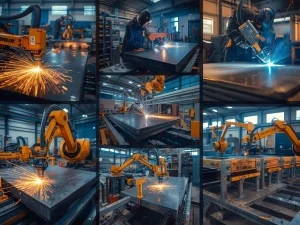
    engineering fabrication solutions

    A leading fabrication company offers a diverse portfolio of services that cater to the entire lifecycle of an industrial project. These services go beyond simply cutting and welding steel; they encompass comprehensive engineering fabrication solutions designed to deliver turnkey results.

    1. Structural Steel Fabrication

    This is the foundation of many industrial projects. It involves the creation of steel skeletons for buildings, factories, warehouses, bridges, and support structures for heavy equipment. A top heavy fabrication company in India can handle massive components, fabricating columns, beams, trusses, and girders with exceptional accuracy. These components are then shipped to the project site for assembly, forming the robust framework of the structure.

    2. Custom Steel Fabrication Services

    No two industrial projects are exactly alike. Custom steel fabrication services provide tailored solutions to meet unique project specifications. This could involve creating non-standard components, specialized machine frames, bespoke platforms and mezzanines, or architectural steel elements. The ability to customize is a key strength, allowing engineers and project managers to solve complex design challenges without being limited by off-the-shelf products.

    3. Heavy Fabrication for Large-Scale Needs

    Heavy fabrication deals with the production of exceptionally large and heavy steel components and assemblies. This specialized field requires significant infrastructure, including large workshops, high-capacity cranes, and advanced welding and handling equipment. A heavy fabrication company in India is crucial for sectors like shipbuilding, mining, power generation, and large-scale construction, where the sheer size and weight of components present unique logistical and engineering hurdles.

    Specialized Manufacturing: More Than Just Fabrication
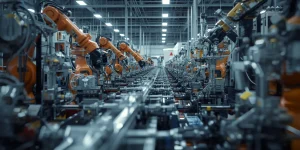
    process equipment manufacturer in India

    Many of the top industrial fabricators in India also specialize in manufacturing specific types of industrial equipment. This dual capability makes them a one-stop-shop for many businesses.

    Process Equipment Manufacturer in India

    For industries like chemical processing, pharmaceuticals, food and beverage, and oil and gas, process equipment is vital. A skilled process equipment manufacturer in India designs and builds the core components that make these plants run. This includes:

    • Reactors and Mixers: Vessels where chemical reactions or mixing processes occur.
    • Heat Exchangers: Devices used to transfer heat between two or more fluids.
    • Distillation Columns: Used to separate mixtures into their component parts.
    • Evaporators and Dryers: Equipment for removing moisture from products.

    These items require a deep understanding of thermodynamics, fluid dynamics, and material science to ensure they perform efficiently and safely under specific operating conditions.

    Pressure Vessel Manufacturer

    A pressure vessel manufacturer produces containers designed to hold gases or liquids at a pressure substantially different from the ambient pressure. Due to the inherent risks involved, the design, manufacturing, and testing of pressure vessels are heavily regulated by codes like the ASME Boiler and Pressure Vessel Code. These vessels are critical components in power plants, refineries, and chemical processing facilities. Indian manufacturers have a proven track record of producing high-integrity pressure vessels that meet the strictest safety standards.

    Industrial Storage Tank Manufacturer

    Nearly every industry requires storage solutions for raw materials, intermediate products, or finished goods. An pressure vessels builds tanks for a wide variety of substances, including water, fuel, chemicals, and food products. These can range from small shop-fabricated tanks to massive field-erected tanks that are built on-site. The material selection and design depend on the substance being stored to prevent corrosion and ensure containment.

    The Fabrication Process: From Design to Delivery
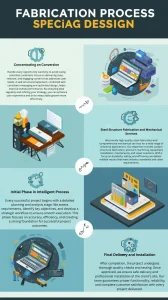
    engineering fabrication solutions

    Understanding the step-by-step process helps clients appreciate the complexity and precision involved in industrial steel fabrication.

    1. Design and Engineering: The process begins with detailed drawings and plans. Engineers use CAD (Computer-Aided Design) and other software to create precise 3D models. This stage is crucial for ensuring every component fits perfectly and meets all structural and functional requirements. It’s where the best engineering fabrication solutions are born.
    2. Material Procurement and Preparation: The correct grade and specification of steel are sourced. The raw material is then prepared for fabrication. This involves cutting the steel to the required size and shape using high-precision methods like plasma or laser cutting.
    3. Fitting and Welding: Skilled fitters assemble the cut pieces according to the design drawings, tacking them into place. Certified welders then perform the final welding to create strong, permanent joints. The welding process is carefully monitored to ensure it meets quality standards.
    4. Finishing and Coating: After fabrication, the component undergoes finishing processes. This may include grinding welds smooth, shot blasting the surface to remove impurities, and applying protective coatings like paint or galvanization to prevent corrosion.
    5. Quality Control and Inspection: Throughout the entire process, quality control inspectors conduct rigorous checks. This includes dimensional verification, weld inspection (using methods like ultrasonic or radiographic testing), and coating thickness checks. This ensures the final product is flawless.
    6. Assembly and Delivery: For large projects, components may be pre-assembled in the workshop to ensure a perfect fit before being disassembled for transport. The finished parts are then carefully packed and shipped to the client’s project site.

    Choosing the Right Industrial Equipment Manufacturer

    Selecting a partner for your fabrication needs is a major decision. Not all companies are created equal. Here are key factors to consider when evaluating an industrial equipment manufacturer or fabrication firm in India:

    • Experience and Track Record: Look for a company with a proven history of successful projects in your industry. Ask for case studies, client testimonials, and references.
    • Technical Capabilities and Certifications: Ensure the company has the right equipment, a skilled workforce, and relevant quality certifications (e.g., ISO, ASME).
    • Project Management Expertise: A good partner will have a strong project management team to ensure your project stays on schedule and within budget.
    • Communication and Collaboration: Clear and consistent communication is key. Choose a company that is responsive, transparent, and willing to work collaboratively to solve challenges.
    • Financial Stability: A financially stable company is more likely to be a reliable long-term partner and see your project through to completion without issues.

    Conclusion: Building the Future with Indian Fabrication

    The global demand for robust, reliable, and cost-effective industrial infrastructure continues to grow. An industrial steel fabrication company in India offers a compelling value proposition, combining engineering expertise, advanced technology, and a commitment to quality. Whether your project involves massive structural steel, intricate custom steel fabrication services, or specialized equipment from a pressure vessel manufacturer, India’s fabrication industry — led by experienced players like National Engineers & Steel Fabricators — is ready to deliver.

    By partnering with the right industrial equipment manufacturer, you gain more than just a supplier; you gain a strategic partner dedicated to turning your vision into a reality. The strength, precision, and innovation flowing from India’s fabrication shops are building the foundation for the next generation of industry worldwide.

    Frequently Asked Questions (FAQs)

    India offers a strong combination of skilled engineering talent, modern manufacturing infrastructure, global quality certifications, and cost-effective production. These advantages make Indian fabricators competitive worldwide while maintaining high safety and performance standards.

    Steel fabrication is widely used across industries such as:

    • Power generation

    • Oil & gas

    • Chemical processing

    • Pharmaceuticals

    • Food & beverage

    • Infrastructure & construction

    • Mining and heavy engineering

    Each sector relies on fabricated steel for structural support, equipment manufacturing, and process operations.

    Heavy fabrication focuses on large, high-weight components like structural frames, tanks, and industrial assemblies.
    Custom steel fabrication involves tailored parts made to specific project requirements, such as machine frames, platforms, mezzanines, or specialized industrial components.

    Both services often work together on complex industrial projects.

    Yes. Reputed industrial steel fabrication companies in India follow international quality systems and standards such as ISO, ASME, API, and DIN. This ensures products like pressure vessels, storage tanks, and process equipment meet global safety and performance requirements.

    Process equipment manufacturers typically produce:

    • Reactors and mixers

    • Heat exchangers

    • Distillation columns

    • Evaporators and dryers

    • Pressure vessels

    • Industrial storage tanks

    These components are essential for chemical, pharmaceutical, food, and energy industries.

    When selecting a fabrication partner, consider:

    • Industry experience and project portfolio

    • Technical capabilities and certifications

    • Quality control systems

    • Project management strength

    • Communication transparency

    • Financial stability

    A reliable manufacturer should act as a long-term engineering partner, not just a supplier.
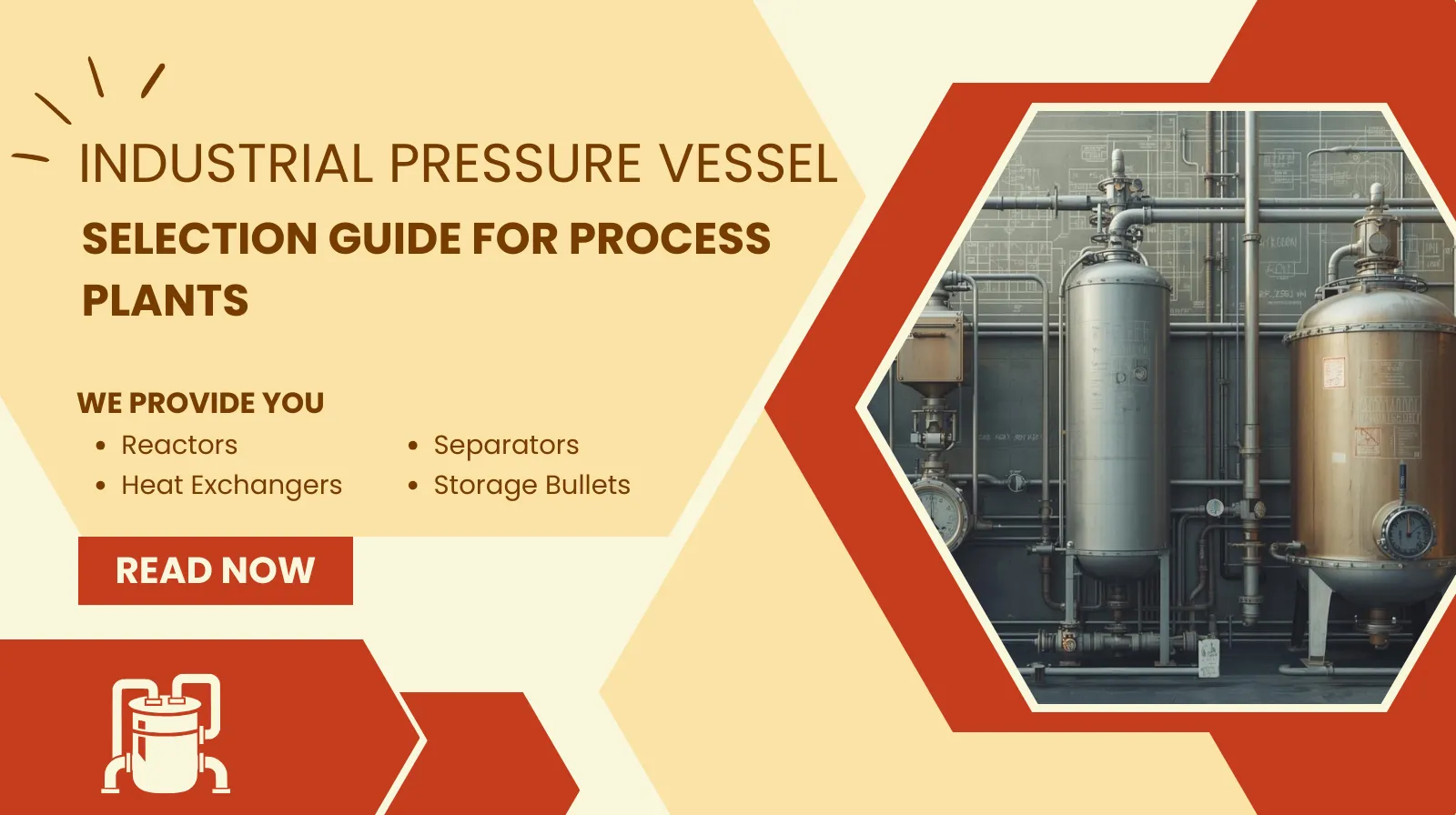
  • Industrial Pressure Vessels Selection Guide for Process Plants 2026

    Industrial Pressure Vessels Selection Guide for Process Plants 2026


    In the complex landscape of process engineering, few components are as critical—or as potentially dangerous—as the pressure vessel. These rigid containers, designed to hold gases or liquids at a pressure substantially different from the ambient pressure, are the beating heart of operations in industries ranging from oil and gas to pharmaceuticals. Selecting the right industrial pressure vessels is not merely a procurement task; it is a fundamental engineering decision that dictates the safety, efficiency, and longevity of an entire plant.

    For plant managers and process engineers, the stakes are incredibly high. A poorly selected vessel can lead to catastrophic failures, regulatory fines, and costly downtime. Conversely, a well-specified unit ensures seamless operations and robust safety margins. This guide is designed to cut through the complexity. We will walk you through the essential considerations for selecting pressure vessels, exploring everything from material science and fabrication nuances to specific applications like the pressure vessel for petrochemical industry sectors. Whether you are retrofitting an old plant or designing a new facility, this roadmap will help you make informed, safety-critical decisions.

    The Critical Role of Industrial Pressure Vessels in Process Plants

    Industrial Pressure Vessels in Process Plants

    To understand selection, one must first appreciate the function. Industrial pressure vessels are not just storage tanks; they are active participants in thermodynamic and chemical processes. They facilitate reactions, separation, and storage under extreme conditions.

    In a typical process plant, these vessels serve various roles:

    • Reactors: Where chemical changes occur under high pressure and temperature.
    • Separators: used to separate mixtures of oil, gas, and water.
    • Heat Exchangers: Where heat transfer takes place between two fluids.
    • Storage Bullets: For storing liquefied gases like propane or ammonia.

    The failure of any of these components is not an option. This is why the design and selection process is governed by rigorous codes such as the ASME Boiler and Pressure Vessel Code (BPVC) in the US, or PED in Europe. Compliance isn’t just about legality; it’s about physics. The vessel must withstand internal pressure, external pressure (vacuum), operating temperature, and external forces like wind or seismic activity.

    Key Factors in Selecting Industrial Pressure Vessels

    When approaching an industrial pressure vessel manufacturer, you need more than just a volume requirement. The selection process involves a multi-dimensional analysis of your process needs.

    1. Design Pressure and Temperature

    The defining characteristics of any vessel are its Maximum Allowable Working Pressure (MAWP) and design temperature.

    • Pressure: You must calculate the maximum pressure the vessel will experience, including potential spikes during startup or shutdown. The vessel’s wall thickness is directly proportional to this pressure.
    • Temperature: Temperature affects the strength of the material. High temperatures can reduce the allowable stress of the metal, requiring thicker walls or specialized alloys. Conversely, cryogenic temperatures (low temperatures) require materials that remain ductile and do not become brittle.

    2. Fluid Characteristics

    What is going inside the vessel? The chemical nature of the process fluid dictates material selection.

    • Corrosion: Acids, chlorides, and sulfur compounds can eat away at standard carbon steel.
    • Lethality: If the fluid is toxic, the vessel requires stricter fabrication tolerances and non-destructive testing (NDT) to ensure zero leaks.
    • Density and Viscosity: These affect the design of nozzles, agitators, and internal baffles.

    3. Geometry and Orientation

    Industrial pressure vessels generally come in two orientations: vertical and horizontal.

    • Vertical Vessels: Often used for separation processes where gravity plays a role (e.g., fractionation columns) or where floor space is limited.
    • Horizontal Vessels: Typically used for storage or for processes requiring large surface areas for phase separation (e.g., three-phase separators).
      The shape of the heads (end caps) also matters. Ellipsoidal, hemispherical, and torispherical heads all handle pressure differently and have different cost implications.

    4. Operational Cycles

    Is the process continuous or cyclic? A vessel subjected to frequent pressure or temperature fluctuations is prone to fatigue failure. If your process involves batch processing with rapid heating and cooling cycles, the design must account for thermal expansion and fatigue stress, which standard designs might overlook.

    Material Selection: The Backbone of Safety

    industrial steel vessel fabrication

    The choice of material is perhaps the most critical variable in industrial steel vessel fabrication. It balances cost against performance and longevity.

    Carbon Steel

    The workhorse of the industry. It is cost-effective and readily available.

    • Pros: High strength, easy to weld, low cost.
    • Cons: Susceptible to corrosion.
    • Application: General-purpose vessels for water, air, and non-corrosive hydrocarbons.

    Stainless Steel (304/316)

    The standard for corrosion resistance.

    • Pros: Excellent resistance to oxidation and chemical attack. Hygienic properties make it ideal for food and pharma.
    • Cons: Higher cost than carbon steel.
    • Application: Chemical processing, food and beverage, pharmaceutical tanks.

    Nickel Alloys (Inconel, Monel, Hastelloy)

    For extreme environments where failure is not an option.

    • Pros: Exceptional resistance to high temperatures and aggressive acids.
    • Cons: Extremely expensive and requires specialized pressure vessel fabrication services.
    • Application: Reactors dealing with hydrochloric acid, high-temperature heat exchangers.

    Clad Materials

    A smart compromise. This involves bonding a thin layer of expensive, corrosion-resistant alloy (like stainless steel or titanium) onto a thick, cheaper backing of carbon steel.

    • Benefit: You get the strength of thick carbon steel with the surface properties of the exotic alloy, significantly reducing costs for large, high-pressure vessels.

    The Fabrication Process: From Design to Delivery

    Pressure Vessel for Petrochemical Industry

    Understanding the fabrication workflow helps you manage timelines and quality expectations when working with a vendor. High-quality industrial steel vessel fabrication follows a strict sequence.

    1. Engineering and Design

    It starts with calculations. Engineers use software like PV Elite or Compress to simulate stresses and determine wall thickness, nozzle reinforcement, and support structure design according to ASME Section VIII.

    2. Material Procurement and Inspection

    Raw plates are ordered with Mill Test Reports (MTRs) to verify chemical composition and mechanical properties. Before cutting begins, the steel is inspected for laminations or surface defects.

    3. Cutting and Forming

    Steel plates are cut to size using plasma or laser cutters. They are then rolled into cylinders (shells) or pressed into heads. This stage requires precision; any deviation in roundness can create stress concentration points.

    4. Welding

    This is the core of fabrication. Welders must be certified (ASME Section IX) for the specific procedures used.

    • Technique: Processes like Submerged Arc Welding (SAW) are often used for long seams on thick vessels due to their high deposition rate and quality.
    • QA/QC: Welds are not just visually inspected. They undergo rigorous testing.

    5. Non-Destructive Testing (NDT)

    To ensure integrity without damaging the vessel, manufacturers use:

    • Radiography (RT): X-rays to see inside the weld for porosity or cracks.
    • Ultrasonic Testing (UT): Sound waves to detect internal flaws.
    • Dye Penetrant (PT): To find surface cracks.
    • Hydrostatic Testing: The final proof. The vessel is filled with water and pressurized to 1.3 or 1.5 times its design pressure to guarantee it won’t fail in operation.

    Industry Spotlight: Pressure Vessel for Petrochemical Industry

    The petrochemical sector presents unique challenges. A pressure vessel for petrochemical industry applications must handle aggressive hydrocarbons, often at high pressures and temperatures, and sometimes with the presence of hydrogen.

    Hydrogen Service

    In processes like hydrocracking, vessels operate in high-pressure hydrogen environments. This can lead to “Hydrogen Embrittlement” or “High-Temperature Hydrogen Attack” (HTHA).

    • Selection Tip: Carbon steel is often insufficient. Engineers must use Chromium-Molybdenum (Cr-Mo) steels, which are resistant to hydrogen attack. The fabrication of these vessels requires precise heat treatment (Post Weld Heat Treatment – PWHT) to relieve stresses.

    Sour Service (H2S)

    Many crude oils contain Hydrogen Sulfide (H2S), which is highly corrosive and toxic (Sour Service).

    • Selection Tip: Materials must meet NACE MR0175 standards to prevent Sulfide Stress Cracking (SSC). This usually involves controlling the hardness of the base metal and welds.

    How to Choose the Right Industrial Pressure Vessel Manufacturer

    The market is flooded with fabricators, but not all are created equal. Selecting the right partner is as important as selecting the right steel.

    1. Certifications are Non-Negotiable

    Look for the “U” stamp. An ASME “U” stamp certification indicates that the industrial pressure vessel manufacturer has been audited and approved to design and build to ASME standards. Other relevant certifications include ISO 9001 for quality management and National Board “R” stamps for repairs.

    2. Capability and Capacity

    Does the shop have the physical capacity to handle your project?

    • Crane Capacity: Can they lift a 50-ton reactor?
    • Rolling Capacity: Can they roll 3-inch thick steel plate cold?
    • Floor Space: Do they have room to assemble and test large columns?

    3. Experience with Similar Projects

    Ask for a reference list. If you need a high-pressure reactor made of Duplex Stainless Steel, you don’t want to be the “guinea pig” for a shop that mostly builds low-pressure water tanks. Ask specifically about their experience with pressure vessel fabrication services for your industry.

    4. Quality Control Documentation

    A high-quality vessel comes with a “Manufacturer’s Data Report” (MDR). This is the vessel’s birth certificate. It should include material certs, weld maps, NDT reports, and heat treatment charts. During the selection phase, ask to see a sample MDR to ensure their documentation standards meet your company’s requirements.

    5. Fabrication Technology

    Modern problems require modern solutions. Does the fabricator use automated welding systems? Do they have in-house heat treatment furnaces? Advanced technology often translates to better consistency and faster delivery times.

    Maintaining Your Asset: Post-Installation Considerations

    Selection doesn’t end at delivery. The longevity of industrial pressure vessels depends on how they are treated after installation.

    • Regular Inspections: Follow API 510 codes for in-service inspection. This involves periodic ultrasonic thickness checks to monitor corrosion rates.
    • Safety Valve Maintenance: The Pressure Safety Valve (PSV) is the last line of defense. It must be tested and calibrated regularly to ensure it opens at the correct pressure.
    • Painting and Insulation: External corrosion (CUI – Corrosion Under Insulation) is a major killer of vessels. Ensure the coating system is compatible with the operating environment and that insulation is kept dry.

    Conclusion: Engineering Safety and Efficiency

    The selection of industrial pressure vessels is a sophisticated balance of physics, chemistry, and economics. It requires a deep understanding of your process conditions and a strict adherence to safety standards. By focusing on the correct design parameters, choosing appropriate materials, and partnering with a certified industrial pressure vessel manufacturer, you lay the foundation for a safe and efficient plant.

    Remember, a pressure vessel is not a static object; it is a dynamic component containing immense energy. Treat its selection with the gravity it deserves. Whether you need standard industrial steel vessel fabrication or a specialized pressure vessel for petrochemical industry use, the time invested in proper specification will pay dividends in safety and operational reliability for decades.

    Ready to start your next project? Don’t leave your vessel fabrication to chance. Consult with engineering experts who understand the nuances of high-pressure design.

    Frequently Asked Questions

    Material selection depends on the fluid’s corrosiveness, the operating temperature, and the pressure. Carbon steel is common for non-corrosive fluids. Stainless steel is used for corrosive or sanitary applications. For high-temperature or highly aggressive chemical environments (like in the petrochemical industry), specialized alloys like Inconel or Hastelloy are required.

    At a minimum, look for the ASME “U” stamp, which certifies compliance with the ASME Boiler and Pressure Vessel Code. ISO 9001 certification ensures a robust quality management system. If you are in Europe, PED (Pressure Equipment Directive) certification is mandatory.

    NDT involves testing the integrity of the vessel’s welds and materials without damaging them. Common methods include Radiography (X-ray) to find internal cracks, Ultrasonic testing to measure thickness and flaws, and Dye Penetrant testing for surface defects. This ensures the pressure vessel fabrication services meet safety standards.

    The head shape affects the vessel’s ability to withstand pressure and its cost. Hemispherical heads are the strongest and best for very high pressures but are expensive to form. Ellipsoidal heads offer a good balance of strength and economy for most standard industrial applications. Torispherical heads are the cheapest but have the lowest pressure rating.